Brilliance Autumn Fern FAQ: 12 Questions Answered
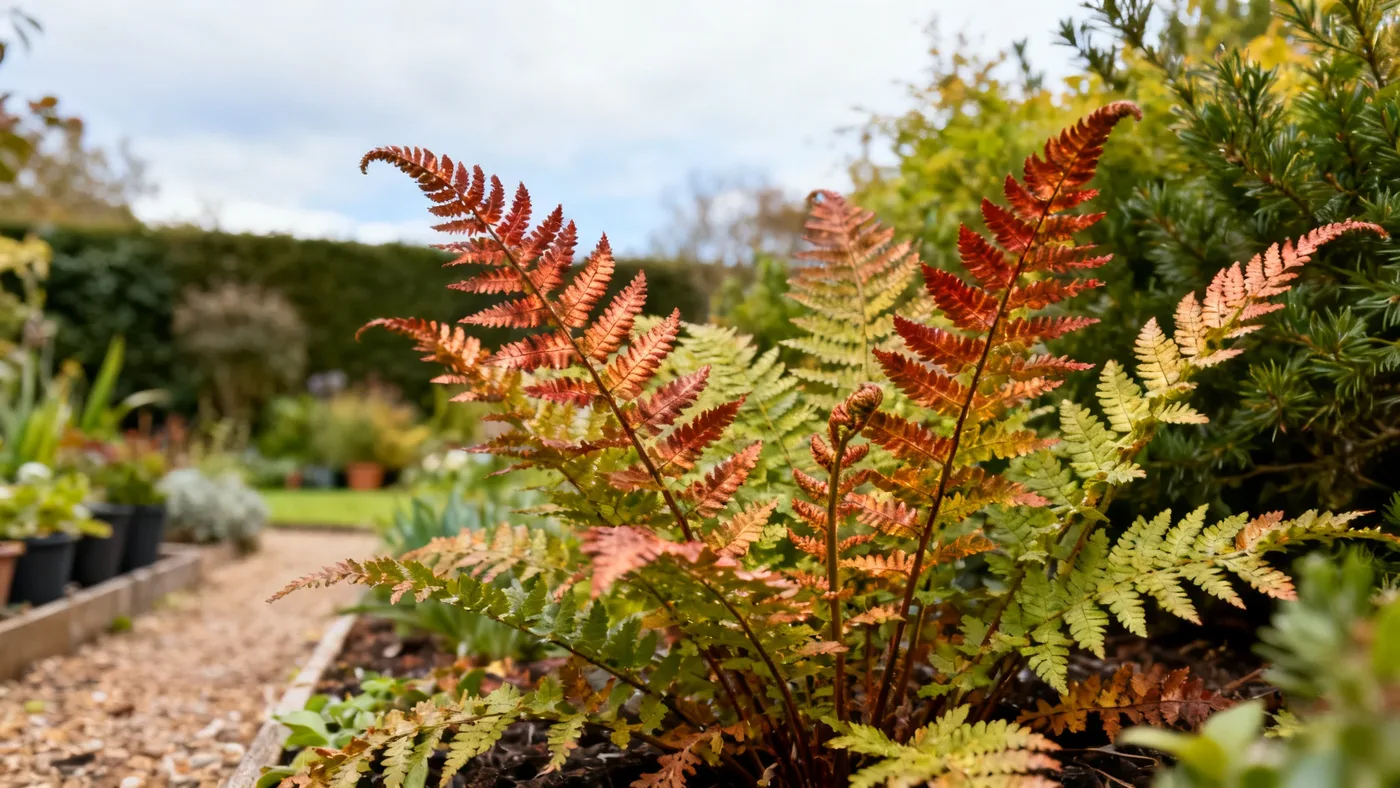
Brilliance Autumn Fern is an evergreen perennial fern that thrives in shade and brings year-round structure to woodland gardens and shaded borders. Here are answers to the questions home gardeners ask most often about this plant.
Basic Plant Information
What is Brilliance Autumn Fern, and what makes it different from other ferns?
Brilliance Autumn Fern (Dryopteris erythrosora 'Brilliance') is a cultivated selection of the Japanese Shield Fern, bred specifically for its glossy foliage and bronze-red new growth. Unlike deciduous ferns that die back in winter, this evergreen to semi-evergreen perennial retains its fronds year-round in zones 5-9, offering winter interest and structure that deciduous varieties cannot provide. The 'Brilliance' cultivar is an improved form of the straight species, selected for consistent color and vigor in home gardens.
Is Brilliance Autumn Fern toxic to pets or children?
No, Brilliance Autumn Fern is not known to be toxic to pets or people, making it a safe choice for households with dogs, cats, and children. You can plant it confidently in high-traffic shade areas and near seating without concern for accidental ingestion.
Will deer or rabbits eat my Brilliance Autumn Fern?
Brilliance Autumn Fern has high deer and rabbit resistance, so it is an excellent choice for gardens in areas with heavy deer pressure. The fern's texture and lack of palatable foliage make it unappealing to most browsing animals, though rabbits occasionally nibble young growth if other food sources are scarce.
Growing Conditions: Light, Water & Soil
How much shade does Brilliance Autumn Fern need?
This fern thrives in part shade to full shade, making it ideal for under trees, on the north side of buildings, or in woodland gardens where filtered light reaches the ground. In cooler northern climates (zones 5-6), it tolerates more morning sun if soil moisture stays consistent throughout the year; in warmer zones or very sunny sites, additional afternoon shade prevents frond scorch.
How often should I water Brilliance Autumn Fern?
Water regularly to maintain medium, consistent moisture, especially during the first year after planting when the fern is establishing its root system. The plant is not drought tolerant, so avoid letting the soil dry out completely; in well-amended soil with good organic matter, weekly deep watering in dry spells is usually sufficient. Once established, it still prefers even moisture over dry periods.
What type of soil does Brilliance Autumn Fern prefer?
Plant in humusy, organically rich, well-drained soil with a pH of roughly 5.5 to 6.5 (acidic to neutral). Amend heavy clay or compacted soil with compost, leaf mold, or peat moss to improve drainage and organic content; poor drainage leads to crown rot, which is the most common cause of plant failure. The fern's shallow rhizomes benefit greatly from a thick organic mulch layer, which also helps retain moisture and regulate soil temperature.
Planting & Spacing
When is the best time to plant Brilliance Autumn Fern?
Plant in spring or fall when temperatures are moderate and the soil is moist but not waterlogged. Both seasons give the fern time to establish roots before the heat of summer or the cold of winter, though spring planting in zones 5-6 ensures the plant is well-rooted before its first winter.
How far apart should I space Brilliance Autumn Fern plants?
Space plants 18 to 24 inches apart for mass plantings or groundcover under trees. This spacing allows each fern room to spread into its mature clump size (18 to 24 inches wide) without overcrowding, while still providing dense coverage within 2 to 3 years as the clumps fill in.
How large does Brilliance Autumn Fern grow?
Mature plants reach 18 to 24 inches tall and wide, forming a slowly spreading clump. In ideal shade conditions with consistent moisture, some growers report plants reaching up to 2 feet; the fern grows slowly, adding a few inches of new frond growth per year and reaching full size in about 2 to 3 years. This modest size makes it suitable for containers, foundation plantings, and tight shade spaces.
Can I grow Brilliance Autumn Fern in a container?
Yes, Brilliance Autumn Fern is container-suitable when placed in a shaded location and grown in a moisture-retentive potting mix rich in compost or peat moss. Use a container with drainage holes, water consistently to keep the mix evenly moist, and refresh the top 2 inches of soil each spring with fresh compost. Container plants need more frequent watering than in-ground plants, especially in warm weather.
Care & Maintenance
Do I need to prune or cut back my Brilliance Autumn Fern?
Pruning is minimal and only necessary to tidy winter damage or tattered fronds. In late winter to very early spring, before new fiddleheads emerge, cut back any brown or frost-damaged fronds to the base; otherwise, leave the plant alone and let it grow naturally. The fern's tidy mounding habit means no annual cutback is required like some perennials.
Should I fertilize Brilliance Autumn Fern?
Light feeding is optional and usually not necessary in well-amended soil. A light application of balanced, slow-release fertilizer in spring gives a gentle boost; annual top-dressing with compost or leaf mold provides slow, steady nutrition that mimics the fern's natural woodland habitat. Over-fertilizing can encourage weak, leggy growth, so less is better for ferns.
How do I propagate Brilliance Autumn Fern?
The easiest method for home gardeners is division of established clumps in spring, ideally when new growth is just beginning. Carefully dig around the base, separate the clump into 2 or 3 rooted sections with a sharp knife, and plant each division in moist, prepared soil at the same depth; keep divisions shaded and consistently watered for the first few weeks. Spore propagation is possible but slow and not practical for most home growers.
Common Problems & Solutions
Why are my Brilliance Autumn Fern fronds turning brown or scorched?
Frond scorch typically results from too much direct sun, inconsistent watering, or air that is too dry. Move the plant to a shadier location or water more frequently during dry spells, aiming to keep soil evenly moist but not soggy. If the fronds are winter-damaged, remove them in early spring and allow fresh growth to emerge.
What causes crown rot, and how do I prevent it?
Crown rot occurs when water sits around the base of the plant for extended periods, usually in poorly drained or heavy clay soil. Prevent it by ensuring well-drained soil amended with compost or peat, and by avoiding overwatering or planting in low-lying areas where water collects. Once rot begins, the plant cannot be saved, so prevention through proper soil preparation is essential.
Does Brilliance Autumn Fern get pests or diseases?
This fern is generally pest and disease-resistant but may occasionally suffer from slugs, snails, mealybugs, or scale insects, especially in stressed plants. Rust is uncommon but possible in very humid conditions with poor air circulation; thin crowded plantings and avoid overhead watering to reduce disease risk. Most pest problems can be managed by hand-removal or a strong spray of water from the hose.
Seasonal Behavior & Hardiness
What happens to Brilliance Autumn Fern in winter?
In zones 6-9, the fern retains most or all of its fronds through winter, providing year-round color and structure in the shade garden. In zone 5, it is semi-evergreen and may lose some fronds in harsh winters or flatten significantly in heavy snow; fronds may take on bronze tones in cold weather rather than dropping. Either way, new fiddleheads emerge in spring and quickly restore the plant's vigor.
In which hardiness zones can I grow Brilliance Autumn Fern?
Brilliance Autumn Fern is hardy in USDA zones 5 through 9, making it suitable for most of North America east of the Great Plains. Zone 5 gardeners should plant in spring to allow full establishment before winter, provide a thick mulch layer, and choose a sheltered location away from harsh winter wind. In zones 6-9, the fern is more reliably evergreen and requires minimal winter protection.
Is Brilliance Autumn Fern invasive or aggressive?
No, Brilliance Autumn Fern is not invasive and has a slowly spreading, clumping habit that remains well-controlled in the garden. It spreads gradually through underground rhizome growth and does not produce abundant spores that establish elsewhere, making it safe to plant without concern for it overtaking neighboring plants.
Landscape Design & Companions
What are good companion plants for Brilliance Autumn Fern?
This fern pairs beautifully in shade gardens with hosta, heuchera (coral bells), astilbe, hellebore, Japanese painted fern, brunnera, and pulmonaria. The fern's fine texture contrasts nicely with bolder foliage plants, while its year-round presence anchors shade borders through all seasons. Use it as a mass planting under deciduous trees or in clusters along shaded walkways for a naturalistic woodland feel.
How should I use Brilliance Autumn Fern in my landscape?
This fern excels in shade and woodland gardens, shaded borders, mass plantings or groundcover under trees, containers in protected shade, and foundation plantings on the shaded sides of buildings. Its evergreen presence and modest size make it ideal for small yards, courtyard gardens, and anywhere you need reliable year-round shade structure. For more detailed planting advice, see our guide to planting Brilliance Autumn Fern.
Lifespan & Long-Term Care
How long does Brilliance Autumn Fern live?
Brilliance Autumn Fern is a long-lived perennial that commonly persists 10 or more years with appropriate shade and consistent moisture. Established plants require minimal intervention, and the fern actually improves with age, forming increasingly robust clumps that become more impressive each season. This longevity makes it an excellent investment for stable shade gardens.
For comprehensive care instructions beyond these FAQs, visit our complete Brilliance Autumn Fern care guide.
Quick Reference Checklist
| Attribute | Details |
|---|---|
| Hardiness Zones | 5-9 |
| Mature Size | 18-24 inches tall and wide |
| Growth Rate | Slow to moderate; 2-3 years to mature size |
| Light Requirements | Part shade to full shade |
| Water Needs | Medium, consistent moisture; not drought tolerant |
| Soil Type | Humusy, organically rich, well-drained |
| Soil pH | 5.5-6.5 (acidic to neutral) |
| Spacing | 18-24 inches apart |
| Planting Season | Spring or fall |
| Pruning | Late winter to early spring; minimal (tidy frost damage) |
| Winter Interest | Evergreen to semi-evergreen; retains fronds |
| Deer Resistant | Yes |
| Toxic to Pets | No |
| Lifespan | 10+ years |