Brilliance Autumn Fern Care Guide: Everything You Need to Know
Key Takeaways
- Brilliance Autumn Fern (Dryopteris erythrosora 'Brilliance') thrives in USDA zones 5-9 and reaches 18-24 inches tall
- Prefers part shade to full shade with consistent, medium moisture and organically rich, well-drained soil
- Reaches mature size in 2-3 years with slow to moderate growth rate
- Evergreen to semi-evergreen depending on zone; retains winter interest with bronze-toned fronds
- Minimal pruning needed; cut back winter damage in late winter before new growth emerges
- Highly deer resistant and not toxic to pets or people
Table of Contents
- Getting to Know Your Brilliance Autumn Fern
- Planting Brilliance Autumn Fern: The Foundation for Success
- Watering and Moisture Management
- Light Requirements and Garden Placement
- Soil Preparation and Ongoing Maintenance
- Seasonal Care Calendar
- Pruning, Fertilizing, and Troubleshooting
- Companion Plants and Landscape Design
Getting to Know Your Brilliance Autumn Fern
The Brilliance Autumn Fern is a cultivated selection of Dryopteris erythrosora, a species native to East Asia including Japan, China, Taiwan, and the Philippines. This is not a wild-collected plant but a carefully selected cultivar bred for its distinctive color and reliable performance in home gardens.
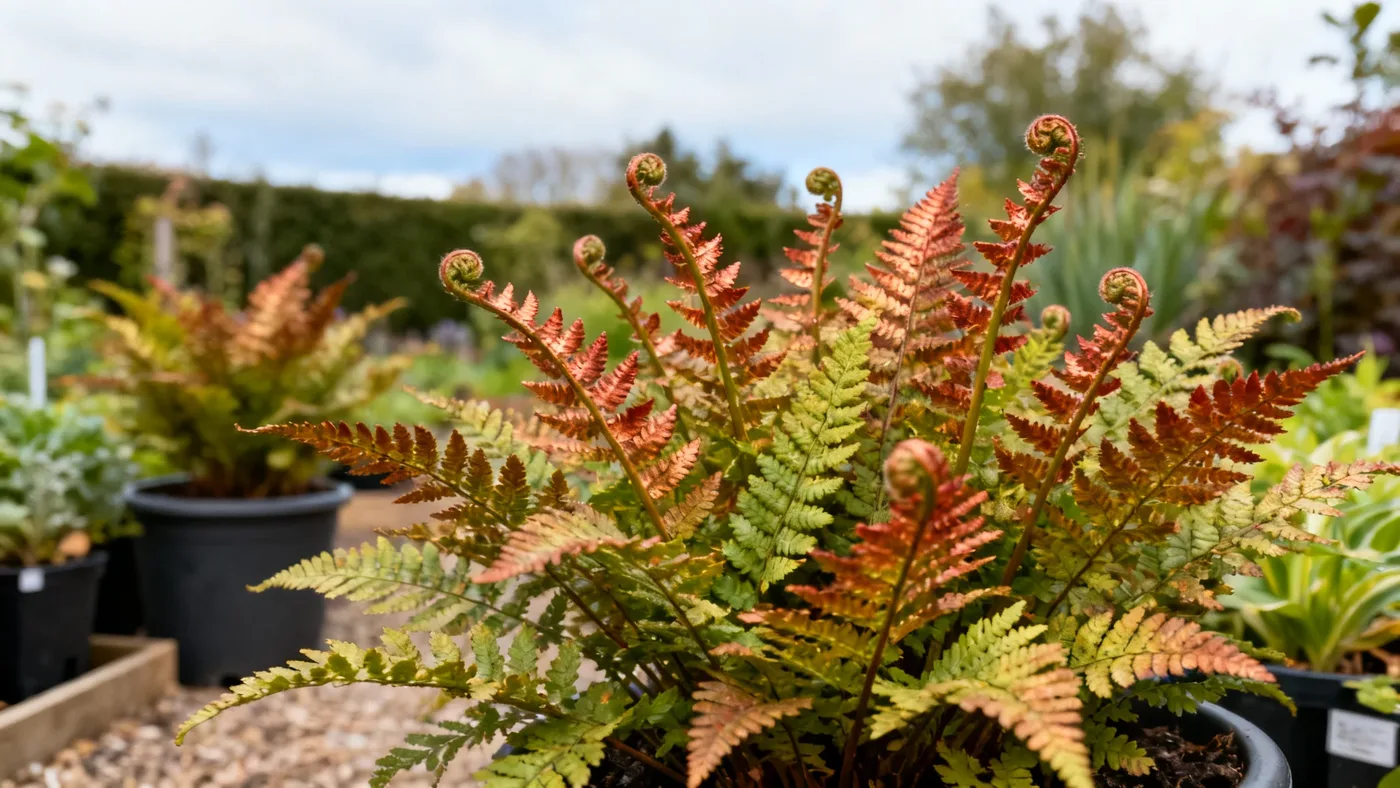
What makes the Brilliance Autumn Fern special is its foliage display. New fronds emerge in spring with striking coppery-red to bronze coloring, then mature to a glossy dark green. This color progression gives the plant its common name "Autumn Fern" even though the seasonal shift happens in spring, not fall. The fronds are triangular and finely divided, creating an intricate, feathery texture that adds depth to shade plantings.
Unlike flowering plants, ferns reproduce by spores rather than seeds or blooms. The Brilliance Autumn Fern is evergreen in warmer zones and semi-evergreen in zone 5, meaning it may lose some or all of its fronds in harsh winters but will reliably return from its crown each spring.
This perennial fern is long-lived, commonly persisting 10 or more years with appropriate shade and moisture. It grows at a slow to moderate pace, reaching its full mature size of 18-24 inches tall and 18-24 inches wide in about 2-3 years. Once established, it forms a slowly spreading clump that fills in gradually but steadily.
Planting Brilliance Autumn Fern: The Foundation for Success
Timing and site selection matter most when planting your Brilliance Autumn Fern. Plant in spring or fall when temperatures are moderate and the soil retains moisture naturally. Spring planting gives the plant the entire growing season to establish roots before winter arrives.
Choosing the Right Location
The Brilliance Autumn Fern belongs in shade. It tolerates part shade to full shade, though it can handle more morning sun in cooler, northern climates as long as soil moisture stays consistent. Afternoon sun, especially in warm zones, can scorch the delicate fronds and stress the plant. A location beneath deciduous trees, on the north side of a building, or in a shade garden is ideal.
Soil Preparation
Prepare the planting area by amending the native soil with compost or leaf mold. The Brilliance Autumn Fern demands humusy, organically rich, well-drained soil. Clay-heavy or compacted soil invites crown rot, a serious problem for this moisture-loving fern. The ideal soil pH is acidic to neutral, around 5.5 to 6.5. If your soil tends alkaline, work in sulfur or pine needles to lower the pH before planting.
Spacing and Planting Depth
Space plants 18-24 inches apart to allow room for the clump to expand over time. When planting, position the crown (the point where fronds emerge) at soil level. Burying the crown promotes rot; planting too shallow exposes it to drying. Set the plant at the same depth it was growing in its nursery pot.
Water thoroughly after planting to settle the soil and eliminate air pockets. The first year after planting is critical. The Brilliance Autumn Fern is not drought tolerant and needs consistent moisture while roots establish. Mulch around the base with 1-2 inches of compost or leaf mold to help retain soil moisture and moderate temperature.
Watering and Moisture Management
Proper watering is the difference between a thriving fern and a struggling one. The Brilliance Autumn Fern requires medium, consistent moisture. It is not drought tolerant, especially in its first year, and it cannot tolerate waterlogged or soggy soil.
Watering Schedule
During the growing season (spring through fall), water deeply when the top inch of soil becomes dry. In most climates, this means watering 2-3 times per week in summer, depending on heat and humidity. Sandy soils dry faster and need more frequent watering; clay-amended soils hold moisture longer. Use a soil moisture meter or the finger test: if soil feels dry at your first knuckle, it is time to water.
In cooler months (fall and winter), reduce watering but do not let the soil dry out completely. Established plants are more drought tolerant than newly planted ones, but they still prefer even moisture. During rain, skip supplemental watering.
Avoiding Common Water Problems
Frond scorch (browning leaf tips and edges) often results from inconsistent watering or dry air, not sunburn alone. Maintain steady soil moisture to prevent the fern from wilting between waterings. If the plant dries out severely, recovery is slow.
Crown rot and root rot occur in poorly drained soil, especially heavy clay left waterlogged. This is often irreversible. Build raised beds or add coarse sand and compost to improve drainage before planting.
Light Requirements and Garden Placement
Light is one of the easiest plant care factors to understand with the Brilliance Autumn Fern: it needs shade. More precisely, it needs part shade to full shade.
Part Shade Environments
Part shade means 3-6 hours of indirect light or dappled sunlight. This is the ideal condition. A location under a high canopy of deciduous trees works perfectly. Light filters through the leaves without direct sun hitting the fern. Morning sun followed by afternoon shade is also suitable, particularly in northern zones where the sun is less intense.
Full Shade Conditions
Full shade (less than 3 hours of direct light) is also fine for the Brilliance Autumn Fern, though growth may be slightly slower. Shaded foundation plantings, woodland gardens, and shade borders are all appropriate.
Avoiding Too Much Sun
Direct afternoon sun, especially in zones 7-9, causes frond scorch. The leaf edges and tips brown and look burned. Combine excessive sun with dry soil and the problem worsens. If your fern shows signs of scorch, move it to a shadier spot or provide afternoon shade with a shade cloth during the hottest months.
Soil Preparation and Ongoing Maintenance
Soil health underpins fern success. The Brilliance Autumn Fern is not aggressive or invasive. It does not spread through runners or seeds and forms a compact, slowly spreading clump.
Initial Soil Amendment
At planting, work in compost or aged leaf mold at a 1:1 ratio with native soil. This achieves the humusy, organically rich texture the fern needs. If your garden soil is clay-heavy, add coarse sand or perlite for drainage.
Ongoing Soil Care
Each spring, top-dress the area around the fern with 1 inch of compost or leaf mold. This adds organic matter, feeds the plant slowly, and maintains the moisture-retentive soil structure the fern prefers. Do not pile mulch against the crown itself; leave a small gap to allow air circulation.
Fertilizing
Ferns are not heavy feeders. A light application of balanced, slow-release fertilizer in spring is sufficient. Many gardeners skip fertilizer altogether and rely on the annual compost top-dress to provide nutrients. If using fertilizer, choose a balanced formulation (equal nitrogen, phosphorus, and potassium) and apply at half strength to avoid burning the fronds.
Seasonal Care Calendar
Understanding the Brilliance Autumn Fern's seasonal rhythm helps you care for it effectively.
Spring (March-May)
This is the most active growing season. New fiddleheads unfurl with coppery-red color. Remove any winter-damaged or tattered fronds to tidy the plant. Apply a light slow-release fertilizer and top-dress with compost. Ensure consistent moisture as growth accelerates.
Summer (June-August)
The fern is at full size with mature dark green fronds. Maintain consistent watering, as heat and sun exposure increase evaporation. Water more frequently during hot spells. Watch for slug and snail damage (occasional but possible) and spider mites in very dry conditions.
Fall (September-November)
Growth slows. In warmer zones (7-9), the fern remains evergreen with fronds retaining glossy green color. In cooler zones (5-6), fronds may take on bronze tones rather than dropping completely. Reduce watering as temperatures cool and growth stops. Avoid fertilizing, as it encourages tender new growth vulnerable to frost.
Winter (December-February)
In zones 6-9, the fern retains its fronds and provides winter structure and color in the shade garden. In zone 5, fronds may flatten or brown in harsh winters, but the crown remains alive underground. Do not prune during winter dormancy; wait until late winter to very early spring (late February to early March in most regions) when new fiddleheads begin to emerge. At that time, cut back winter-damaged or tattered fronds to ground level to make room for fresh growth.
Pruning, Fertilizing, and Troubleshooting
Pruning Practices
Pruning is minimal with the Brilliance Autumn Fern. The only pruning needed is removal of winter damage. In late winter to very early spring, before new fiddleheads emerge, cut back any brown, tattered, or frost-damaged fronds to ground level. Use clean pruning shears and cut just above the soil surface. This tidy-up takes minutes and removes dead tissue that looks unsightly and can harbor pests.
Otherwise, leave the plant alone. Do not deadhead or shape it; ferns do not need this intervention.
Common Problems and Solutions
Frond scorch: Browning leaf tips and edges usually point to inconsistent watering or dry air. Check soil moisture and water more frequently. Increase humidity by misting the fronds occasionally in dry climates.
Crown rot: Soft, slimy tissue at the base of the plant indicates crown or root rot. This occurs in poorly drained soil or from overwatering. Unfortunately, crown rot is difficult to reverse. Improve drainage and reduce watering immediately. Prevention is key: plant in well-draining soil amended with compost and ensure water is not standing.
Slow to fill in: Newly planted ferns grow slowly in their first year. This is normal. Do not overwater or overfertilize trying to speed things up. Be patient; the fern reaches mature size by year 2-3.
Slugs and snails: These occasional pests chew irregular holes in fronds. Handpick them in early morning or evening, or place copper tape around the base of nearby plants to deter them.
Mealybugs and scale insects: Occasional, especially indoors. Spray with horticultural oil according to label directions, or isolate the plant and remove insects with a soft cloth.
Companion Plants and Landscape Design
The Brilliance Autumn Fern shines in shade gardens paired with complementary plants. Its fine, feathery texture and glossy green foliage contrast beautifully with bold-leaved perennials.
Ideal Companion Plants
Plant alongside hosta (large, textured leaves), heuchera (colorful foliage), astilbe (delicate plumes), hellebore (early-season blooms), Japanese painted fern (silver-blue fronds), brunnera (heart-shaped leaves and small blue flowers), and pulmonaria (spotted leaves). These all prefer the same partial to full shade and consistent moisture.
Landscape Uses
Use the Brilliance Autumn Fern in shade and woodland gardens as a textural anchor. Mass plant 18-24 inches apart for a groundcover effect under trees. Tuck it into shaded borders at midlevel. It works equally well in containers filled with a moisture-retentive potting mix, as long as the container is placed in shade and watered regularly. Plant on the shaded north or east side of buildings for foundation plantings. The deer-resistant nature and year-round interest make it invaluable in wildlife-prone areas.
Winter Interest
In zones 6-9, the evergreen or semi-evergreen fronds provide reliable winter structure when deciduous companions have dropped their leaves. Bronze-toned fronds in cold weather add subtle color without appearing damaged or neglected.
Quick Reference Care Checklist
| Care Factor | Details |
|---|---|
| USDA Zones | 5-9 |
| Mature Size | 18-24 in tall and 18-24 in wide |
| Time to Maturity | 2-3 years |
| Sun Exposure | Part shade to full shade |
| Watering | Medium, consistent moisture; not drought tolerant first year |
| Soil Type | Humusy, organically rich, well-drained; pH 5.5-6.5 |
| Spacing | 18-24 in apart |
| Planting Season | Spring or fall |
| Fertilizing | Light slow-release in spring, or annual compost top-dress |
| Pruning | Cut back winter damage in late winter before new growth |
| Deer Resistant | Yes |
| Toxicity to Pets | Not known to be toxic |
| Lifespan | 10+ years |
The Brilliance Autumn Fern earns its place in shade gardens through reliable year-round interest, minimal care demands, and natural resistance to pests and deer. Start with well-drained soil rich in organic matter, ensure consistent moisture without waterlogging, and place the plant in appropriate shade. Once established, this long-lived perennial requires only routine pruning and seasonal top-dressing. It fills in gradually over 2-3 years to create a textured, sophisticated planting that looks equally at home in a woodland setting or a manicured shade border.