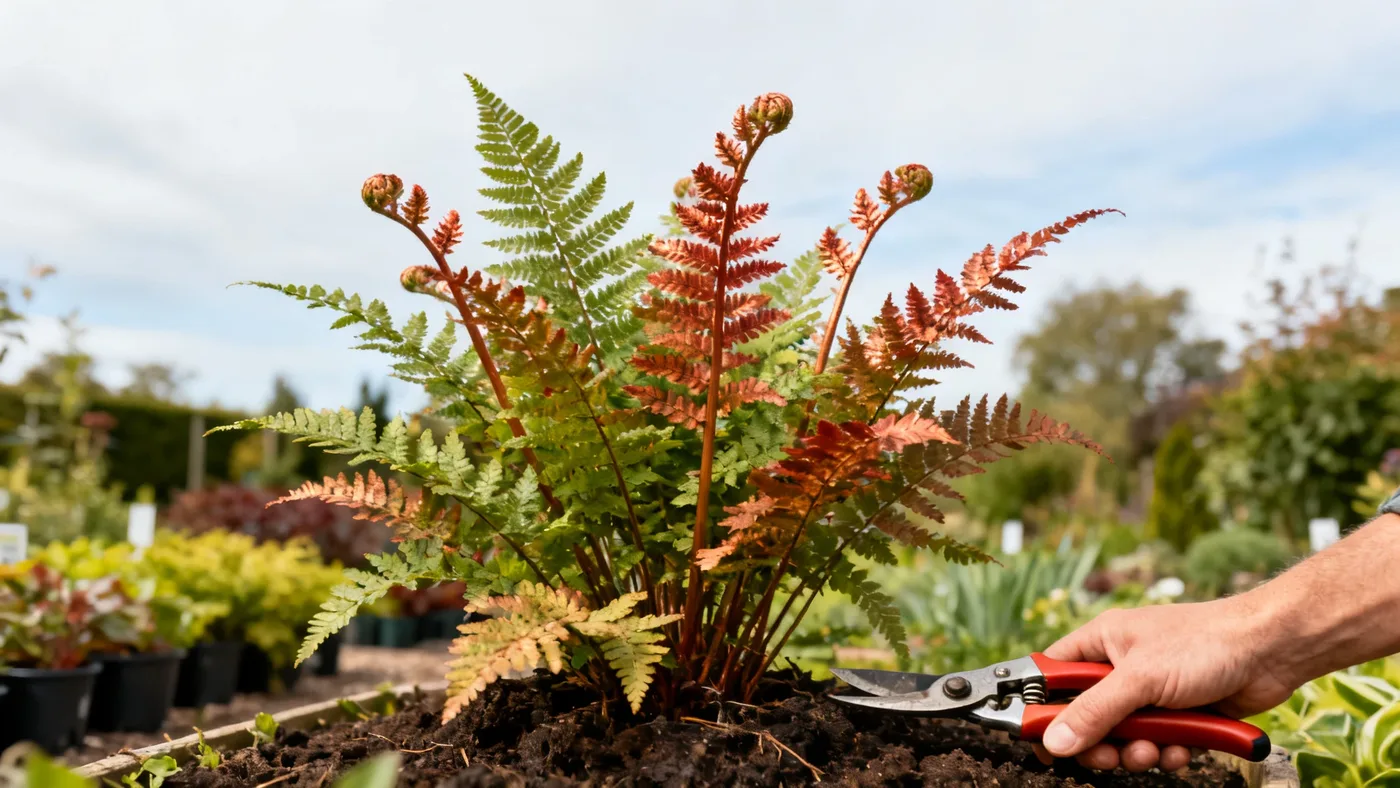
How and When to Prune Brilliance Autumn Fern Fronds
Brilliance Autumn Fern is largely a hands-off plant when it comes to pruning. Unlike many ornamental shrubs and perennials, this evergreen to semi-evergreen fern thrives with minimal cutting and fussing. That said, knowing how and when to remove winter-damaged or tattered fronds keeps your clump looking neat and helps strong new growth emerge each spring. This guide walks you through the process, from the tools you'll need to the best timing for your zone, so you can prune with confidence and care.
Do You Need to Prune Brilliance Autumn Fern?
The short answer is: sometimes, but not often. Brilliance Autumn Fern does not require routine pruning to thrive. In fact, the best approach is to leave the plant alone unless you spot winter damage, discolored tips, or fronds that have become tattered.
In zones 6 through 9, the fern typically retains its fronds through winter, providing structure and color in the shade garden even when temperatures drop. This winter interest is one of the plant's best features. Toward zone 5, the fern is semi-evergreen, meaning some fronds may flatten, brown, or drop in harsher winters. If you garden in zone 5, you may need to prune more frequently than gardeners in warmer climates.
For a complete overview of year-round care, including watering, soil, and seasonal needs, see the Brilliance Autumn Fern care guide.
Materials and Tools You'll Need
Pruning Brilliance Autumn Fern requires only basic supplies you likely already have on hand:
- Hand pruners or bypass pruning shears with a sharp blade
- A pair of light gardening gloves (optional but helpful for grip and comfort)
- A small hand rake or your fingers (to clear away loose frond debris after removal)
- A nearby compost bin or garden waste container
No special products, chemicals, or fertilizers are needed. A sharp blade is essential: dull pruners can crush the delicate frond tissue and invite rot or disease. If your shears have become dull from seasonal use, spend a moment sharpening them before you start. Clean blades reduce the risk of spreading any fungal issues from one frond to another.
Step-by-Step Pruning Instructions
Follow these seven steps to prune your Brilliance Autumn Fern safely and effectively.
- Inspect your fern in late winter to very early spring. Before new fiddleheads begin to unfurl (typically late February to mid-March in most zones), walk around your plant and look for fronds that are brown, tattered, or obviously damaged. Healthy fronds are a glossy dark green. Dead or dying tissue will appear bleached, brown, papery, or flattened.
- Assess each damaged frond. Grasp a brown or tattered frond gently at its base where it emerges from the clump. Gently bend it back to see the full extent of damage. If the entire frond is discolored or broken, it should come out. If only the tip is brown but the rest of the frond is green and healthy, you may leave it; the plant will eventually shed it on its own.
- Make a clean cut at the base. Using your hand pruners, cut the frond as close to its base as possible without damaging the crown or healthy fronds nearby. The cut should fall just above the soil line, where the frond attaches to the rootstock. Do not leave long stubs of frond stem, as these can become entry points for disease.
- Place removed fronds in compost. Drop the pruned frond into your compost bin. If you suspect the frond is diseased (for example, if you see signs of rust or unusual spots), dispose of it separately in a yard waste container rather than the home compost pile.
- Work around the entire clump. Remove only the fronds that are clearly past their prime. You may remove a handful or several dozen, depending on how harsh the winter was in your area. Resist the urge to prune healthy green fronds, even if they look slightly tired or have a few brown tips. Your goal is removal, not reshaping.
- Clear away loose debris. Once you have finished cutting, use a hand rake or your fingers to gently clear any loose or fallen frond pieces from the top and center of the clump. This helps reduce the risk of fungal issues and keeps the crown tidy for new fiddleheads to emerge.
- Step back and assess. A properly pruned Brilliance Autumn Fern should have an open center with space for new fronds to grow up through the clump. You may be surprised at how sparse the plant looks immediately after pruning. This is normal and temporary.
When to Prune: Timing Matters
Timing is critical. The ideal window for pruning Brilliance Autumn Fern is late winter to very early spring, before new fiddleheads emerge.
In zones 6 through 8, this window typically falls between late February and mid-March. In zone 9, where springs arrive earlier, pruning may be appropriate as early as January. In zone 5, where growth starts later, the window extends from mid-March through mid-April. If you are unsure of the typical growth timing in your area, contact your local cooperative extension service.
Why does timing matter? When you remove dead fronds before new fiddleheads unfurl, you allow the plant to focus its energy on fresh growth without visual distraction. Pruning after fiddleheads have already emerged risks damaging those tender new fronds and disrupts the plant's growth cycle. Pruning too late in the season can also mean the fern spends energy regrowing what you removed rather than settling in for the season.
Avoid pruning in fall or mid-winter. Even though some fronds brown in cold weather, the plant is still drawing energy from those tissues to prepare for spring dormancy and regrowth. Removing them early can stress the plant unnecessarily.
Tips for Healthy Regrowth
A few simple practices help your fern bounce back strong after pruning.
Keep soil consistently moist through spring. A fern recovering from pruning needs steady moisture as new fronds expand. Do not let the soil dry out between waterings. Morning watering is ideal so the soil absorbs moisture before the heat of the day.
Hold off on fertilizer at pruning time. Brilliance Autumn Fern is a light feeder and does not need a nutrient boost immediately after pruning. Wait until late spring or early summer to apply a light application of balanced, slow-release fertilizer if you fertilize at all. For detailed guidance on feeding, see Do You Need to Fertilize Brilliance Autumn Fern.
Provide shade during recovery. Pruning exposes the crown slightly, and new fronds are tender. Full shade through the first week after pruning is ideal.
Be patient with regrowth. Brilliance Autumn Fern reaches mature clump size in about 2 to 3 years, with roughly a few inches of new frond growth per year. After pruning, a fern may take several weeks to begin unfurling new fiddleheads, and it will not fill its previous space overnight. This is normal and healthy.
Common Pruning Mistakes to Avoid
Cutting too far back. Some gardeners cut the entire clump down to 1 or 2 inches, as they might with some perennials. Do not do this with Brilliance Autumn Fern. Remove only the damaged fronds, leaving healthy ones intact. Over-pruning can set back growth significantly and may even damage the crown.
Pruning at the wrong time. Fall or mid-winter pruning stresses the plant. Stick to the late-winter-to-early-spring window for best results.
Using dull blades. Crushing frond tissue with dull pruners invites rot and disease. Keep your shears sharp and clean between cuts.
Damaging the crown. The crown is the central growing point where fronds attach. Be careful not to slice into it with your pruners. All cuts should fall on the individual frond stem, not on the crown itself.
Leaving long stubs. Frond stubs left behind can become entry points for fungal disease. Cut as close to the base as safely possible without damaging neighboring fronds.
Pruning healthy fronds out of habit. Resist the urge to remove green fronds for the sake of tidiness. Your instinct should be conservation, not decoration.
What to Expect After Pruning
In the weeks following pruning, your fern will look noticeably sparser than before. This is completely normal and temporary. Over the next 4 to 8 weeks, new fiddleheads will begin to emerge from the center of the clump. These tightly coiled new fronds are among the fern's most appealing features, with their coppery-red to bronze coloring as they unfurl into glossy dark green foliage.
By mid-to-late spring, the fern should look fuller again as the new fronds mature. The clump will not reach its full previous size instantly, but it will continue to fill in throughout the growing season.
In ideal conditions (consistent shade, steady moisture, and light fertilizing in late spring), a well-pruned fern should show noticeably fresher and more uniform frond color by early summer. The rich, deep green of new fronds creates a cleaner, more vibrant appearance compared to plants laden with mixed brown and green winter-damaged tissue.
Quick Reference: Pruning Checklist
| Task | Timing | Notes |
|---|---|---|
| Inspect for winter damage | Late Feb to mid-March (zones 6-9); mid-March to mid-April (zone 5) | Look for brown, tattered, or papery fronds |
| Gather tools | Before pruning begins | Sharp pruners, gloves, compost container |
| Remove damaged fronds | Same window as inspection | Cut at base; do not leave stubs |
| Clear debris from crown | Immediately after pruning | Use hand rake or fingers |
| Water consistently | Through spring and growing season | Keep soil evenly moist, not soggy |
| Avoid fertilizing | At pruning time | Wait until late spring or early summer |
| Monitor new growth | 4 to 8 weeks post-pruning | Watch for fiddleheads unfurling |
| Observe mature regrowth | Early summer onward | Enjoy fresh, uniform new foliage |