Winter Care for Brilliance Autumn Fern in Cold Climates
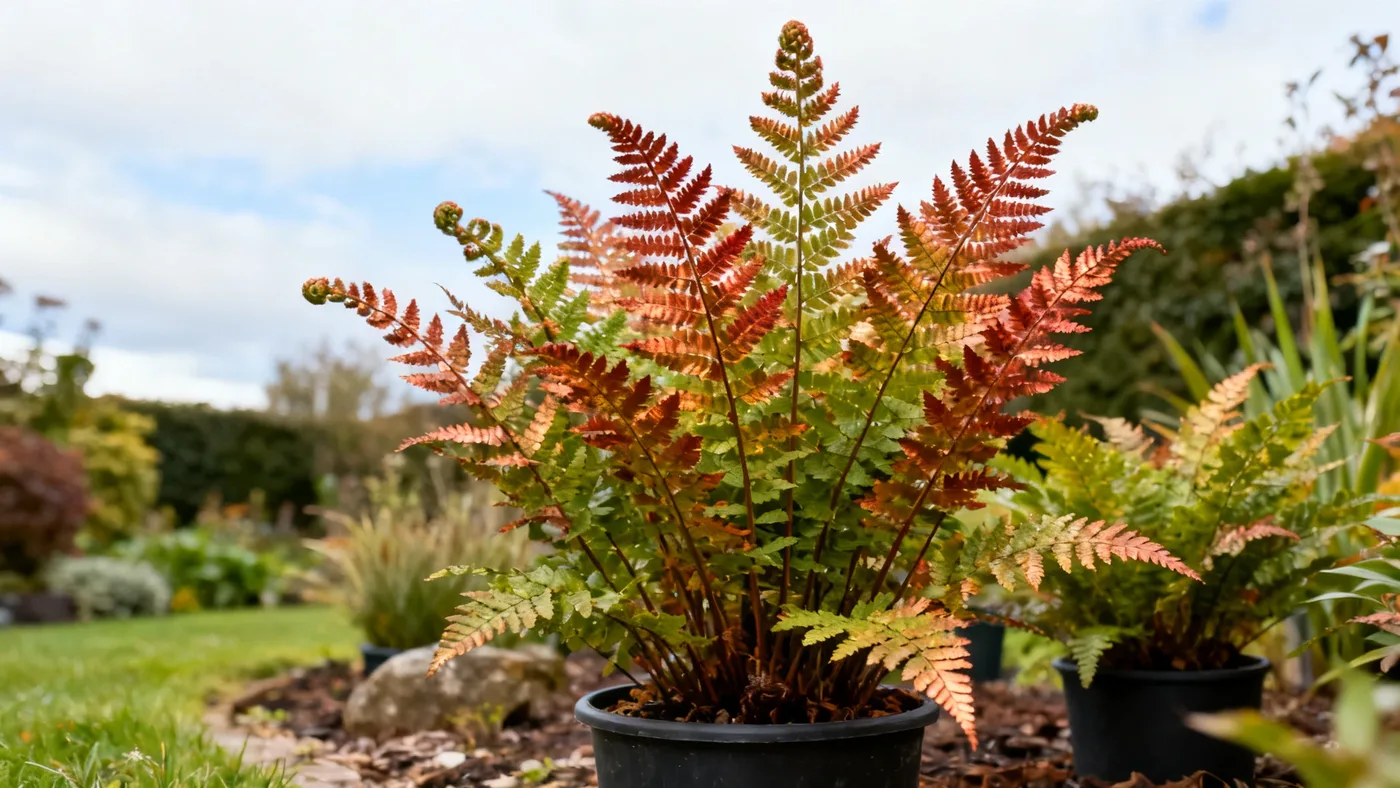
Brilliance Autumn Fern is prized for its glossy dark green fronds and coppery-red new growth, but gardeners in colder zones often wonder what to expect when temperatures drop. The good news: this hardy fern (USDA zones 5–9) can survive cold winters with straightforward preparation. Understanding whether your Brilliance Autumn Fern is evergreen in winter, and what that means for your care routine, is the key to keeping it healthy through the season.
Understanding Brilliance Autumn Fern's Winter Behavior
Brilliance Autumn Fern is evergreen to semi-evergreen, which means its winter performance depends on where you garden. In zones 6–9, the plant retains most or all of its fronds through winter, providing year-round structure and color in the shade garden. In zone 5 (the northern edge of its hardiness range), the fern transitions to semi-evergreen, meaning some fronds may flatten, brown, or drop after cold snaps. This is normal and not a sign of plant death.
One common observation: fronds may take on bronze or reddish tones in cold weather. This is a natural response, not damage. The plant stores energy in its crown (the central base where all fronds emerge) and can bounce back in spring even if winter fronds look tired or brown.
Materials You'll Need for Winter Protection
Before temperatures drop, gather these items:
- Leaf mold or shredded leaves (2 to 4 inches worth)
- Compost or well-rotted organic matter
- Mulch (bark chips or straw, if not using leaves)
- Garden pruners or scissors (sharp and clean)
- Burlap or frost cloth (optional, for extreme zone 5 winters)
- Garden gloves
- Watering can or hose with a gentle spray setting
Step-by-Step Winter Preparation Guide
Step 1: Assess Soil Drainage Before Winter Arrives
Brilliance Autumn Fern thrives in well-drained, organically rich soil. Poor drainage is the primary threat in winter because wet soil can lead to crown rot when temperatures plummet. Walk around each plant after a heavy rain. If water pools at the base for more than a few hours, the site needs improvement.
If drainage is sluggish, work 2 to 3 inches of compost into the top 6 to 8 inches of soil around the plant (avoiding the crown itself). This improves soil structure and reduces standing water. Do this at least 2 to 3 weeks before your first expected hard frost.
Step 2: Water Deeply Before the Ground Freezes
A well-hydrated plant enters winter stronger than a drought-stressed one. In the 2 to 3 weeks before the first frost, water slowly and deeply at the base of the plant. Aim for 1 to 1.5 inches of water per week if natural rainfall does not provide it. Water in the morning so the soil dries slightly before nightfall.
Once the ground freezes, the plant cannot access soil moisture, so this pre-frost watering acts as an insurance policy. Do not water after the first hard freeze.
Step 3: Stop Fertilizing in Late Summer
Fertilizing in late summer or fall stimulates tender new growth, which frost will damage. Cut back on fertilizer by late August or early September. A light application of balanced, slow-release fertilizer in spring (after new fiddleheads emerge) is sufficient for the whole year. No feeding is needed as winter approaches.
Step 4: Apply a Winter Mulch Layer
Once the ground has frozen solid (typically after the first hard frost), apply a 2 to 3 inch layer of leaf mold, shredded leaves, or compost around the base of the plant. This layer protects the crown from frost heave (the expansion and contraction of soil as it freezes and thaws), which can damage or expose the root system.
Important: leave a small air gap around the crown itself. Do not pile mulch directly against the emerging fronds. A 1 inch gap between the mulch and the center of the plant allows air circulation and prevents rot.
Step 5: Plan for Spring Cleanup
Wait until very late winter or very early spring to remove winter-damaged fronds. Timing is critical: you want to prune after the harshest cold has passed but before new fiddleheads emerge. In most of zone 5, this window is late February to early March. In zones 6 and warmer, it may be as early as mid-February or as late as early April.
Using sharp, clean pruners, cut back any flattened, brown, or tattered fronds as close to the crown as possible. Remove no more than one-third of the plant's total frond count to avoid shocking it. If new fiddleheads are already unfurling, stop pruning immediately; the plant is already generating new growth.
Winter Monitoring and Maintenance
Watch for Extreme Temperature Swings
The biggest danger in cold climates is not sustained cold but rapid temperature swings. A warm spell followed by a hard frost can damage even hardy plants. There is no action needed when this happens, but it explains why fronds may look worse after a warm period in winter.
Check Soil Moisture Under Mulch
On mild winter days (above 50 degrees Fahrenheit with no snow), gently pull back the mulch and check if the soil is bone dry. In most years, winter precipitation provides enough moisture. However, if you live in an arid region or the winter is unusually dry, provide a slow, deep watering during a thaw. Avoid frequent light watering; winter plants need less water than summer plants.
Remove Heavy Snow Carefully
Wet, heavy snow can weigh down fronds and cause them to crack or separate from the crown. After a heavy snowfall, gently brush snow off with a soft broom or your gloved hand. Do not try to break or pull fronds free; work gently to avoid breaking them.
Spring Recovery and Transition
Once new growth emerges (typically late winter in zones 6–9, early spring in zone 5), the plant is signaling it has weathered the cold. Remove the mulch layer you applied in fall, pulling it back to the drip line of the plant. Work any remaining leaf matter into the soil; it will continue to enrich the organic content.
After pruning away winter damage and once new fiddleheads are clearly unfurling, apply a light layer of compost or leaf mold as a top-dress. A light application of balanced, slow-release fertilizer at this point supports new growth.
Common Mistakes to Avoid
Over-mulching the crown: Too much mulch piled directly on the crown traps moisture and invites rot. A thin air gap is your friend.
Fertilizing too late in the season: Late-season feeding encourages tender growth that frost will kill. Stick to spring applications only.
Pruning too early: If you remove dead fronds in late fall or early winter, the plant cannot use those fronds as insulation. Prune only in very early spring, just before new growth emerges.
Planting in poorly drained soil: This is the number one cause of winter crown rot. If your soil is heavy clay or compacted, amend it with compost before planting, or choose a slightly raised bed.
Assuming a brown winter fern is dead: Semi-evergreen behavior in zone 5 can make the plant look completely dormant. As long as the crown is firm and not mushy, the plant will recover. Patience is essential.
Expected Results and Seasonal Timeline
With proper winter preparation, Brilliance Autumn Fern should emerge from winter with at least some living fronds intact (especially in zones 6–9). In zone 5, the plant may look sparse after winter, but new fiddleheads will unfurl within a few weeks of the last frost date.
By mid-spring, 2 to 4 weeks after the frost date, new coppery-red fronds will begin to expand and mature to glossy dark green. The plant typically reaches its full, lush appearance by early summer.
Quick Winter Care Reference
| Task | Timing | Zone 5 Notes |
|---|---|---|
| Assess and improve drainage | August to September | Non-negotiable; poor drainage means crown rot in freeze-thaw cycles |
| Stop fertilizing | By late August | Late feeding triggers frost-sensitive new growth |
| Deep water | 2-3 weeks before first frost | Hydrated plants handle winter better; water deeply once |
| Apply winter mulch | After ground freezes (mid-to-late November in zone 5) | 2-3 inch layer; leave 1 inch air gap around crown |
| Monitor under mulch | During warm winter days above 50°F | Check soil moisture; water only if bone dry after a thaw |
| Remove heavy snow | As it falls | Gently brush off; do not force fronds or break stems |
| Prune winter damage | Late February to very early March (zone 5); earlier in zone 6-9 | Wait for fiddleheads to emerge; prune just before they unfurl |
| Remove fall mulch | After new fiddleheads emerge | Pull back to drip line; work remainder into soil |
| Apply spring compost | Once fiddleheads are clearly unfurling | Light layer; supports new growth transition |
| Spring fertilizer (optional) | After new growth is 2-3 inches tall | Balanced, slow-release only; light application |
Keeping Your Fern Healthy Year-Round
Brilliance Autumn Fern is a long-lived perennial that can persist 10 or more years with appropriate shade and consistent moisture. Winter is just one season, but preparing well in autumn makes all the difference. For a complete overview of caring for your fern beyond winter, see our Brilliance Autumn Fern care guide, which covers planting, watering, and troubleshooting year-round.
The beauty of this fern is that it asks for simple, proven steps. Ensure drainage, water before frost, mulch after the ground freezes, and prune in early spring. Follow this sequence and your Brilliance Autumn Fern will reward you with strong growth each year, even in zone 5.