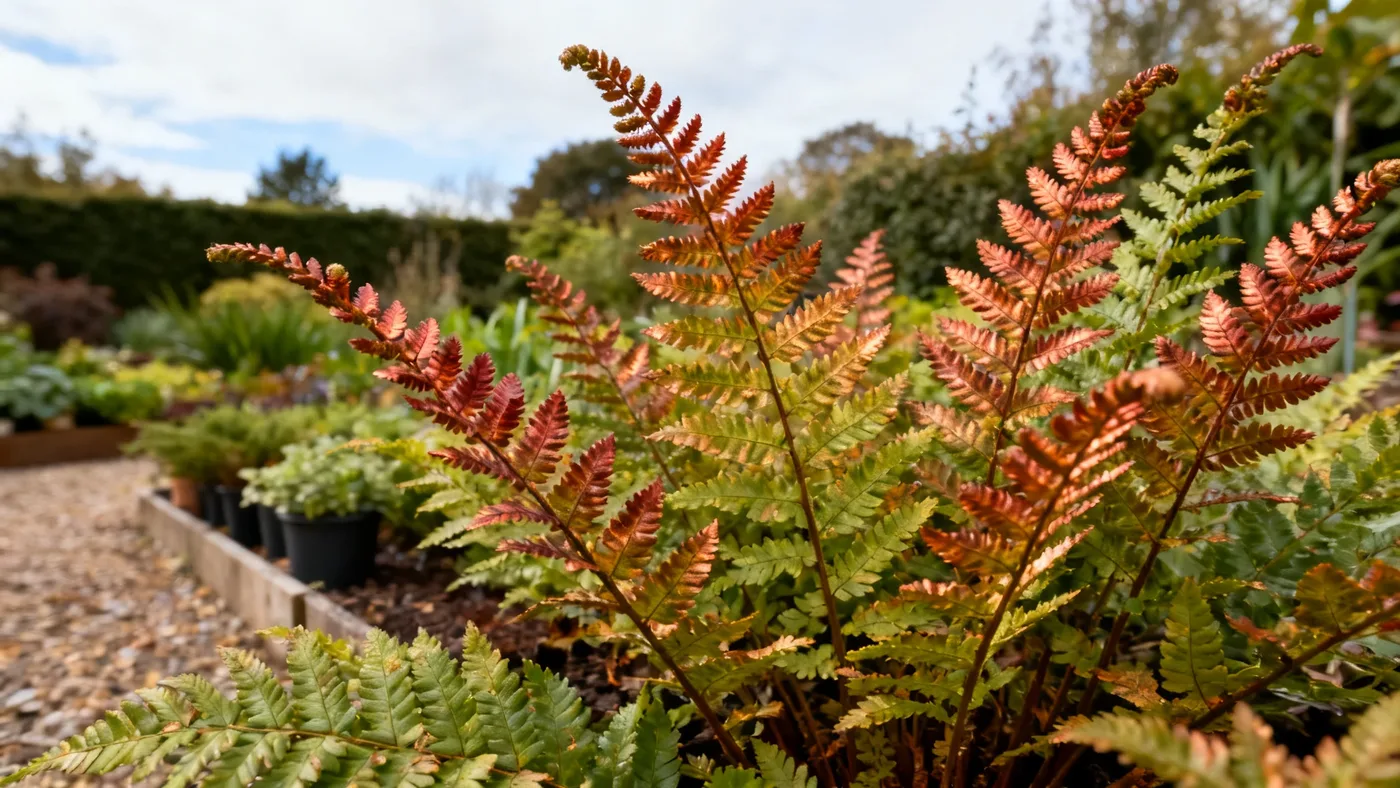
Brilliance Autumn Fern Shade Tolerance: How Dark Is Too Dark?
Brilliance Autumn Fern is built for shade. This evergreen fern from East Asia thrives in the low-light conditions where many other plants struggle, making it an invaluable choice for woodland gardens, shaded borders, and the darker corners of your yard. But if this plant loves shade, what does "too dark" actually mean? The answer is more nuanced than you might think, and understanding the difference between ideal shade and genuinely problematic darkness will help you place your fern where it grows best.
Understanding the Plant's Natural Shade Preference
Brilliance Autumn Fern naturally occurs in forests and woodlands across East Asia, where it grows beneath the canopy of taller trees. This heritage makes it a part shade to full shade plant. Unlike sun-lovers that languish in low light, this fern actually prefers conditions without direct afternoon sun. The distinction matters: shade tolerance means the plant survives in shade. Shade preference means it performs better there.
What does "too dark" mean for this plant? In practical gardening terms, extremely dark conditions fall into two categories. First, there is the indoors-only scenario: if your space receives no natural light at all, indoors under artificial light only, then yes, that is too dark. Second, there is the air circulation problem: shade so dense that moisture lingers on fronds all day, creating fungal conditions, is problematic for any fern. Brilliance Autumn Fern tolerates morning sun in cooler climates (zones 5-6) if soil moisture stays consistent, but it does not need sun to thrive.
Assessing Your Garden's Light Conditions
Before planting, spend at least one day observing your site. Most gardeners either overestimate or underestimate their shade. Here is how to assess accurately.
- Track direct sun exposure over a full day. Note what time the sun first reaches the site and when it leaves. Count the hours of unobstructed direct sun. Brilliance Autumn Fern performs well in spaces receiving 2 to 4 hours of morning sun and filtered light the rest of the day. It also thrives with zero direct sun, as long as the area is not pitch-black all hours.
- Identify what is casting the shade. Shade from a north-facing building wall is consistent year-round. Shade from deciduous trees changes seasonally, meaning more light reaches the ground in winter and spring. For a fern, deciduous shade is often ideal: it gets some dappled light during the growing season and rests in deeper shade when dormant or semi-dormant.
- Observe moisture patterns. Shaded areas often stay moist longer, which suits Brilliance Autumn Fern well since it prefers consistent moisture. However, shade that stays wet and airless (like against the side of a building with poor drainage) can lead to crown rot and fungal issues.
- Check for air movement. Even in shade, gentle air flow helps keep fronds dry and prevents mold. A site under a canopy with open sides will have better airflow than a dense corner enclosed by walls and hedges.
Materials Needed for Shade Assessment and Setup
- Notebook or smartphone camera for recording light observations
- Sunlight hours timer (optional phone app) to track direct sun duration
- Soil moisture meter to check existing soil moisture levels
- Thermometer to monitor temperature fluctuations in deep shade areas
- Compost, leaf mold, or humus to amend soil for moisture retention
- Rain gauge or watering can to establish a moisture baseline
Creating Ideal Shade Conditions for Your Fern
If your garden receives too much direct sun or lacks the moisture-retentive soil this fern needs, you can modify conditions. Here are practical steps to optimize the planting site.
- Prepare the soil before planting. Brilliance Autumn Fern requires humusy, organically rich, well-drained soil with a pH between 5.5 and 6.5. Dig a planting hole about 18 to 24 inches wide and deep. Mix the excavated soil with 2 to 3 inches of compost or leaf mold. This amendment increases water-holding capacity in sandy soils and improves drainage in clay soils. Aim for soil that stays consistently moist but does not puddle.
- Add shade structure if needed. If your site receives morning or afternoon sun and you want to reduce it, install a shade cloth rated for 30 to 50 percent light reduction. Mount it on the south or west side of the planting area to block hot afternoon rays while allowing morning light. Alternatively, plant the fern near existing shade sources: under tree canopies, on the north side of walls or fences, or near shrub borders.
- Space plants 18 to 24 inches apart if creating a mass planting or groundcover. This spacing ensures each fern receives adequate air circulation even in shade and reaches its mature size of 18 to 24 inches in width without crowding neighbors.
- Water deeply after planting. The first year is critical. Even though the fern prefers shade, newly planted specimens are not yet drought tolerant. Water consistently so the top 2 inches of soil stay moist but not soggy. Reduce watering frequency once established, but continue providing medium, consistent moisture during the growing season.
Common Mistakes to Avoid
Mistake 1: Confusing dappled shade with heavy shade. Dappled shade, where light filters through branches and creates a pattern on the ground, is ideal. Heavy shade, where little to no light penetrates all day, may slow growth. If your site is so dark that you cannot read a newspaper at midday, your fern will grow, but more slowly and with smaller fronds.
Mistake 2: Placing the fern in a moisture trap. Shade corners where water collects and never dries encourage fungal disease. If you must plant in a low-lying shaded spot, add a raised mound of amended soil and ensure water can drain away from the crown. Do not let the fern sit in standing water.
Mistake 3: Assuming shade means no care. Even in deep shade, your fern needs consistent moisture, especially during the first growing season. Shade can mask dry soil because temperatures stay cooler and evaporation is slower, but the fern still requires watering in dry periods.
Mistake 4: Overwatering to compensate for shade. More shade does not mean more water. Monitor actual soil moisture, not assumptions. Soggy, anaerobic soil is worse for the fern than occasional dryness.
What to Expect: Growth and Performance
Brilliance Autumn Fern grows at a slow to moderate rate. Expect it to reach mature size (18 to 24 inches in height and width) in about 2 to 3 years after planting. Annual growth is typically a few inches of new frond length per year. In ideal shade with consistent moisture and rich soil, growth may be steady and new spring growth may display more of the distinctive coppery-red color the cultivar is known for. In deeper shade with cooler temperatures, the same plant may grow slightly slower and remain more uniformly dark green.
The fern retains its fronds through winter in zones 6 to 9, providing structure and color even when little else is visible in the shade garden. In zone 5 or during harsh winters, some fronds may flatten or bronze but typically recover as new growth emerges in spring. This semi-evergreen behavior makes it a long-lived perennial that may persist 10 or more years with proper moisture and shade.
For more comprehensive guidance on caring for your Brilliance Autumn Fern beyond shade management, see the Brilliance Autumn Fern care guide, which covers feeding, pruning, and seasonal tasks.
Quick Reference: Shade Tolerance Checklist
| Light Condition | Daily Direct Sun | Best For Brilliance Autumn Fern? | Notes |
|---|---|---|---|
| Full Sun | 6+ hours | No | Frond scorch likely. Requires consistent watering to prevent stress. |
| Morning Sun | 2-4 hours | Yes (Zones 5-6) | Ideal in cool climates with consistent soil moisture. Afternoon shade essential. |
| Dappled Shade | 1-2 hours filtered | Yes | Ideal condition. Light varies with season; fern adapts well. |
| Part Shade | 0-1 hour | Yes | Excellent. Fern thrives here with minimal stress. |
| Full Shade | 0 hours | Yes | Fern performs well. Growth may be slower; ensure air circulation. |
| Indoors / No Natural Light | None | No | Too dark. Fern decline is likely without supplemental grow lights. |
Spacing for Multiple Plants: Plant 18 to 24 inches apart to allow air circulation and mature-size growth.
Soil pH Target: 5.5 to 6.5 (acidic to neutral)
First-Year Watering: Keep top 2 inches consistently moist; reduce frequency once established
Expected Maturity: 2 to 3 years to full size