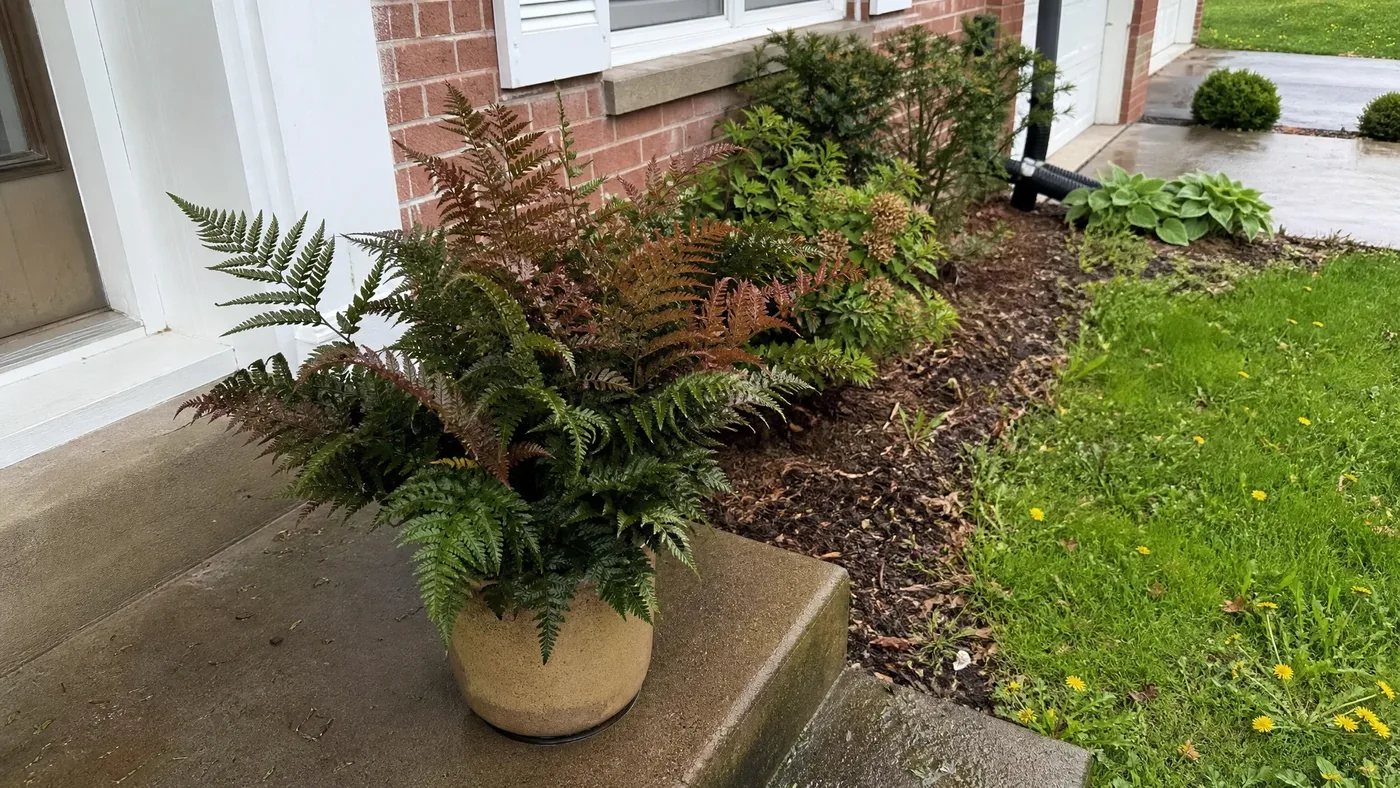
Growing Brilliance Autumn Fern Indoors as a Houseplant
A customer wrote to us once about her grandmother's farmhouse kitchen, where a single fern sat on the same windowsill through every winter, on a saucer of pebbles, never fussed over and never once crisp. "What did she know," she asked, "that most of us forget?"
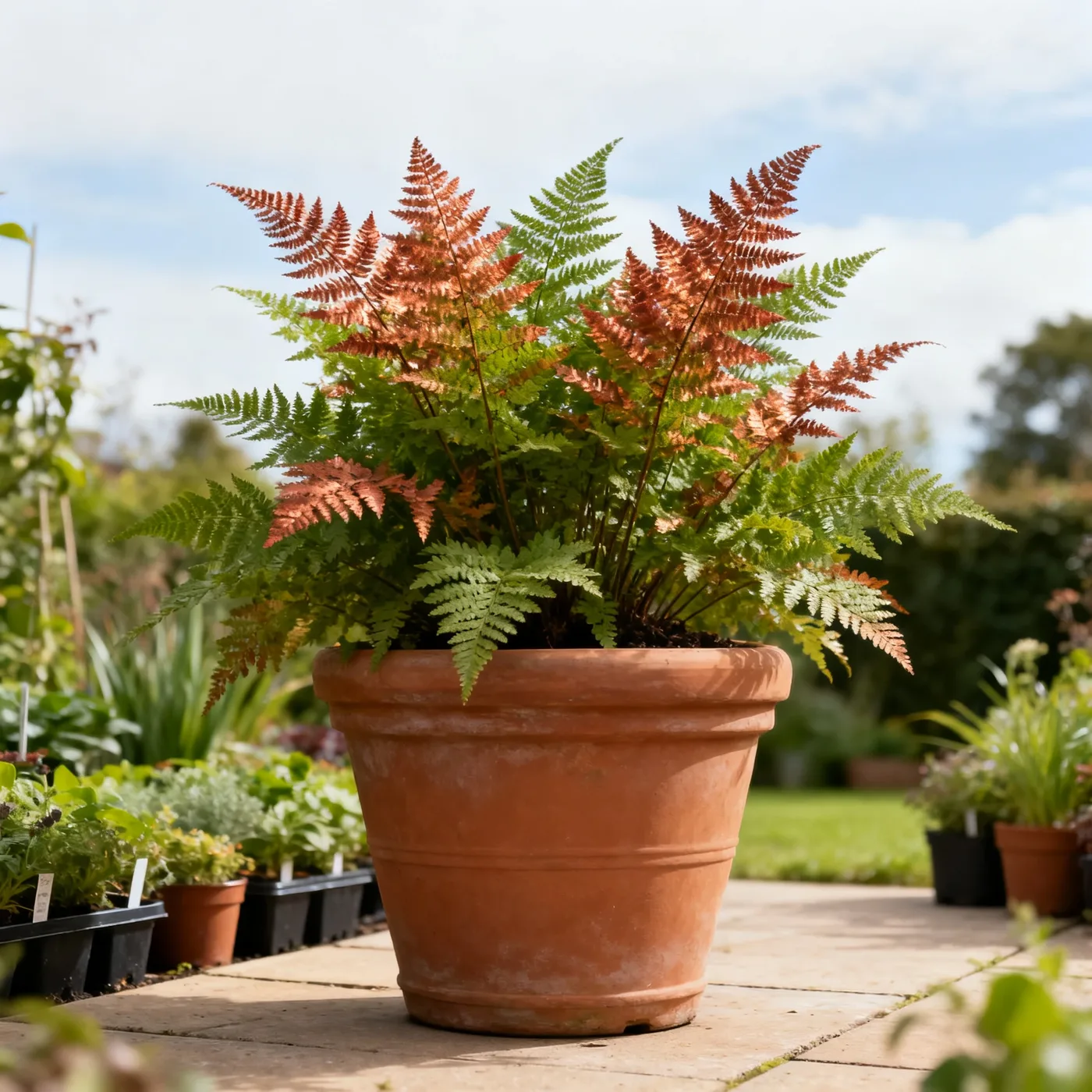
Mostly this: she gave it a cool, bright place, steady moisture and a little patience. Brilliance Autumn Fern is an outdoor evergreen at heart, so indoors it wants a room that feels like the edge of a shaded wood. In return it gives you dark, glossy fronds in the grayest months and a red flush when spring comes.
In this article, we'll go through choosing the sill, settling the pot, reading the light, and handling humidity, watering and the heating season.
A Windowsill Worth Choosing
Before you carry a pot indoors, find the spot. The sill decides most of what follows, and we start from that old kitchen window on purpose.
What the Old Sill Had Going for It
That farmhouse window gave a fern three things without anyone planning it.
It was cool, because old glass lets the chill through. The light was bright but soft, never baking. And the air carried a little steam from the kettle and the sink. Brilliance wants exactly that. It is easy to grow in cool, moist, lightly shaded sites and prefers a sheltered position. Because it is evergreen, the fronds you bring home in fall are the ones you will still be admiring in February.
Choose the Room Before the Plant Moves
Pick the coolest room that still gets good daylight. Most houseplant advice sends ferns to the warmest bathroom, and we would send this one the other way, since heat is what shrivels a woodland fern native to eastern Asia.
A north or east window suits it well. A west or south window works if you set the pot back from the glass. Stay clear of door drafts and heaters. The clump grows slowly, spreading by underground rhizomes, and its eventual size is about 1.5–3 feet tall and wide, reached over 5–10 years, so one good sill will hold it for a long time.
Settling the Pot Into Its First Room
Bringing the plant home is a small move for you and a big one for the fern, which has spent its life outdoors. Do it in a few quiet steps.
Choose a Pot That Drains
Drainage matters more than looks here, so start with the holes in the bottom.
Use a pot with drainage holes and a saucer that fits under it, only an inch or two wider than the root ball. A big pot holds wet mix around a small root system, and the roots sit in it for weeks. The fern's rhizomes grow near the surface, so set the crown level with the mix and do not bury it. Use a light, humus-rich potting mix that holds moisture and still drains. Our guide to growing Brilliance in outdoor pots covers the patio version, and the indoor routine below differs from it in most details.
Give It a Quiet First Week
A plant that has lived outdoors needs a few days to accept walls and glass. If it came from us, expect a nursery pot that has been outside, so treat the first week as a change of climate. Here is what we do.
- Look over the tops and undersides of the fronds and the surface of the mix before it comes inside, and rinse off any dust or hitchhikers.
- Put it in its chosen spot, out of direct sun and away from vents, and leave it there.
- Skip fertilizer and repotting for now, and expect it to shed an older frond or two while it adjusts.
- Check the mix every other day and keep it evenly damp.
Learning What the Light Is Doing
Light through a window is stronger and stranger than it looks, and it changes through the year. Spend a week watching it before you decide the spot is right.
Read the Brightness Through Glass
This cultivar suits full shade or partial shade, and NC State describes partial shade as direct sun for only part of the day, 2 to 6 hours. Indoors, window glass does not intensify sunlight, but sun through a south- or west-facing window can still heat and scorch leaves, so aim at the shadier end and keep this fern in bright, indirect light, away from hot glass. Hold your hand over the leaves at midday. A soft, blurry shadow means good light. A crisp, dark shadow means too bright.
The fronds will tell you the rest. This table shows what to look for and what to do.
| What you see | What it means | What to do |
|---|---|---|
| Fronds look washed out or have bleached patches | Direct sun is landing on them | Slide the pot back from the glass or filter the light with a sheer curtain |
| Growth is floppy, spaced out and dull | Too little light | Move closer to the window |
| Dark, glossy fronds that hold their shape | The spot is right | Leave it alone |
Shift the Plant With the Sun
The sun's angle changes the room, so the plant has to shift with it.
In winter the low sun reaches deep into the room and can find a fern that was safe in July. In summer the high sun stays off the sill, and the same spot may turn dim. Move the pot a little as the seasons turn, and give it a quarter turn every week or two so all sides get light. Our sun requirements guide goes deeper on the outdoor side.
Keeping the Air Soft Around the Fronds
Brilliance is a plant of damp woods, and most homes are drier than any wood. Raising the humidity is a small habit rather than a project, and it is the one thing the old saucer of pebbles got right.
Set Up a Pebble Tray
A pebble tray is the simplest humidity tool we know, and it costs almost nothing.
Fill a shallow tray with pebbles and add water until it comes just below the tops of the stones. Stand the pot on the pebbles so the base stays dry above the water line. A pot sitting in water will rot its roots, so keep the water below the base. As the water evaporates it softens the air right around the fronds. Top the tray up whenever you water and the habit will run itself.
Group, Place and Skip the Mist
Pebbles are the base of the habit. A few placement choices add to it.
Stand the fern with other plants, because a cluster of leaves holds moisture better than a lone pot. Keep it away from heating vents, radiators, and the blast from a fan or the cold draft of an outside door. We would also skip daily misting. A mist dries within minutes and leaves nothing behind, while a tray and a grouped spot work all day. Your time is better spent on the tray.
Finding a Rhythm With the Watering Can
Watering is where indoor ferns are won or lost. The aim is a mix that is always a little damp and never soggy, and you will find it by feel.
Judge by Touch and Weight
NC State says this fern likes acidic, constantly moist soils that are high in organic matter. Constantly moist does not mean wet, so test before you pour.
Push a finger into the mix up to the first knuckle. If it feels cool and damp, wait. If it feels dry, water slowly until it runs out of the holes, then empty the saucer after a few minutes. Lift the pot right after a good watering to learn how heavy it feels when full, and again before the next one. A light pot is a thirsty one, and after a few weeks your hand will tell you the answer before your finger does.
Slow the Pace Indoors
Indoors, there is no rain, no wind and less sun, so the pot dries more slowly than a garden bed or an outdoor container. Most people overwater at first because they carry the outdoor schedule inside. Water by the feel of the mix, not by the calendar. The fern is evergreen, so it never goes dormant and never wants to dry out completely. If your tap water is very hard, an occasional jug of rainwater is a kindness. Our watering guide has the outdoor details.
When the Heating Comes On
The heating season is the real test of a fern on a sill, and it is when the old farmhouse method pays off. Warm, dry air pulls moisture from the fronds faster than the roots can supply it.
Pull Back and Cool Down
One of the most common questions we get each January is why the frond tips have turned brown, and the answer is nearly always a radiator or a vent. Here is what we tell customers to do.
- Move the pot well away from any heat source, even if that costs you the brightest spot.
- Choose the coolest room you can, and turn the heat down at night if you can.
- Pull the pot back from the glass on very cold nights so the fronds do not touch cold glass.
- Top the pebble tray up more often and check the mix more often, because warm air dries the pot faster.
The cold itself is no worry. UF/IFAS lists the species as hardy in zones 5 through 11, so a cool room suits it far better than a warm one.
Know What Is Normal
Dry air shows first at the tips of the oldest fronds. Cut a crisp frond off at the base and the plant carries on. In autumn you may also see bright orange-red dots on the undersides of the fronds. Those are ripe spores, which is how a fern reproduces since it has no flowers, and they are not a pest. Leave them be.
Spring Fronds Unrolling Indoors
Around the time the days lengthen, the plant begins to wake, and this is the part customers tell us they enjoy most.
Watch the Red Flush
New fronds rise as tight coils from the crown and unroll slowly. They come in red in spring, turning to coppery pink and then dark glossy green, and that is the show a sunny winter sill finally pays out. Do not handle the coils, and keep watering steadily. As the light grows stronger, check the sun on the sill again and move the pot back if the new fronds begin to bleach.
Tidy the Old Fronds and Refresh the Pot
Once the new growth is up, the old fronds can go. Dead or damaged fronds may be removed as necessary, so cut only those, at the base, with clean scissors. Our guide to pruning Brilliance fronds covers the details.
Then look at the pot. Scrape off the top of the mix and add fresh mix. Repot only if roots crowd the pot, since this fern grows slowly. If it ever outgrows its sill, spring is also the time to divide it.
A Fern That Stays for Years
A year indoors asks for very little. Pick the cool, bright sill, set the pot to drain, read the light as it moves, keep the air soft with a tray of pebbles, water by weight, and pull back from the heat when winter comes. Do those few things, and the fern repays you with fronds that stay green through the months when little else in the house is growing, and a red flush every spring to prove it was worth the wait. Give it its 5–10 years and the clump fills out with the same easy habits.
Brilliance Autumn Fern
Nursery-grown Brilliance Autumn Fern in sizes from 4 Inch, shipped to your door.
From $16.99
Shop Now →Picture that sill a few winters on: the same pot on the same pebbles, fronds dark and glossy beside the window while frost builds on the outside of the glass. Customers come back to us for Brilliance because it earns that place with so little fuss, and as a small business with our own farms, we grow and sell top-quality ferns for exactly that reason.