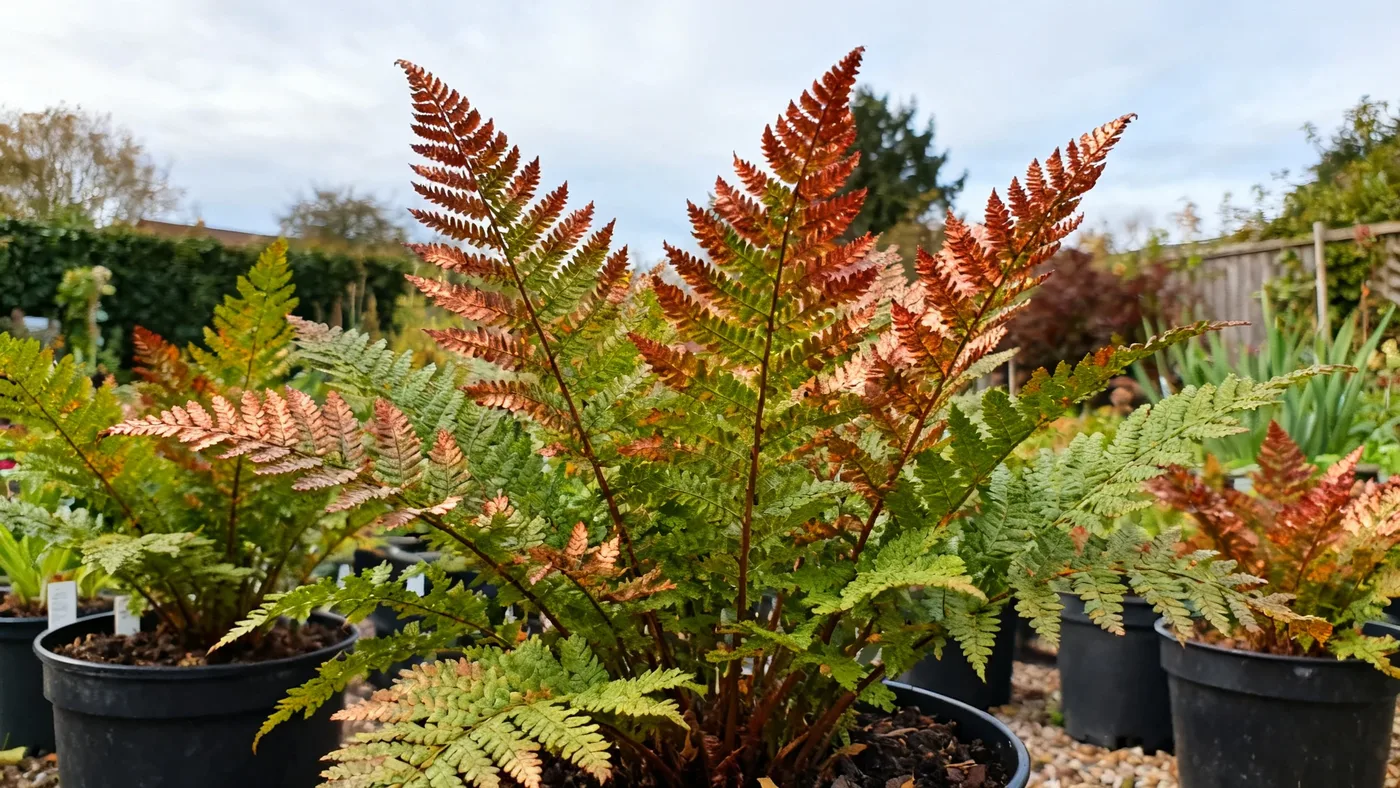
Do You Need to Fertilize Brilliance Autumn Fern?
The short answer: Brilliance Autumn Fern is not a heavy feeder. In fact, overfeeding is a more common mistake than underfeeding. A light application of fertilizer in spring is usually all this plant needs to thrive, though the best approach often involves adding compost or leaf mold annually instead of relying on commercial fertilizers.
This guide walks you through everything you need to know about feeding your Brilliance Autumn Fern, including when, how, and why to fertilize, plus what to expect from a well-fed plant.
Do Brilliance Autumn Ferns Actually Need Fertilizer?
Brilliance Autumn Fern (Dryopteris erythrosora 'Brilliance') grows slowly and steadily without heavy nutrient demands. The plant reaches its mature clump size of roughly 18 to 24 inches tall and wide in about 2 to 3 years, with only a few inches of new frond growth per year. This modest growth rate means the plant does not exhaust soil nutrients quickly.
However, fertilizing can help. A well-fed fern may produce slightly more vigorous new fronds and maintain deeper color in its foliage. In poor or depleted soil, a light feeding in spring offers visible benefits. In rich, organically dense soil, the plant often performs well without added fertilizer.
The key is "light application." Ferns are evolved to grow in shaded woodland floors where organic matter breaks down slowly and nutrients remain modest. Too much fertilizer can lead to soft, weak frond growth that is more prone to pest problems and disease.
When to Fertilize Brilliance Autumn Fern
Timing matters. Apply fertilizer once per year, in spring, as the plant is beginning to produce new fiddleheads. This is typically around the same time you would prune off any winter-damaged fronds, which usually means late winter to very early spring in zones 5 to 9.
In warmer zones (8 to 9), where Brilliance Autumn Fern remains fully evergreen, new growth emerges earlier, so move your feeding date to very early spring. In cooler zones (5 to 7), where the plant is semi-evergreen and may have frost-burned fronds, wait until you see active new growth before feeding.
Do not fertilize in summer, fall, or late winter. The plant is not actively growing at these times, and fertilizer applied when growth has slowed can accumulate in the soil and burn the delicate roots.
What Kind of Fertilizer to Use
Two approaches work well for Brilliance Autumn Fern.
Balanced, Slow-Release Fertilizer
A balanced, slow-release fertilizer (such as a 10-10-10 or similar N-P-K ratio) is the simplest choice. "Slow-release" means the nutrients are released gradually over weeks or months, rather than all at once, which reduces the risk of fertilizer burn.
Choose a product labeled for houseplants, ferns, or shade plants. Avoid high-nitrogen formulas meant for lawn grass or heavy feeders like tomatoes. These overload the plant with more nutrients than it can use.
Organic Top-Dressing (Often the Best Route)
Many experienced gardeners skip commercial fertilizer entirely and instead apply an annual top-dressing of compost or leaf mold in spring. This approach mimics what happens naturally in a woodland and supplies gentle, steady nutrition as the organic matter breaks down.
A 1-inch layer of well-aged compost or leaf mold spread around the base of the plant (keeping it away from the crown to prevent rot) is usually sufficient. This is especially effective if you have already planted your fern in organically rich, well-drained soil, as detailed in the care guide for Brilliance Autumn Fern.
How to Fertilize Brilliance Autumn Fern: Step-by-Step
If Using Slow-Release Fertilizer
- Wait until you see new fiddleheads beginning to unfurl, typically in early spring (March to April in temperate zones, earlier in zones 8 to 9).
- Water the plant thoroughly one day before applying fertilizer. A moist soil root zone allows the plant to absorb nutrients more safely.
- Read the label on your slow-release fertilizer and use only the recommended amount for your plant's size. For a mature fern (18 to 24 inches wide), a light application is usually 1 to 2 tablespoons of granular product, or the equivalent dose as a liquid.
- If using granular fertilizer, scatter it evenly over the soil surface, staying 2 to 3 inches away from the crown of the plant.
- If using liquid fertilizer, dilute it to half strength (use half the recommended dose) and apply it directly to the soil, again avoiding the crown and new growth.
- Water gently after application to help the fertilizer reach the root zone.
- Do not apply fertilizer again until the following spring. One light feeding per year is sufficient.
If Using Compost or Leaf Mold
- In early spring, gently clear away any old, deteriorated fronds or leaf litter around the base of the plant.
- Layer 1 inch of compost or leaf mold around the plant's base, creating a ring that stops 2 to 3 inches away from the center crown.
- Water lightly to settle the compost and help it begin breaking down.
- Repeat this annual application each spring for as long as you maintain the plant.
The compost will gradually incorporate into the soil, enriching it year after year. After several years, your soil becomes increasingly rich and may eventually provide enough nutrition that additional feeding is unnecessary.
Tips for Success
Water after feeding. Whether you use commercial fertilizer or compost, always water after application to activate the nutrients and move them into the root zone.
Feed only in spring. A single light application in spring is ideal. Do not feed again in summer or fall. Extra feedings will not make the plant grow faster (remember, Brilliance Autumn Fern is a slow grower by nature) and can weaken the plant.
Choose organically rich soil. If your fern is planted in poor, compacted, or clay-heavy soil, fertilizing alone will not fully solve the problem. Consider amending the soil with compost at planting time or over several seasons. See the complete care guide for more details on soil preparation.
Watch for signs of overfeeding. If fronds look soft, pale, or wilted shortly after feeding, stop fertilizing. These are signs that excess nutrients have accumulated. Flush the soil by watering deeply and thoroughly over several days.
Match feeding to soil condition. If your Brilliance Autumn Fern is already planted in rich, dark soil full of organic matter, you may not need to fertilize at all. Observe the plant's growth and color for one year before deciding. If the fronds look vigorous and the plant is producing new growth steadily, skip the fertilizer.
Common Mistakes to Avoid
Overfeeding is the number one mistake. Ferns are not heavy feeders. A single light application each spring is far more appropriate than monthly feeding or multiple doses.
Using high-nitrogen fertilizers meant for leafy greens. While Brilliance Autumn Fern does have attractive foliage, it is not a nitrogen hog. A balanced 10-10-10 or similar product is better than a 20-5-5 or similar high-nitrogen formula.
Fertilizing in summer or fall. The plant is dormant or semi-dormant at these times. Fertilizer applied then sits in the soil and can cause salt buildup, which damages roots.
Applying fertilizer to dry soil. Always water the plant well before fertilizing. Fertilizer on dry soil can burn roots. If you have forgotten and the soil is dry, water first, wait until the next day, then apply fertilizer.
Applying fertilizer directly against the crown. Keep all fertilizer, whether granular or liquid, 2 to 3 inches away from the center crown of the plant to avoid rot and crown damage.
What Results to Expect
A well-fed Brilliance Autumn Fern in appropriate growing conditions (part shade to full shade, consistent moisture, acidic to neutral soil pH of roughly 5.5 to 6.5) may produce new fronds with slightly more robust color and structure. Consistent moisture and spring feeding together may support steady, healthy growth over the plant's long lifespan.
However, do not expect dramatic size increases. Brilliance Autumn Fern grows slowly by nature, adding only a few inches of new frond growth per year. This slow growth is one of its strengths in the landscape. A mature plant will reach 18 to 24 inches in height and width in about 2 to 3 years, with or without supplemental feeding. Proper watering and shade are more critical to the plant's success than fertilizer.
The most noticeable results come from consistent watering. Fertilizer is a supporting player in good fern care. For more details on watering, see the guide to watering Brilliance Autumn Fern.
Quick Reference: Fertilizing Brilliance Autumn Fern
| Task | When | How Much | Notes |
|---|---|---|---|
| Apply slow-release fertilizer | Early spring, when fiddleheads emerge | 1 to 2 tablespoons for mature plant | Water well before and after |
| Apply compost or leaf mold top-dressing | Early spring | 1-inch layer around base | Stay 2 to 3 inches from crown |
| Water before fertilizing | One day before feeding | Thoroughly | Moist soil absorbs nutrients safely |
| Prune winter damage | Late winter to very early spring | As needed | Remove dead or tattered fronds only |
| Do not fertilize | Summer, fall, late winter | N/A | Plant is not actively growing |
| Repeat annual feeding | Next spring | Same amount | Once per year is sufficient |