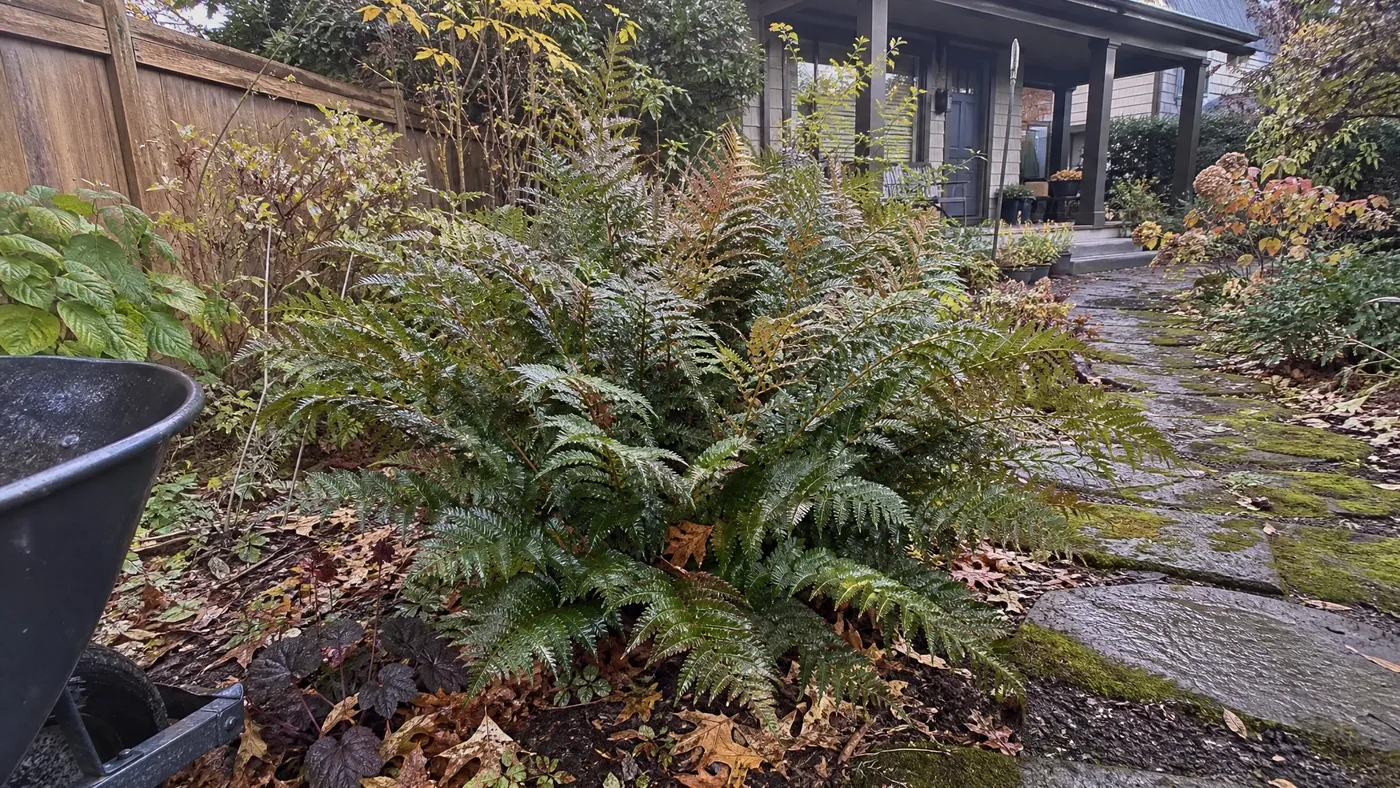
Does Brilliance Autumn Fern Actually Have Fall Color?
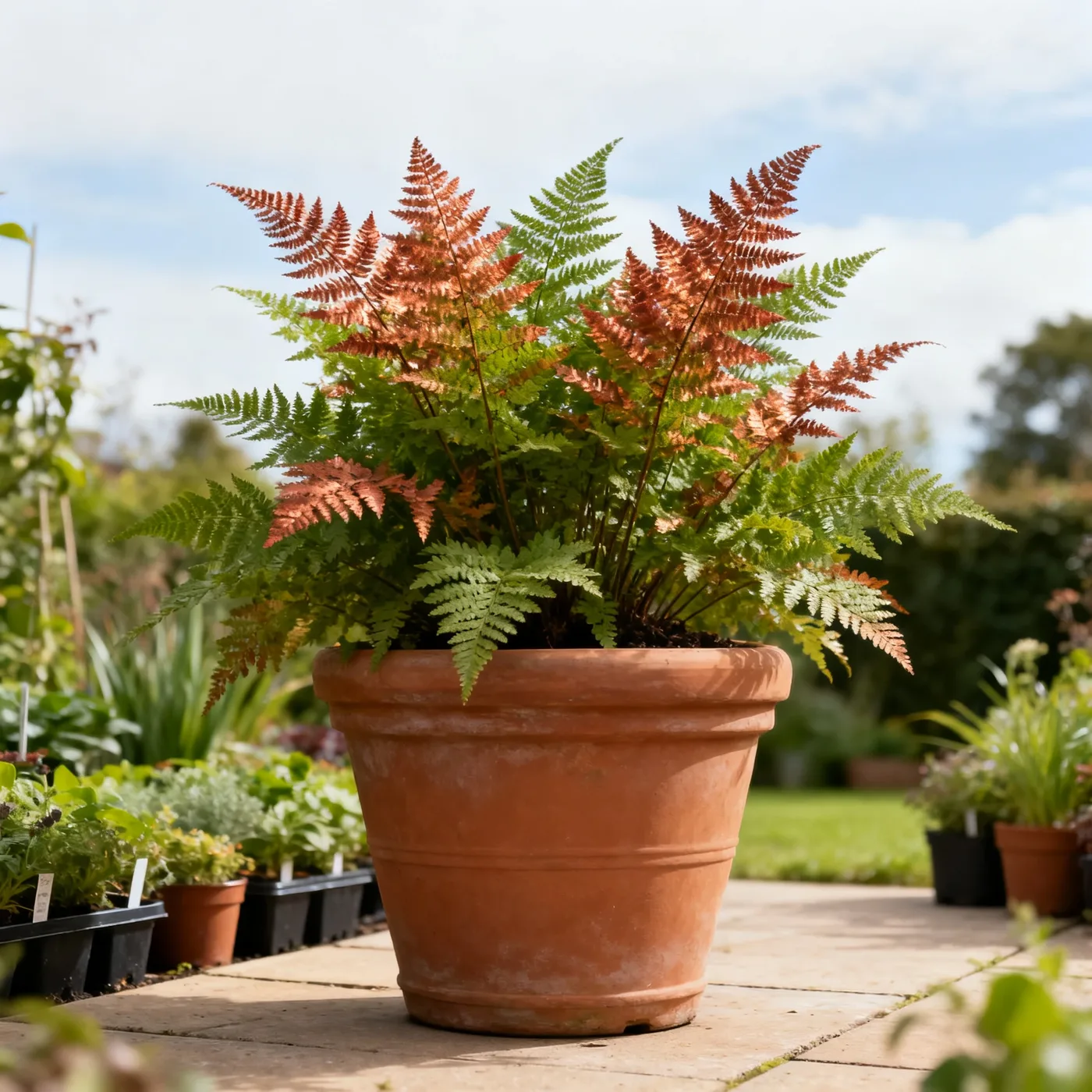
Three is the number to remember: red, coppery pink, then dark glossy green. Those are the stages a new Brilliance frond passes through, and they explain nearly every color question we hear about this fern. The red is real and it is striking. It just is not the kind of fall color the name suggests.
Getting this wrong has a cost. You wait for an October show that never comes, then worry that a plant holding its green must be sick. Knowing when the color happens lets you plan the bed around it and then leave the plant alone.
Below, you'll find out all about how Brilliance colors up, including how a frond is built, what actually happens in autumn, how the fern behaves in winter, and what light and moisture do for the spring flush.
How This Fern Grows From the Ground Up
The color makes sense once you see how the plant is put together. Brilliance is a fern, so it works differently from a shrub or a perennial with flowers.
Rhizomes and the Crown
Underneath the fronds sits a crown, a tight knot of growing points. Plants spread slowly over time through underground creeping rhizomes. Those rhizomes are thick, horizontal stems that creep just below the surface and send up new growth at their tips. That is why a clump widens gradually instead of exploding.
It also explains why the plant is slow to bulk up. The cultivar takes 5–10 years to reach maturity, at roughly 1.5–3 feet tall and wide. The species is listed a little shorter, at 1.5–2 feet tall and 2–3 feet wide.
Fronds From Coil to Canopy
Every frond starts as a tightly rolled coil that rises from the crown and slowly unfurls. The unrolling is where the red lives. Young tissue is the colorful tissue, and it is on display for only a short stretch before it hardens off into mature green.
Ferns also skip flowers entirely. The species has no flowers and no fruit, and it reproduces by spores. So the only things this plant can show you are frond color, frond shape and, later in the year, spore clusters. Color is the whole performance, and its timing is tied to new growth.
A Woodland Plant at Heart
The species comes from eastern Asia, and its habits make sense for a plant of that kind of ground. It is a shade dweller that likes to stay moist and sheltered, with a crown tucked into leaf litter and rhizomes running through it.
That background is the key to growing it well. Give a Brilliance something close to a woodland floor and it behaves. Put it on a hot, dry, windy bank and the fronds suffer, however good the cultivar is.
Where the Red Comes From
The red is a young-frond trait. It appears as fronds emerge and fades as they age, so what you see depends on what stage each frond has reached.
Brilliance is an evergreen fern with red new fronds in spring turning to a coppery pink then dark glossy green. That sequence is the entire color story. The table below lays out the stages.
| Stage | What you see | What it means |
|---|---|---|
| Red | Freshly unfurling fronds in spring | The peak of the show, and the reason for the name Brilliance |
| Coppery pink | Fronds expanding and softening | The transition, when old and new shades mix in one clump |
| Dark glossy green | Mature fronds | The backbone of the plant for the rest of the year |
The species follows the same path with a less dramatic start. Its fronds emerge coppery pink and turn green as they mature. Brilliance is the cultivar that starts redder, so it looks noticeably hotter in spring than a plain Japanese shield fern beside it. Our comparison of Brilliance and the species goes through the other differences.
The clump is never one color. Old green fronds hang on while new red ones rise through the middle, and that layering is what makes the plant look so lit up. Look closely and you can read the clump like a timeline, with the newest growth at the center and the oldest at the edges.
Does It Change Color in Fall?
The short version is no, not in the way a maple or a hosta does. The fern does not wait for cool nights and then flip its whole canopy.
Autumn fern is actually evergreen, with fronds that brighten the winter landscape. Brilliance is evergreen as well. Evergreen fronds keep their dark glossy green through the seasons instead of turning yellow and dropping.
One of the most common questions we get is when the leaves turn red. The honest answer is that the red already happened, in spring. This cultivar does show coppery tones in fall, and you may see a warm cast on some fronds as the weather cools. Treat it as a faint tint, not a seasonal event to plan around.
What You Will and Will Not See
If you buy this plant expecting orange and crimson in October, you will be disappointed. If you buy it expecting a glossy clump that holds its looks from one year to the next, with a red flush in spring, it will deliver.
A few yellowed or browned fronds on older growth are normal as the plant renews itself, and they do not signal a color change. Widespread browning is another matter. That usually points to dry soil or wind, and our guide to common problems walks through the causes.
The Spore Clusters Behind the Name
There is real red in autumn, but you have to turn a frond over to see it. This is the other half of the name puzzle.
Ferns carry their reproductive structures on the undersides of the fronds. On Brilliance, bright orange-red ripe spores appear on the undersides of the leaves in autumn. The species name, erythrosora, means "red sori," the clusters of spore cases, and it points to the bright red covering on them.
So the common name does have something to point at. Two real autumn events fit it, the coppery tint on some fronds and the ripening red spore clusters. Neither one is a fall foliage change.
These clusters are small and easy to miss unless you look. They are a fine reason to lift a frond on a September walk, and they are the plant's quiet nod to its name. Spores are how ferns spread in the wild, though in a garden the slow rhizome creep is what you will notice.
What Winter Does to the Fronds
Because the fronds stay, winter is where the evergreen claim gets tested. How well they hold up depends on your climate.
The species is hardy in zones 6b–12b according to NC State and in zones 5 through 11 according to UF/IFAS. It is also semi-evergreen. That wording matters in colder zones, where fronds can look battered by late winter even though the plant is fine underneath. Our winter care guide covers what to do at the cold end of the range.
Wind does more harm than cold in many yards, so protect plants from drying winds. A frond that has dried out will not recolor, so a sheltered spot beats any extra care.
Come late winter, dead or damaged fronds may be removed as necessary. What we tell customers is to wait until new growth shows, then trim only the tired ones. That way you do not cut away cover that is still doing its job. The pruning guide has the details.
Light and Moisture Set the Spring Show
You cannot make this fern turn red in fall, but you can influence how good the spring flush looks. Two things do most of the work.
Shade, With Some Brightness
The cultivar suits full shade or partial shade. Partial shade means direct sun for only part of the day, 2–6 hours. In our rows, plants that get bright, dappled light tend to look richer than ones buried in the deepest shade. See our sun requirements guide for how much is too much.
It will grow in full sun with plenty of moisture, but we do not recommend it. Scorched fronds are the quickest way to lose the color you came for.
Steady Moisture and Acid Soil
This fern likes acidic, constantly moist soils high in organic matter, with a preferred pH under 6.0. The cultivar is more relaxed and grows in acid, alkaline or neutral soils. Take that as tolerance, not preference. A fern that never dries out pushes out strong new fronds, and strong new fronds are the colorful ones.
Use this checklist when spring color looks weak.
- Check that the soil has stayed evenly moist through the previous summer, not just damp after rain.
- Look for wind exposure that could be drying young fronds as they unfurl.
- Check for scorch from too much direct sun on the newest growth.
- Count the years. A young plant has fewer fronds, and the show builds as the clump matures.
Placing It Where the Color Pays Off
Once you know the red belongs to spring, design around it. The fern is the anchor, and its neighbors can carry the other seasons.
Pair Brilliance with plants that color in fall or flower in summer, and let the fern supply spring heat and winter green. Our landscape ideas for shade gardens show combinations that work.
This fern is also low-fuss. It is generally pest-free and disease-free outdoors, and deer seldom damage it. That makes it a steady green frame for the beds around it all year.
A dense evergreen clump also gives ground-level cover through the cold months, and a shaded bed with ferns, leaf litter and moisture is the kind of habitat small woodland creatures tend to use. Look under the fronds on a damp morning and see who is home.
Plant it, give it moisture and shelter from wind, and leave it alone. Fussing with fertilizer or constant tidying will not deepen the red.
Brilliance Is Evergreen, Red When Young
Here is the whole answer in one place. Brilliance does not have fall color in the usual sense. It is evergreen, with red new fronds in spring that pass through coppery pink and settle into dark glossy green. In autumn, the real event is the orange-red spore clusters on the undersides of the fronds, plus a coppery cast on some fronds.
Brilliance Autumn Fern
Nursery-grown Brilliance Autumn Fern in sizes from 4 Inch, shipped to your door.
From $16.99
Shop Now →Plant it in moist, sheltered shade, give it years to fill out, and enjoy the spring flush. Every Brilliance we ship is potted and packed by our own growers on our own farms, so it arrives ready to plant and ready to put out that first red growth.