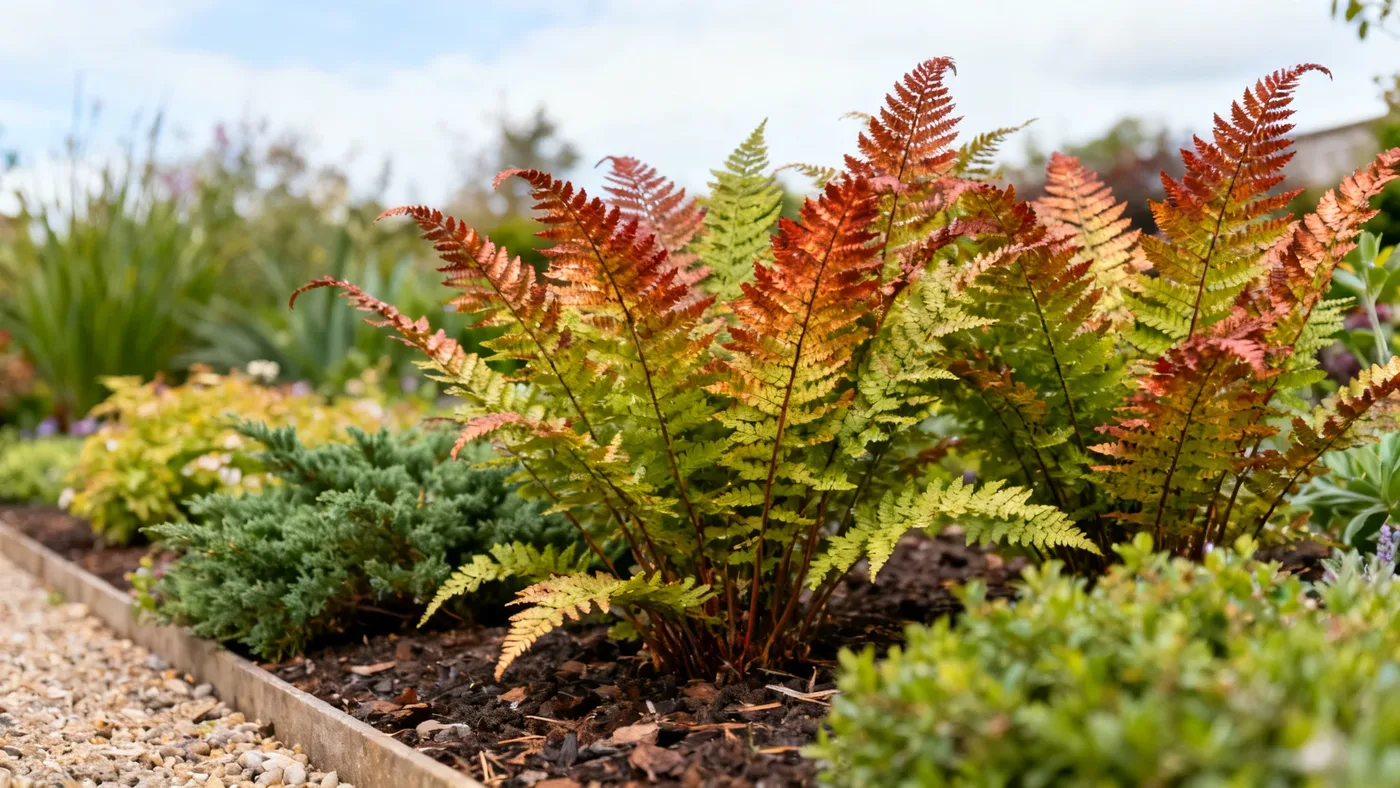
15 Landscape Ideas for Brilliance Autumn Fern in Shade Gardens
Brilliance Autumn Fern brings both practical coverage and seasonal color to shaded gardens. Its coppery-red spring emergence and glossy dark green mature fronds offer a two-season visual show without the fuss of flowering plants. At 18 to 24 inches tall and wide, it fills mid-level niches in shade and woodland gardens. If you're redesigning a difficult shaded corner or planning a woodland border, this cultivar pairs well with shade perennials, works in mass plantings, and holds its structure through winter in zones 6 to 9. Here are 15 proven brilliance fern landscaping patterns to adapt to your own shade garden.
1. Foundation Planting Against Shaded House Walls
Shaded house foundations often sit empty because many perennials refuse to flower in deep shade. Brilliance Autumn Fern thrives in these pockets. Plant it 18 to 24 inches from the foundation and space plants 18 to 24 inches apart. The consistent moisture that foundation beds often retain after rain is exactly what this fern prefers. New growth emerges in spring, and fronds hold through winter, giving your foundation visual interest even on January afternoons.
Pair foundation ferns with shade companions like heuchera or brunnera to break up the green. Heuchera adds metallic or burgundy foliage contrast, while brunnera's heart-shaped leaves echo hostas without the size commitment. The low, clumping habit of Brilliance Autumn Fern keeps foundation lines clean without the sprawl of other woodland groundcovers.
Practical takeaway: Space plants 18 to 24 inches apart in rows 2 feet from the foundation. Apply 2 inches of compost mulch annually, keeping it back 3 inches from the frond crown to prevent rot.
2. Shade Border Edging Under Deciduous Trees
Deciduous trees create the ideal setting for fern borders. Morning sun reaches the fern when trees are bare, and full shade arrives by midsummer. Plant Brilliance Autumn Fern in a single or double row along the dripline of a large oak, maple, or ash. The fronds will be backlit by filtered light, emphasizing their triangular shape and glossy texture. Space them 18 inches apart for a lightly populated border that fills gradually over 2 to 3 years.
This setup also solves a common problem: what to grow where tree roots and dry-summer shade clash. Brilliance Autumn Fern tolerates part shade to full shade and prefers consistent moisture. If rainfall is regular, the border thrives. In drought years, monitor soil moisture in late summer and water weekly if the top inch feels dry, especially during the first season after planting.
Practical takeaway: Orient borders so morning light filters through sparse tree branches. Avoid the darkest north-facing shade; this fern will tolerate it but will grow more slowly.
3. Mass Planting for Shade Groundcover Effect
A drift of Brilliance Autumn Fern under a woodland canopy mimics nature and suppresses weeds without requiring chemical groundcover spray. Plant 15 to 20 ferns in a loose grouping, spaced 18 to 24 inches apart, and let them fill in over three growing seasons. At maturity, they'll form an undulating carpet of green and bronze foliage. This approach works especially well under evergreen conifers like hemlock or spruce, where the fern's glossy fronds catch light year-round.
Mass planting also reduces labor. A larger drift needs less frequent edging and weeding than a few scattered specimens. Water the entire patch during establishment, then step back. Once roots establish, this fern asks for little beyond annual spring mulch refresh and removal of winter-tattered fronds in very early spring.
Practical takeaway: Count on a mature drift of 18 ferns to cover roughly 150 to 200 square feet, accounting for their slow-to-moderate growth rate.
4. Mixed Texture Border with Hostas
Brilliance Autumn Fern and hosta are classic shade companions for a reason. Hostas contribute bold, broad foliage, while ferns add airy, finely divided fronds. In a mixed shade border, alternate hostas (24 to 36 inches tall, depending on cultivar) with clusters of 2 to 3 Brilliance Autumn Ferns (18 to 24 inches tall). The fern's triangular fronds soften the hosta's architectural leaves. Together, they fill vertical space without visual monotony.
This pairing also staggers seasonal interest. Hostas peak in summer greenery, while Brilliance Autumn Fern's coppery spring emergence and winter persistence create bookend seasons. Plant ferns in humusy, organically rich, well-drained soil with a pH of 5.5 to 6.5, matching hosta requirements. Both plants appreciate annual spring compost top-dress and consistent moisture during the growing season.
Practical takeaway: Use a 1:2 or 1:3 ratio of hostas to ferns in a border. Larger hostas (like Blue Angel or Sum and Substance) can anchor multiple ferns in their shadow.
5. Softening Hard Landscaping with Shade Fern Borders
Concrete steps, stone edges, and shade structure plantings need softening. Brilliance Autumn Fern works well in planter beds beside shaded patios or around the base of shade structures. Its fronds arch slightly and won't obscure pathways; at 18 to 24 inches, it stays low enough to maintain sightlines. The coppery spring emergence adds a pop of unexpected color to early-season garden photos.
Plant in containers or in-ground near shaded seating areas. The fern's slow growth and tidy clump form mean it won't overgrow paths or require constant pruning. In late winter to very early spring, simply cut back any winter-damaged or tattered fronds to the crown, and new fiddleheads emerge within weeks.
Practical takeaway: For containers, use a moisture-retentive potting mix and place pots in a shaded location. Water when the top 2 inches feel dry; container plants dry faster than in-ground ferns.
6. Shade Garden Companion Planting with Astilbe
Astilbe and Brilliance Autumn Fern share love for shade and consistent moisture. Both prefer humusy, organically rich soil. Astilbe adds feathery plumes (pink, red, or white) in early to midsummer, while the fern provides textural depth before and after bloom. Plant astilbe where it will receive afternoon shade and ferns 18 to 24 inches away. The two foliages complement rather than compete.
This combination excels in moist, woodland-like settings. If your shade area stays damp (near a downspout, at the base of a slope, or in clay-heavy soil that stays moist), both plants thrive. Add 2 to 3 inches of compost or leaf mold at planting and annually thereafter. The moisture-rich soil keeps both plants' roots happy without creating the root rot conditions that occur in poorly drained clay without organic matter.
Practical takeaway: Ensure your soil drains well enough that water doesn't pond. If it does, plant in a raised bed or amend heavily with compost and aged bark before planting.
7. Rock Garden Shade Planting with Ferns
Shade rock gardens often sit empty because shade lovers typically avoid the dry soil around stones. Brilliance Autumn Fern breaks the mold. Plant it in pockets where soil stays consistently moist, even if surrounded by decorative stone. Create a small basin or mulch dam around each plant to hold moisture. Pair ferns with shade plants like hellebore (winter blooms, architectural foliage) and Japanese painted fern (pale blue fronds). The contrast of fern textures against dark stone is striking.
Space ferns 18 to 24 inches apart and avoid placing them immediately against south-facing stones that radiate heat. Shade rock gardens work best in dappled light, not full afternoon sun. If your site gets morning sun and afternoon shade, monitor soil moisture closely during the first season. Water weekly if rainfall is scarce.
Practical takeaway: Use pea gravel or slate mulch around ferns to maintain soil moisture and add visual interest without the bulk of bark chips.
8. Fern Border Ideas for Shaded Pathside Plantings
A low fern border alongside a shaded garden path guides the eye and softens the hardscape without obscuring the way. Brilliance Autumn Fern's compact 18-to-24-inch height is ideal for this role. Space plants 18 inches apart in a single row to create a linear accent. The coppery spring emergence will mark the path's opening each season, and glossy dark green fronds brighten shadowed walks through summer and fall.
This layout also makes spring cleanup easier. When it's time to remove winter-damaged fronds in late winter to very early spring, a linear arrangement means you can work methodically without navigating around multiple clustered plantings. The fronds arch naturally without requiring shaping; the plant's form is its own design statement.
Practical takeaway: Use a garden string to mark your planting line before digging. Straight rows feel intentional; irregular spacing looks accidental, even if unintended.
9. Fern Border Between Shade Perennials and Shrubs
Large shade shrubs like rhododendrons or shade-tolerant serviceberry create canopies that shade the ground below. Brilliance Autumn Fern fills that zone elegantly. Plant ferns 18 to 24 inches from the shrub's dripline, spaced 18 to 24 inches apart. The fern's mid-level height bridges the gap between low groundcovers and tall shrubs, creating visual depth. Its triangular fronds soften the bold foliage of rhododendrons or the irregular branching of shrubs.
Underplanting shade shrubs also keeps soil cool and retains moisture, a benefit both the fern and shrub appreciate. Water during establishment (the first year). Once established, the fern will draw moisture from deeper soil where the shrub's roots already draw water, creating a complementary system.
Practical takeaway: Plant ferns 2 to 3 feet from the shrub's trunk to avoid root competition. As the shrub and fern mature, they'll settle into comfortable coexistence.
10. Zone 5 to 6 Shade Garden Winter Structure Planting
In zones 5 and 6, most shade perennials die back completely by November. Brilliance Autumn Fern persists, offering winter interest when gardens run brown and gray. While fronds may flatten or develop bronze tones in harsh winters, they remain upright enough to provide form and visual texture. Plant in clusters of 3 to 5 for impact, spaced 18 inches apart, in high-visibility locations: near a pathway, at the edge of a patio, or against a light-colored wall where winter fronds read as sculpture rather than debris.
In zones 7 and warmer, fronds retain their green color through winter, making this fern an all-season presence. Either way, it's one of the few shade perennials that doesn't require complete removal in fall. Cut back tattered fronds only in very late winter to early spring, just as new fiddleheads emerge, preserving winter structure as long as it's visually appealing.
Practical takeaway: In zone 5, expect semi-evergreen behavior. Fronds may not emerge until late April or early May. Plan spring planting after the frost date for your region to ensure good establishment before heat.
11. Moisture-Retaining Shade Slope Planting
Sloped shade gardens drain quickly, starving shade plants of consistent moisture. Brilliance Autumn Fern prefers consistent moisture, so slopes require thoughtful setup. Plant ferns in slight depressions or basins that catch runoff. Space them 18 to 24 inches apart, on contour (following the slope line) rather than up and down the slope. This arrangement keeps water from channeling past their roots.
Mulch heavily with 2 to 3 inches of compost or aged bark, creating a moisture-retaining layer that buffers against slope drainage. Water during the first season, especially mid to late summer, when slopes dry out fastest. In subsequent years, monitor during dry spells and water weekly if rainfall falls below 1 inch per week.
Practical takeaway: Install a soaker hose on contour with your fern line. It's a one-time investment that pays off in consistent moisture for years.
12. Brilliance Fern Landscaping Near Water Features and Streams
Shade-loving plants that tolerate wet feet are rare. Brilliance Autumn Fern isn't bog-tolerant, but it thrives in the damp soil adjacent to streams or small water features, especially where shade is overhead. Plant it 12 to 24 inches back from the water's edge in soil that stays moist but doesn't pond. Pair with hostas, sedges, and hellebore to create a naturalistic stream-edge tapestry.
The fern's fine foliage reflects light off water beautifully. Its triangular fronds seem to lean toward the water, creating visual flow that mirrors the stream's movement. This is one of the most striking shade garden fern design applications, especially in spring when coppery emergence stands out against water and green canopy foliage.
Practical takeaway: Test soil moisture before planting. If it's soggy or mucky, amend with compost to improve drainage, or choose a higher-ground spot 30 to 40 inches back.
13. Container Grouping for Shaded Patios
Brilliance Autumn Fern suits containers, especially when grouped in odd numbers on shaded patios or decks. Use a moisture-retentive potting mix and plant in containers 12 inches or larger to ensure adequate root space. The fern will reach its full 18-to-24-inch width in 2 to 3 years. Group containers in clusters of 3 or 5 for visual impact. Arrange them at varying heights by using plant stands or upturned pots.
Container plants dry faster than in-ground specimens, so water when the top 2 inches of potting mix feel dry. In hot, dry summers, this may mean watering every other day. In fall and spring, water less frequently. Repot every 2 to 3 years in spring when new fiddleheads emerge, refreshing the potting mix with fresh moisture-retentive blend.
Practical takeaway: Move containers to a spot with morning sun (even if it's just 2 to 3 hours) if you can. Ferns in full shade indoors or under deep eaves will grow slowly. A bit of morning light nudges growth without causing frond scorch.
14. Layered Shade Garden with Ferns and Bulbs
Spring shade bulbs like hellebore, pulmonaria, and heuchera emerge before deciduous tree leaves fully open. Brilliance Autumn Fern's emerging fronds coincide with these spring bloomers, creating a coordinated emergence sequence. Plant bulbs or early bloomers in clusters, then surround them with ferns spaced 18 to 24 inches apart. The fern foliage will eventually shade and cool the bulbs through summer, protecting them from heat scorch in warm climates.
This stacked planting maximizes a single shade zone. Early spring color comes from bulbs and hellebore. Mid to late spring offers the fern's coppery emergence. Summer greenery sustains interest until fall, when some fronds may develop bronze tones. It's a multi-season design with minimal maintenance.
Practical takeaway: Leave 24 inches between bulb clusters and fern groups so bulb foliage isn't crowded out by expanding fern fronds as plants mature.
15. Autumn Fern Companion Plants: Creating Textural Contrast in Shade Borders
Brilliance Autumn Fern's finely divided, triangular fronds create visual lightness. Pair them with bold, broad-leaved companions to maximize contrast. Hosta, heuchera (coral bells), and pulmonaria all offer architectural foliage that feels substantial next to delicate fronds. In a 20-foot shade border, alternate 2 to 3 large hostas with clusters of 3 to 5 Brilliance Autumn Ferns, spaced 18 to 24 inches apart. Weave in smaller hellebore or brunnera for mid-layer interest.
This composition honors autumn fern landscaping principles: layered height, varied texture, and a color story that unfolds seasonally. Coppery spring emergence, glossy green summer maturity, and bronze winter tones create visual drama without demanding high-maintenance flowering plants. The shade garden fern design speaks through foliage and form, not blooms.
Practical takeaway: List your shade perennials by mature height: tall (hostas, 24 to 36 inches), mid (Brilliance Autumn Fern, 18 to 24 inches), and low (groundcovers, 6 to 12 inches). Build your border front to back, placing tall plants on the border's back edge and low plants in front, with mids layered in between.
Quick Reference: Brilliance Autumn Fern Landscape Planting Guide
| Landscape Use | Spacing | USDA Zones | Light Needs | Soil Type | Key Companion Plants |
|---|---|---|---|---|---|
| Foundation planting | 18-24 in apart | 5-9 | Part to full shade | Humusy, well-drained | Heuchera, brunnera |
| Shade border under trees | 18 in apart | 5-9 | Part to full shade | Organically rich, pH 5.5-6.5 | Hellebore, astilbe |
| Mass groundcover | 18-24 in apart | 5-9 | Full shade | Consistently moist | Japanese painted fern |
| Container grouping | 12 in+ container | 5-9 | Part to full shade | Moisture-retentive potting mix | N/A (standalone or grouped) |
| Pathside border | 18 in apart, single row | 5-9 | Part shade preferred | Well-drained, consistent moisture | Pulmonaria, hostas |
| Fern border with hostas | 18-24 in apart (ferns) | 5-9 | Part to full shade | Humusy, well-drained | Hosta (all cultivars) |
| Winter structure planting | 18 in apart in clusters of 3-5 | 5-6 (semi-evergreen) | Part to full shade | Well-drained, organically rich | Hellebore, pulmonaria |
| Rock garden accent | 18-24 in apart | 5-9 | Dappled shade | Well-drained + compost basin | Japanese painted fern, hellebore |
| Stream-edge planting | 18-24 in from water edge | 5-9 | Part shade, damp soil | Consistently moist, well-drained | Hosta, sedge |
Getting Started with Brilliance Autumn Fern Landscapes
Whether you're designing a single foundation border or a full woodland garden, Brilliance Autumn Fern adapts to many roles. It tolerates zones 5 through 9, thrives in part to full shade, and asks only for consistent moisture and humusy, well-drained soil. For detailed care after planting, see our care guide for everything you need to know and our complete watering guide. Both guides cover seasonal pruning, fertilizing schedules, and troubleshooting common issues like frond scorch or slow establishment.
Start with a single planting scheme from this list, observe how the ferns settle in over their first growing season, then build from there. Ferns are slow-to-moderate growers; it takes 2 to 3 years for a clump to reach mature size. That patience pays off in reliable, low-maintenance gardens that look better every season.