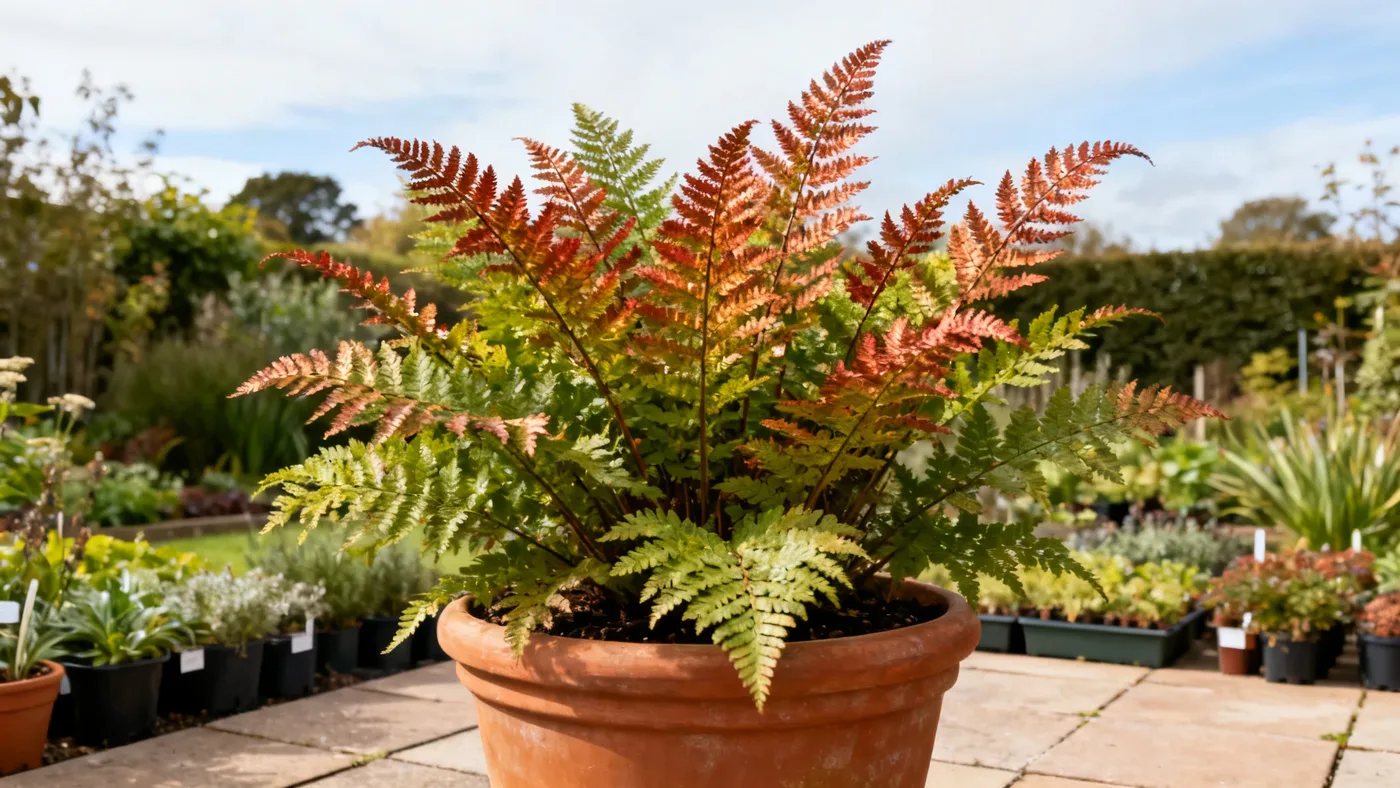
Buying Brilliance Autumn Fern: Container Sizes and What to Look For
If you're ready to add Brilliance Autumn Fern to your shade garden or container collection, knowing what to look for and which size to buy makes the difference between a thriving plant and one that struggles through the first season. This guide walks you through container sizes, quality indicators, and practical tips for choosing the healthiest plant at your nursery or online retailer.
Understanding Container Sizes: Quart vs. Gallon Pots
Nursery-grown Brilliance Autumn Fern are typically sold in three standard container sizes, each with trade-offs in cost, maturity, and planting commitment.
Quart Containers
A quart pot holds roughly 1 liter of soil and is the smallest standard size you'll encounter. These young plants are usually 6 to 10 inches tall and just beginning to establish a root system. Quart-size ferns cost the least upfront, making them ideal if you're buying multiple plants for a large shade border or mass planting. The trade-off is patience: a quart plant will take longer to fill in and reach its mature clump size of 18 to 24 inches, typically 2 to 3 years under good conditions. Quart plants also dry out faster and need more frequent watering during the first season, especially during hot or dry spells. If you have time to nurture younger stock and don't mind waiting for full impact, quarts offer the best value per plant.
#1 Gallon Containers
A #1 gallon pot (roughly 3.8 liters) represents the sweet spot for most home gardeners. Plants in #1 containers are typically 10 to 14 inches tall with a well-developed root system and visible fronds showing the plant's mature growth habit. At this size, Brilliance Autumn Fern will reach full maturity in roughly 1 to 2 years, faster than quart plants but with much less waiting than a smaller start. #1 gallon plants establish quickly after planting and require less intensive watering schedules than quart stock. Prices fall in the middle range, and these plants deliver noticeable visual impact in the first season. For most buyers, #1 gallons are the recommended choice unless you're planting a large area or have a tight budget.
#3 Gallon Containers
A #3 gallon pot (roughly 11 liters) holds mature or near-mature plants, usually 14 to 18 inches tall or larger, with a thick clump of established fronds. These plants can contribute immediate visual presence to a shade garden or entrance planting and may begin reaching full size (18 to 24 inches) within the first season. The upfront cost is higher, but #3 plants mature faster and need less supplemental care during establishment. Choose #3 gallons if you want fast results, are working with a smaller planting area, or prefer the confidence of buying a larger, visibly healthy specimen. Shipping costs can be steep for larger containers, so #3 plants are often purchased in person from local nurseries.
Quality Indicators: What to Look For When Selecting a Plant
Once you've chosen your container size, inspect the individual plant. A few simple checks separate a robust, long-lived fern from one that will struggle.
Frond Color and Texture
Brilliance Autumn Fern fronds emerge coppery-red to bronze in spring and mature to a glossy dark green. When shopping, look for plants showing both colors: fresh coppery-red fiddleheads or young fronds emerging at the crown, and established darker green fronds lower in the clump. This signals an actively growing plant with good vigor. Avoid plants with yellowing, brown-tipped, or papery fronds, which suggest inconsistent watering, poor drainage, or stress during transit. The fronds should feel firm and supple, not brittle or limp.
Clump Density and Shape
A healthy Brilliance Autumn Fern forms a densely packed, triangular clump with fronds radiating from a central crown. Look for plants with no obvious bare patches, dead centers, or sparse, straggly growth. If the clump looks thin or you can see large areas of soil between fronds, the plant may have been underwatered, poorly fertilized, or stressed. Press gently on the soil around the base: the clump should feel solid and established, not wobbly or loose in its pot.
Root System Check (If You Can)
If the retailer allows, gently remove the plant from its pot to inspect the roots (or ask a staff member to do it). Healthy roots are white to tan, firm, and numerous enough to hold the soil together without excessive air gaps. Avoid plants with sparse roots, soft mushy roots (indicating root rot), or a solid, matted root ball (indicating the plant is overgrown for its container). A fern that's been in its pot too long will have circling roots and may struggle to establish in the ground.
Soil Condition
The potting soil should be consistently moist but not waterlogged or bone dry. Press your finger into the top inch of soil: it should feel like a wrung-out sponge. Soggy soil suggests poor drainage in the pot or inconsistent watering at the nursery. Very dry soil indicates the plant has been neglected. Both extremes signal stress. The soil should be dark, rich, and visibly amended with organic matter, not pale or sandy.
Key Features to Compare Across Retailers
Not all Brilliance Autumn Fern plants are created equal, even within the same container size. Use these features as a comparison checklist.
- Plant Age and Size within Its Container: Two #1 gallon plants can differ widely. One might be a 12-month-old specimen filling its pot with dense fronds; another might be a younger, smaller plant with only a few emerging fronds. Larger specimens within the same container size establish faster and deliver quicker visual impact, though they cost slightly more.
- Foliage Health and Colorfulness: Plants with rich color and no leaf damage command confidence. Some retailers may discount plants with minor frond scorch or blemishes; these might recover with proper care, but healthy plants cost less in stress and babysitting.
- Moisture Consistency at the Retailer: A nursery or garden center with consistent watering practices delivers plants in better condition. Ask staff how often they water the shade section. Retailers with dedicated shade-plant zones typically keep their ferns in better shape than those stocking ferns haphazardly in full sun.
- Potting Mix Quality: Premium nurseries often use blended potting mixes specifically formulated for ferns, with added peat, perlite, or coconut coir for aeration and moisture retention. Budget retailers might use generic mixes that drain too quickly or hold too much water. When you pot it up at home, you'll amend the soil anyway, but starting with a quality mix gives your plant a better first-season foundation.
Top Picks at Different Price Points
Your buying strategy depends on budget and timeline.
Budget Option: Quart Plants from a Discount or Online Retailer
Quart Brilliance Autumn Fern plants are usually the lowest-priced entry point. Buy multiple quarts if you're mass planting a shade border or underplanting trees across a large area. Expect slower fill-in (2 to 3 years to mature size) and more frequent watering in the first season, but the cumulative cost for 12 or 20 plants is far less than buying an equivalent number of #1 gallons. This option works best if you're patient, have a consistent watering schedule, and can absorb losses if a few plants don't thrive.
Best Value: #1 Gallon from a Reputable Local Nursery
#1 gallon plants strike the best balance between cost, quality, and results. A well-grown #1 gallon from a local or regional specialty nursery will be denser and healthier than the same size from a big-box chain, often with better potting mix and more consistent care. Look for nurseries that specialize in shade plants or native woodland gardens; staff there will know Brilliance Autumn Fern well and can answer care questions. Buying local also avoids shipping stress and lets you inspect the plant in person.
Premium Option: #3 Gallon or Larger from a Specialty Grower
If you want fast, visible results and can justify the higher upfront cost, buy #3 gallon plants from a specialty nursery known for high-quality perennials. These plants are typically mature or near-mature, grown in premium potting mix, and will reach full size quickly. Some specialty growers even offer #5 gallon or specimen-size ferns for dramatic immediate impact. This option works best for small to medium plantings, entrance features, or container gardens where one or two perfect plants matter more than quantity.
Red Flags to Avoid
Before buying, watch for these warning signs that suggest a plant will struggle after planting.
- Frond Scorch (Brown or Bleached Leaf Tips): Indicates inconsistent watering or excessive sun exposure at the nursery. A fern with widespread scorch will take weeks to recover, and new fronds may emerge damaged if the underlying stress persists.
- Soft or Mushy Crown: Press gently on the soil right at the crown (where fronds emerge). Soft or spongy tissue suggests crown rot or root rot, a serious condition that often ends the plant's life. Pass on these specimens.
- Visible Algae or Moss on the Soil Surface: While algae isn't harmful to the plant, heavy algae or moss growth signals that the pot has been waterlogged or poorly drained for weeks, a sign of root damage even if the fronds look okay.
- Extreme Dryness or Waterlogging: If you can't gauge the soil moisture or the pot feels bone dry, the plant has been neglected. If the soil is waterlogged and smells sour or musty, drainage or watering practices have failed.
- Price Outliers: Unusually cheap plants of a given size might be clearance stock with hidden damage, or they might be a different cultivar or species masquerading as Brilliance Autumn Fern. Verify the botanical name on the label: it should read Dryopteris erythrosora 'Brilliance', Autumn Fern 'Brilliance', or Brilliance Wood Fern.
- Missing or Vague Labels: A pot with no label or a hand-written label that doesn't match common names for this plant is a risk. Ask the retailer to confirm the cultivar and origin before purchasing.
When and Where to Buy
Timing and source matter for getting a healthy plant.
Best Seasons to Buy
Spring and fall are the ideal planting seasons for Brilliance Autumn Fern. Buy during these windows so your plant can establish before summer heat or winter cold. Spring (March through May) offers the widest selection as nurseries restock after winter. Fall (September through November) is excellent too, and plants have time to root in before dormancy. Summer purchases can work if you commit to consistent watering during establishment, but hot weather stresses new transplants. Winter buys are risky in cold climates and should be avoided unless you plan to keep the plant in a pot indoors until spring.
Local Nurseries and Garden Centers
A reputable local or regional nursery is your best bet for quality. Staff can verify the cultivar, discuss your specific growing conditions (zone, shade level, soil type), and answer questions about care. You'll inspect the plant in person before buying, reducing risk. Small to medium nurseries often have better quality stock than big-box chains because plants get more attentive care. Prices may be slightly higher, but the confidence and service usually justify it.
Online Retailers
Online purchases offer convenience and sometimes lower prices, but shipping stress can harm ferns. If buying online, choose retailers with strong return policies and experience shipping plants. Expect to pay for expedited shipping to minimize time in transit. Inspect the plant immediately upon arrival and report any damage. Quart and #1 gallon plants ship better than larger sizes. Read reviews from other buyers to gauge how plants arrive in their condition.
Big-Box Garden Centers
Chain stores like big-box garden centers carry Brilliance Autumn Fern at competitive prices, but quality varies. Plants may sit in inadequate light or inconsistent watering. Staff may not know the plant well or be able to answer specific care questions. If you buy from a chain, inspect carefully and understand you're taking on more risk. That said, if you find a well-maintained fern at a good price, go for it and don't overthink it.
Quick Reference: Buying Checklist
| What to Evaluate | Quart Pot | #1 Gallon | #3 Gallon |
|---|---|---|---|
| Typical Height at Purchase | 6-10 in | 10-14 in | 14-18 in or larger |
| Time to Mature Size (18-24 in) | 2-3 years | 1-2 years | First season to 1 year |
| Frond Color | Should show coppery-red and dark green | Should show coppery-red and dark green | Should show coppery-red and dark green |
| Clump Density | Emerging, may look sparse | Solid, triangular shape | Dense, mature-looking |
| Root System | Developing, some air gaps okay | Well-established, firm soil ball | Mature, may be slightly root-bound |
| Best For | Budget buys, mass plantings | Most home gardeners (best value) | Fast results, specimen plants |
| Red Flags | Papery fronds, sparse growth, dry soil | Mushy crown, yellowing leaves, waterlogging | Soft spots, brown frond tips, circling roots |
| Care After Purchase | Frequent watering first year, consistent moisture essential | Regular watering first year, moderate care | Moderate watering first season, fastest establishment |
Once you've brought your Brilliance Autumn Fern home, follow proper planting and care steps to ensure it thrives in your shade garden. The first year is critical: consistent moisture, quality soil, and dappled light are the keys to a plant that will reward you for 10+ years.