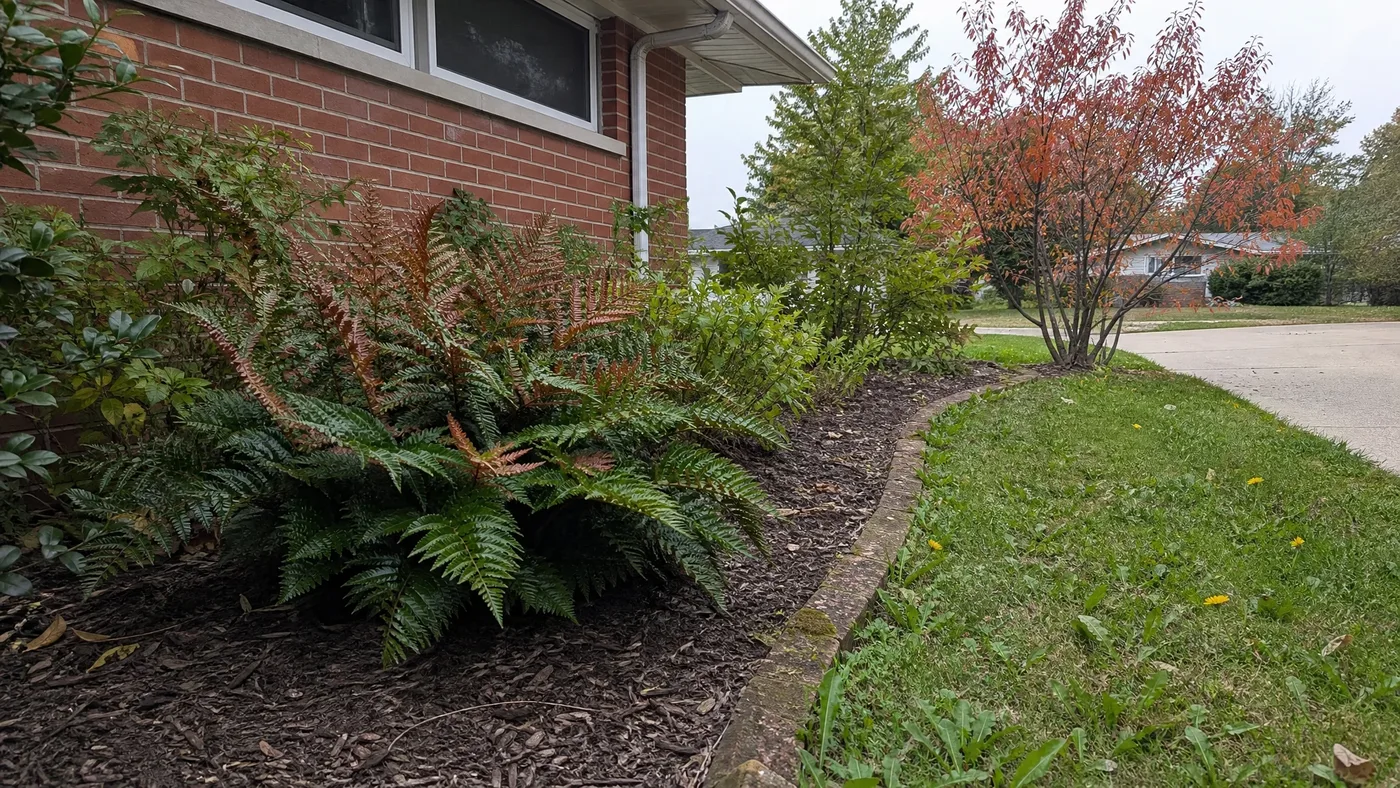
Brilliance Autumn Fern vs Autumn Brilliance Serviceberry
Every spring, a shopper types 'Autumn Brilliance' into a search bar, places a $60 order for what they believe is a shade fern, and gets a serviceberry. Two summers later the plant is taller than the fence, and the corner meant for ferns belongs to a shrub that wants sun. Digging out a woody plant and starting over costs years of bed space, and no refund covers that.
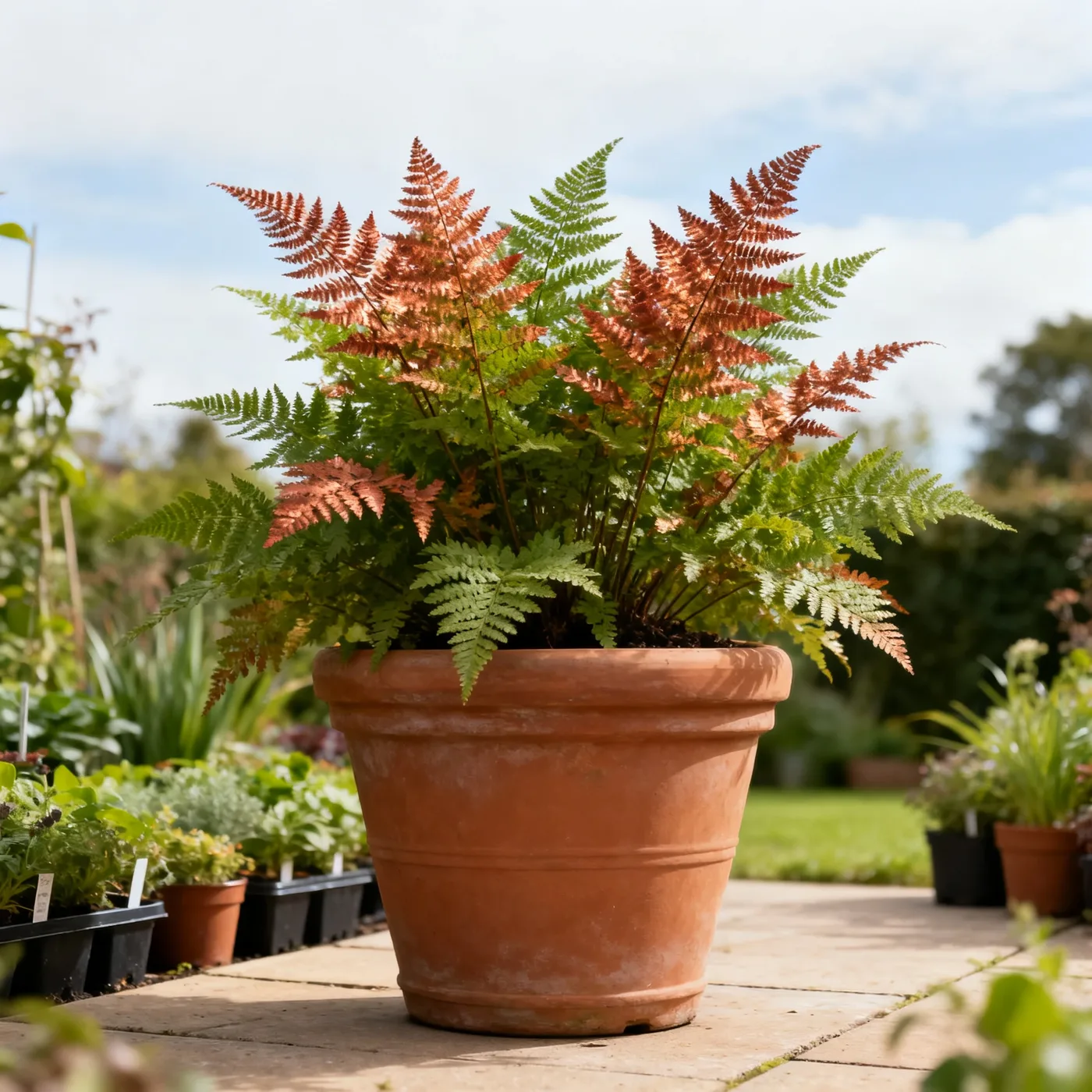
Two unrelated plants sell under that name. One is Brilliance Autumn Fern, an evergreen shade fern. The other is Autumn Brilliance serviceberry, a deciduous small tree for sun. In this article, we'll go through how tall each gets, what light each needs, how to tell them apart at the counter, and what each costs you over five years.
Two Plants, Nearly Twenty Feet Apart in Height
Size is the first thing the shared name hides. Here is what each plant takes from a bed once it settles in, above ground and below.
What the Shrub Takes
The serviceberry is the bigger commitment, so we start with it.
The University of Minnesota describes it as a deciduous, multi-stemmed shrub or small tree that normally reaches about 20 feet tall. That is a plant with a canopy, and a canopy takes light and rain from everything under it. Several stems rise from the base, so it claims ground as well as sky. Whatever you plan to grow beneath it has to live in its shadow.
What the Fern Takes
The fern asks for far less, and it asks in a different direction.
The species grows 1 foot 6 inches to 2 feet tall and 2 to 3 feet wide. The Brilliance cultivar reaches 0.5 to 1 meter in both directions, roughly 1.5 to 3 feet. It has no trunk, no flowers and no fruit, and it spreads slowly through underground rhizomes. Our guide on how big Brilliance really gets goes into the spread.
Counting the Cost in Bed Space
Put the two heights together and the planning problem is easy to see.
The gap is close to 18 feet. The fern leaves the air above it empty, so it fits under a window, beside a path or at the foot of a tree. The serviceberry fits none of those places without becoming the problem. A wrong order does not cost you one plant. It costs you every season that bed spends growing the wrong thing, plus the labor of removing a woody shrub.
Sun-Loving Shrub, Shade-Bound Fern
Light is where the two plants part ways completely. It is also why a swap fails instead of merely disappointing. This section sets each plant in its right site and then in the wrong one.
The Serviceberry Wants Open Sky
The serviceberry is flexible about light but rewards you most in the open.
Minnesota's tree program says it grows in full sun and partial sun or shade, and rates it for zones 4 to 9. Autumn color will be brightest in full sun, though. Hanging white flowers in mid-spring and red fall leaves are the reasons to own it. Shade dulls the second of those.
The Fern Wants Moist Shade
The fern's light range is narrower, and its second requirement is water.
The cultivar suits full or partial shade. For this species, partial shade means direct sun for only 2 to 6 hours a day, and it likes acidic, constantly moist soils high in organic matter. The species is rated for zones 5 through 11 by UF/IFAS. A sunny bed dries faster than a shaded one, so a fern placed there asks for watering the site cannot easily supply. Our pages on how dark is too dark and on watering cover the edges of that range.
Why a Swap Fails
The two wrong placements fail at different speeds, and that changes what they cost.
You will hear that anything labeled part shade works under a tree. For the serviceberry that holds only as far as survival. It lives, it grows toward its full height, and you get a dimmer version of what you ordered. A fern in a hot, dry bed fails in plain sight within a season. The quiet failure is the expensive one, because you keep it for years before you admit it.
Reading the Tag Against the Plant in Hand
Most mix-ups happen at a checkout or a listing page, where the name is all you have. Here is how to tell a correct label from a vague one, and what the pot itself tells you.
Names That Settle It
A full botanical name is the only label that cannot be misread.
The fern is Dryopteris erythrosora 'Brilliance'. The serviceberry is Amelanchier x grandiflora 'Autumn Brilliance'. A tag or listing that says only 'Autumn Brilliance' with no botanical name could be either, and so could one that says only 'Brilliance'. Ask the seller for the botanical name before you pay. A seller who cannot give it has told you something useful.
Cues You Can Check at the Counter
If the label is vague, the plant and the fine print can still answer the question. The table sets the two side by side.
| Cue | Brilliance Autumn Fern | Autumn Brilliance serviceberry |
|---|---|---|
| What is in the pot | Fronds rising from a crown at soil level | Woody stems, often several, with leaves or buds |
| New growth | Red fronds in spring, turning coppery pink, then dark glossy green | Hanging clusters of white flowers in mid-spring |
| Winter | Evergreen | Deciduous, bare stems |
| Flowers and fruit | None, reproduces by spores | White flowers and edible berries |
| Zones on the label | Species rated 5 through 11 by UF/IFAS | 4 to 9 |
| Light on the label | Shade or part shade | Full sun to partial shade |
Pot Size Tells a Story Too
The container is a clue when you read it with the plant.
A fern in a pot is a leafy tuft that sits at the rim. A serviceberry in a pot is a cluster of sticks, and the plant often stands taller than the container is wide. One of the most common questions we get is whether a leafless plant in a winter pot is the fern. It is not, because a woody, leafless stem is never this fern. Our guide to container sizes and what to look for shows what a healthy fern pot looks like.
Five Years Out: Bare Ground or Full Clump?
The early years look very different for each plant, and a planner should know what the bed will show each season. Here is the fern's timeline first, then the shrub's.
The Fern Fills in Slowly
Patience is part of the price of the fern.
The cultivar takes 5 to 10 years to reach its ultimate size, and the plant spreads slowly through creeping rhizomes. In the first seasons you will see individual clumps with mulch between them. Each spring brings red new fronds that turn coppery pink and then dark glossy green, and the plant keeps its foliage through winter. We often see customers feel let down by the fern in year one and surprised by it in year four.
The Shrub Changes Faster
The serviceberry gives you something new in every season, and it gets tall.
We will not put a growth figure on it, since our sources do not give one. Ask your local extension service what rate to expect in your zone. What you will see is a pattern. White flowers arrive in mid-spring, berries follow, the leaves turn red in autumn, and bare stems carry the winter. Each year the plant is larger, so each year the bed has less room for anything else.
What the Bed Looks Like in Year Five
By year five the two plantings have reached very different places.
The fern drift is still maturing, so plan to see a filling bed and not a finished one. The serviceberry is already a structure, with branches over your head and a footprint you cannot easily change. Neither is wrong. The question is which one you were expecting when you placed the order.
Spending the Same Money Two Ways
Take a fixed budget, like the $60 from the opening, and see where it goes. We will not quote pot prices here because they change with seller and size. The arithmetic below holds either way.
Plant Count and Pot Size
The two plants spend money in different shapes.
A fern drift is several purchases. At 2 to 3 feet wide each, a 10-foot border takes about four clumps. A larger pot costs more up front but shortens the wait, which matters for a plant that needs 5 to 10 years to mature. The serviceberry is one purchase and one hole, and its starting size matters less than its site, since it is headed for about 20 feet either way.
Cost per Season and Replacement Risk
Spread the cost over five seasons and the difference in risk shows up. The table puts the main questions side by side.
| Question | Fern drift | Serviceberry |
|---|---|---|
| Plants to buy | Several clumps | One plant |
| Seasons of cover | Evergreen, so all four | Flowers, fruit and color, then bare stems |
| If the site is wrong | Replace individual clumps | Remove a woody plant |
| Upkeep you add | Moisture in dry spells | Control of root suckers |
Replacing a failed fern costs one pot. Replacing a failed shrub costs the shrub, the removal and the seasons the spot sat unused. Put the right plant in the right light the first time and the cost per season drops for both.
When the Serviceberry Is the Better Buy
We sell the fern, and we would still send some of you elsewhere. If your site is open and sunny, the serviceberry is the better plant, and this section says when.
Open Sun and Colder Winters
Two conditions make the serviceberry the clear choice.
The first is light. If the spot gets full sun and you have 20 feet of sky, a shade fern will struggle and the serviceberry will thrive. The second is cold. Minnesota rates the serviceberry for zones 4 to 9, while the fern species is rated for zones 5 through 11 by UF/IFAS and 6b to 12b by NC State. In a zone 4 yard, the serviceberry is the plant the sources support. Check your zone before you commit.
What You Accept With It
Choose the serviceberry with its costs in view.
The berries are edible, but the tree is usually grown as an ornamental plant rather than for a crop of fruit. It also grows root suckers that can be difficult to remove. It is also bare in winter. If you accept those things, it gives you flowers, fruit and red fall color that the fern never will.
Buying the Fern Without Second-Guessing
If your spot is shaded and you want something you will not have to think about, the fern is the plant. Before you order, confirm three things: the botanical name reads Dryopteris erythrosora 'Brilliance', the bed gets shade, and the soil can stay moist. We grow and sell the fern, and we list it under its botanical name every time. Our guide to planting Brilliance for best results covers the next step.
Brilliance Autumn Fern
Nursery-grown Brilliance Autumn Fern in sizes from 4 Inch, shipped to your door.
From $16.99
Shop Now →One shaded corner costs you the same five years whichever plant you put in it, and the fern is the one that earns it. Customers come back to us for Brilliance because they plant it once and leave it alone, and we grow it on our own farms as a small business.