The Botanical Name and Common Names of Brilliance Autumn Fern
Walk through a shade garden at dusk and ask five neighbors what the dark, glossy fern clump by the fence is called. You will get five answers: autumn fern, Japanese shield fern, Japanese wood fern, "autumn brilliance," or a shrug. We doubt any of them checked a label.
The mix-up has real costs. The species and this cultivar differ in size, in new-frond color and in how the hardiness numbers are reported, so the wrong name means the wrong expectations and unreliable care advice.
This article talks about the botanical name, the synonyms and the common names of Brilliance autumn fern and answers the questions customers ask us most. Read on to learn which names have solid backing, which are only repeated, and the exact string to look for on a tag.
Why Garden Names Disagree so Often
Before we get to the plant itself, it helps to see how names drift. Most of the confusion starts in the garden, not in the books.
How Common Names Drift
Common names spread by word of mouth, and nobody is in charge of them. One plant collects several names, and one name gets attached to several plants. This fern alone carries a handful. The species goes by Autumn Fern, Japanese Shield Fern and Shaggy Shield Fern. Three common names, one species.
A neighbor's name for a plant is a report of what they heard, not proof of what they have.
What a Name Can and Cannot Prove
You will hear the advice that common names are fine for everyday gardening. We disagree. They are fine for conversation. They are not good enough for buying, because they cannot separate a cultivar from its species or from a plant that merely shares a word.
One of the most common questions we get is whether "autumn brilliance fern" is the real name. We found it in none of the sources we checked. The plant is Brilliance, and the word order matters. "Autumn Brilliance" is also a different plant altogether, as our guide to Brilliance autumn fern versus Autumn Brilliance serviceberry explains.
Three Quick Checks on Any Name You Hear
You do not need a library to test a name. These three checks take a minute and catch most of the errors we run into.
- Ask where the name came from. If the answer is "a friend" or "the garden center years ago," treat it as a guess, not a record.
- Look for a quoted cultivar name. A name with no quotation marks usually points to the species, not a selection.
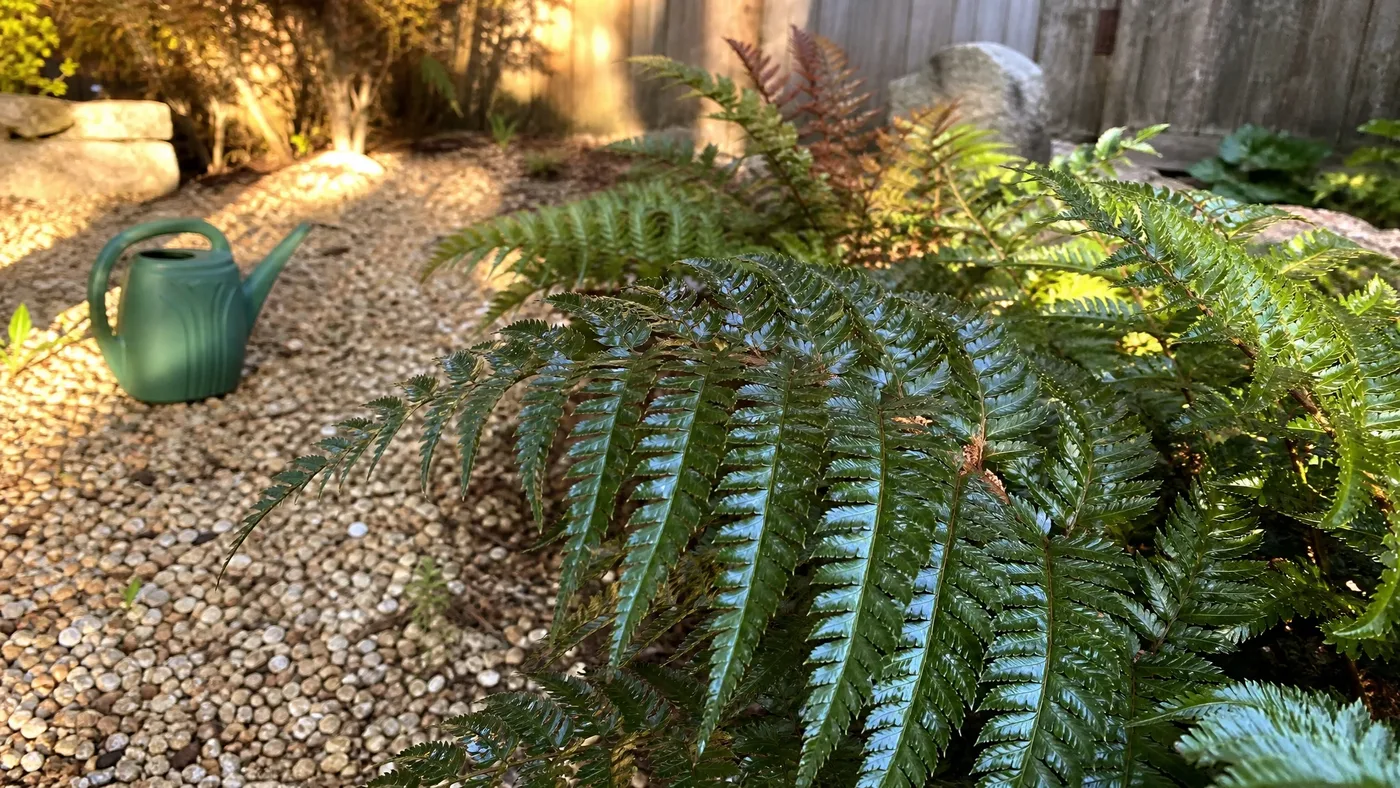
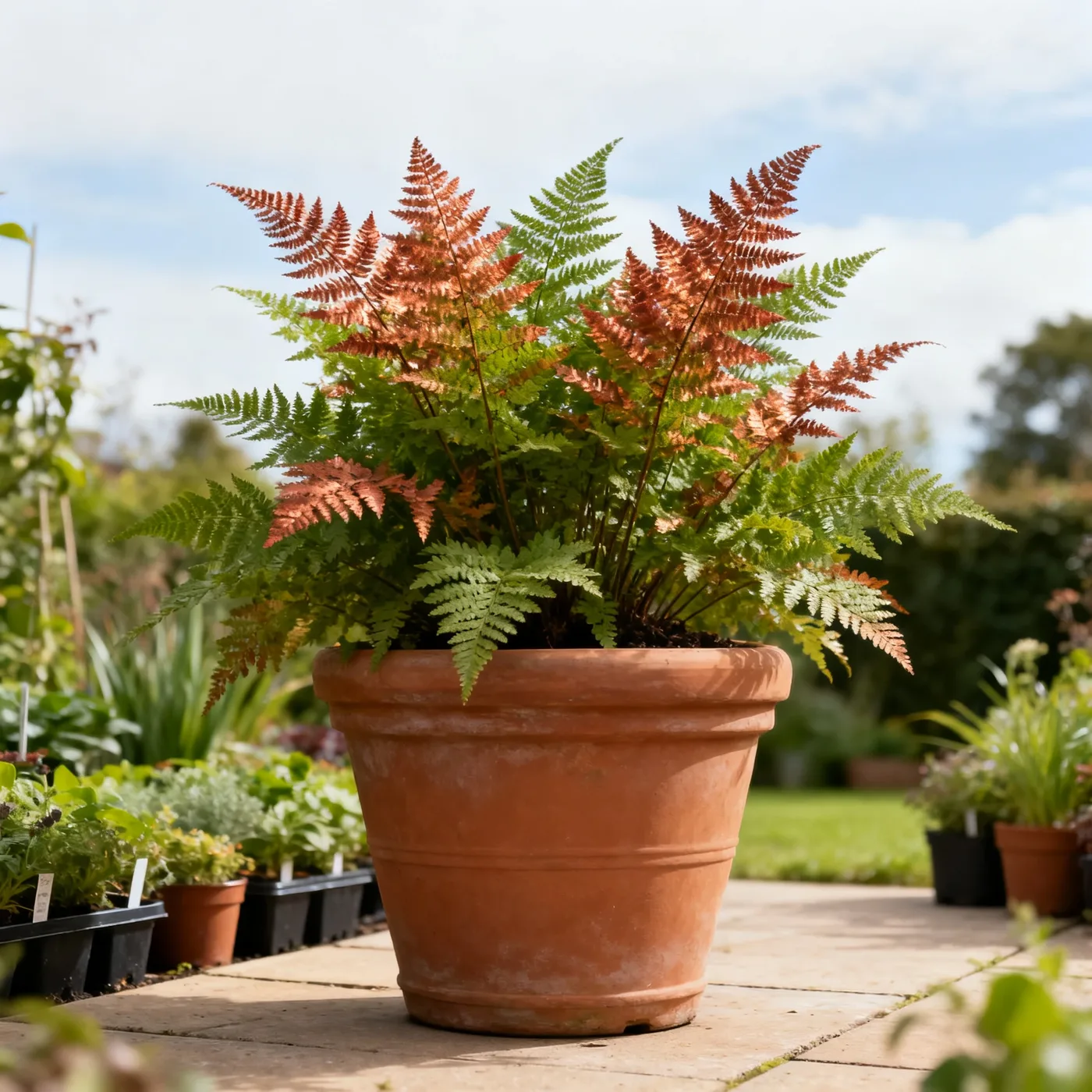
- Compare the plant with the description. Red new fronds that turn coppery pink and then dark glossy green fit Brilliance. Fronds that simply emerge coppery pink and turn green fit the plain species.
Sorting the Ferns Under Autumn Fern Names
The phrase "autumn fern" covers more than one thing on a tag. It helps to separate the layers: family, species and cultivar.
Family, Species and Cultivar
Brilliance is a named selection of the species Dryopteris erythrosora, which is commonly called autumn fern. So "autumn fern" on a tag is usually the species name, and it says nothing about which selection you are holding.
Why Shoppers Mix Them Up
The species and the cultivar look alike at a glance. Both are evergreen ferns with coppery new growth that turns glossy green, and both are sold under the same broad label. Add a word like "autumn" that sounds like a color or a season, and people shuffle the words until a name sounds right.
That shuffling is how "autumn brilliance fern" is born. Our guide to autumn fern cultivars compared to Brilliance covers the other selections in detail, so we will not repeat them here.
Where the Numbers Part Ways
The species and the cultivar are described differently, and that is the practical reason the name matters. The species grows 1 foot 6 inches to 2 feet tall and 2 to 3 feet wide.
Hardiness is murkier still. NC State lists the species at zones 6b through 12b, while UF/IFAS gives zones 5 through 11. We would not treat either of these as a promise for your yard.
The Latin Name and What It Claims
The botanical name is the one name every source here agrees on, so it is the one to anchor on. It is still worth checking what it actually says.
Reading the Name Piece by Piece
The full name is Dryopteris erythrosora 'Brilliance'. Dryopteris is the genus, written with a capital and in italics. erythrosora is the species epithet, lowercase and italic. Together they name the species. The species has no flowers and reproduces via spores.
The name in single quotation marks is the cultivar, set in plain type with a capital. It is not a second species and it is not a nickname. It marks one named selection of the species.
Who Backs It
NC State Extension lists the species as Dryopteris erythrosora. That is good evidence for a gardener's purposes.
It is not a taxonomic ruling. Botanists revise genus and species names from time to time, which is exactly why older tags carry other names. For anything formal, such as labeling a collection, check with your local extension service or a botanical authority. For buying a fern, the name above is what you want.
Our guide to Brilliance versus the Dryopteris erythrosora species lays out the plant differences behind that last name.
Synonyms Found on Older Tags
Older tags and catalogs sometimes show names you will not find on a current label. Some have documented support and some are only repeated from tag to tag, so we sorted them by source.
| Name on an older tag | Applies to |
|---|---|
| Nephrodium erythrosorum | The species |
| Dryopteris oblongipinnula | The species |
| Dryopteris remotipinnula | The species |
The Documented Species Names
These names are documented, but they belong to the species. Nephrodium is a former genus home for the same fern. A tag showing only that name tells you the plant is a D. erythrosora, and nothing about whether it is Brilliance.
The other two species names, oblongipinnula and remotipinnula, are synonyms. We would not guess at why a grower used them. Treat them as the species under another label.
"Autumn Brilliance fern" appears in no synonym list we checked. Treat it as a mix-up of the words, not a past name.
Japanese Shield Fern and Japanese Wood Fern
These are the two common names customers bring to us most often. We tested each against the sources.
Japanese Shield Fern Holds Up
Japanese shield fern is a common name for the species. It is a real, documented name. It also hints at the species' origin, since the fern is native to eastern Asia.
What it does not tell you is the cultivar. It is a species name, so it cannot pick Brilliance out from its relatives.
Japanese Wood Fern Does Not
We could not find Japanese wood fern in the NC State listing. That does not make it wrong in casual talk, since "wood fern" is a name people apply to many ferns in the Dryopteris group. It does mean we cannot back it with a source.
Customers usually ask us which of the two is right. Our verdict: Japanese shield fern is documented, Japanese wood fern is loose. Use either as a search term if you like, but never as the thing you buy by. Neither one names the cultivar.
Why Shield Keeps Turning Up
Notice that shield appears in two of the documented names: Japanese shield fern and shaggy shield fern. That repetition is a useful clue. If a common name for this fern is going to be backed by a reference, it is likely to use shield, not wood.
What the Cultivar Name Adds in Quotation Marks
The last part of the full name is the smallest, and it does the most to separate this plant from its look-alikes.
What the Quotes Identify
The quotation marks mark a cultivar: a named selection kept apart from the wild species. 'Brilliance' is not italic, and it is not part of the species name. It tells you the plant is a particular selection with its own described traits, not just any Dryopteris erythrosora.
Brilliance is an evergreen fern with red new fronds in spring, turning coppery pink and then dark glossy green. The foliage is bright orange-red, copper-pink and chartreuse, maturing to glossy dark green by summer, with coppery tones in fall. The species page describes fronds that simply emerge coppery pink and turn green.
Why It Belongs to This Plant
A different selection, or the plain species, can look similar in a pot. But the color shift is part of what 'Brilliance' claims to be. Size is the other part. The cultivar's 0.5–1 meter range and the species' 2–3 foot width are different statements, and our look at how big Brilliance autumn fern really gets goes into the gap.
One caution about trusting your eyes. Color depends on light, season and the age of the fronds, so a pot in a dim shop can mislead. The quoted name is a better test than the color alone.
Drop the quoted name and you have only the species. Misspell it or reorder it and you may have a different plant entirely.
A Label You Can Trust
The rule is short. A tag is trustworthy when it names the plant at two levels, in order, and nothing is missing.
- The genus and species come first: Dryopteris erythrosora. A tag with only this is the species or an unspecified selection.
- The cultivar follows in single quotation marks: 'Brilliance'. If the quotes or the name are missing, you cannot assume you have the cultivar.
- Common names are extras. Autumn fern or Japanese shield fern may appear, but they never replace the first two points.
If an old tag shows a former genus name, ask what the plant is before you buy. Every Brilliance we sell carries the full name on its tag. Our guide to buying Brilliance autumn fern covers what else to check at the pot.
Brilliance Autumn Fern Down to One Name
Common names are fine for talking and unreliable for buying. Japanese shield fern is documented for the species, Japanese wood fern is not, and the synonyms on older tags mostly describe the species rather than this cultivar. Only one string identifies the plant, and it is Dryopteris erythrosora 'Brilliance'.
Brilliance Autumn Fern
Nursery-grown Brilliance Autumn Fern in sizes from 4 Inch, shipped to your door.
From $16.99
Shop Now →On our farms we grow it in shade with moist, organic soil, the conditions the species prefers, and as a small business we label every plant with its full name: Dryopteris erythrosora 'Brilliance'.