Is Brilliance Autumn Fern Native, Invasive, or Does It Spread?
A pallet of ferns sits on a loading dock, and the receiving clerk asks the standard question before signing: does this crate hold anything restricted? Few buyers ask the same thing about a fern until it is already in the ground.
Most people expect a fern to be either a harmless woodland native or a pushy colonizer. Brilliance is neither of those. It comes from another continent, yet it grows like a plant that stays where it is put.
The answer matters because a garden plant that escapes is hard to take back, while a good evergreen skipped over a rumor is a real loss. Read on for where the fern comes from, how invasive lists work and how to check yours, how the clump widens, what spores may do, the tools that keep edges tidy, and how it compares with true spreaders.
Where This Fern Comes From
Origin settles the first question before any list does. Here is the geography, then what the cultivar name does and does not change.
Native Range
The species behind Brilliance, Dryopteris erythrosora, is native to eastern Asia. It does not grow wild as a native in any US state, so wherever you garden, this fern is a non-native. One of the most common questions we get is whether it counts as a native fern. It does not.
The same answer holds from the other side of the Atlantic. Brilliance is not native to Great Britain or Ireland. Neither region claims it.
What the Cultivar Name Changes
Brilliance is a selection within that Asian species, so its origin is the same as the species. What differs is looks and size, and both are worth knowing before you plan a bed.
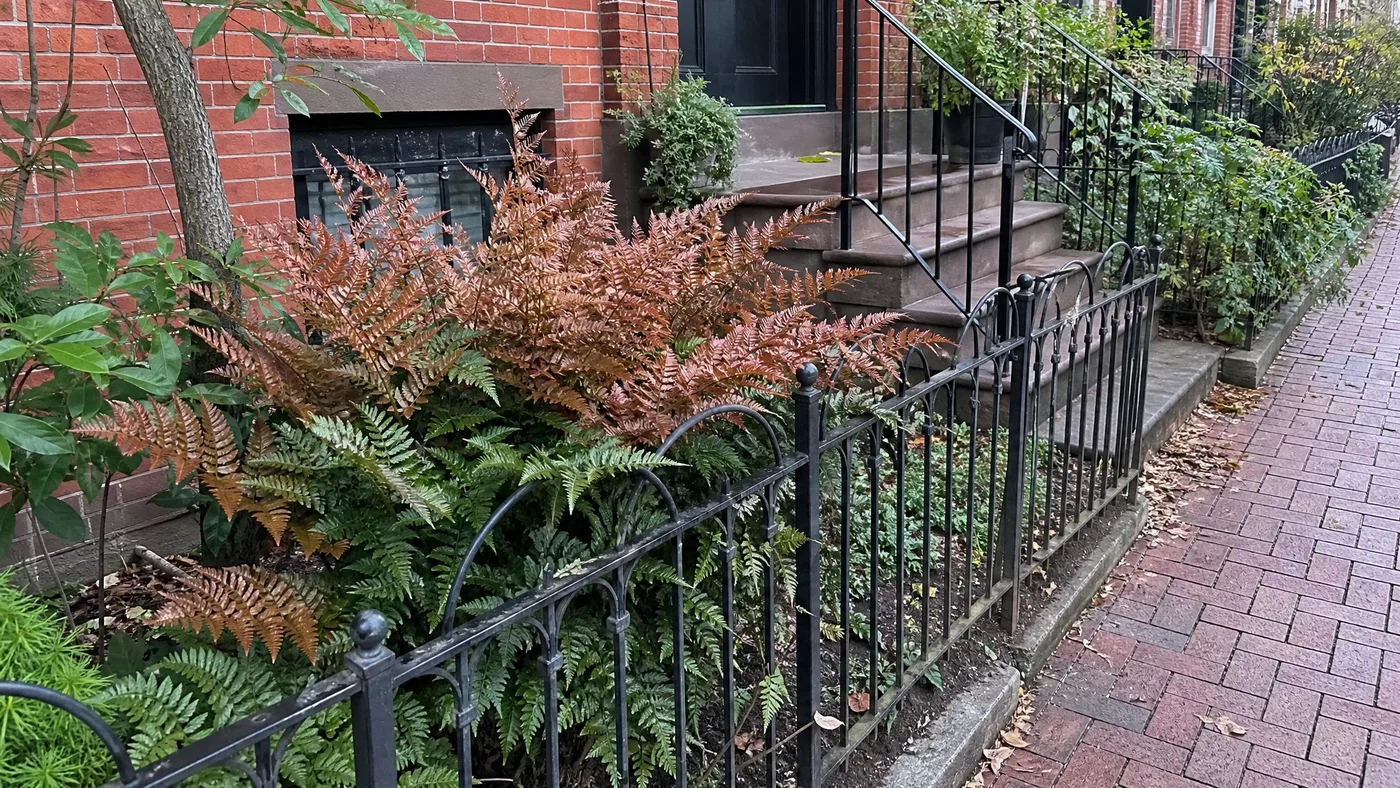
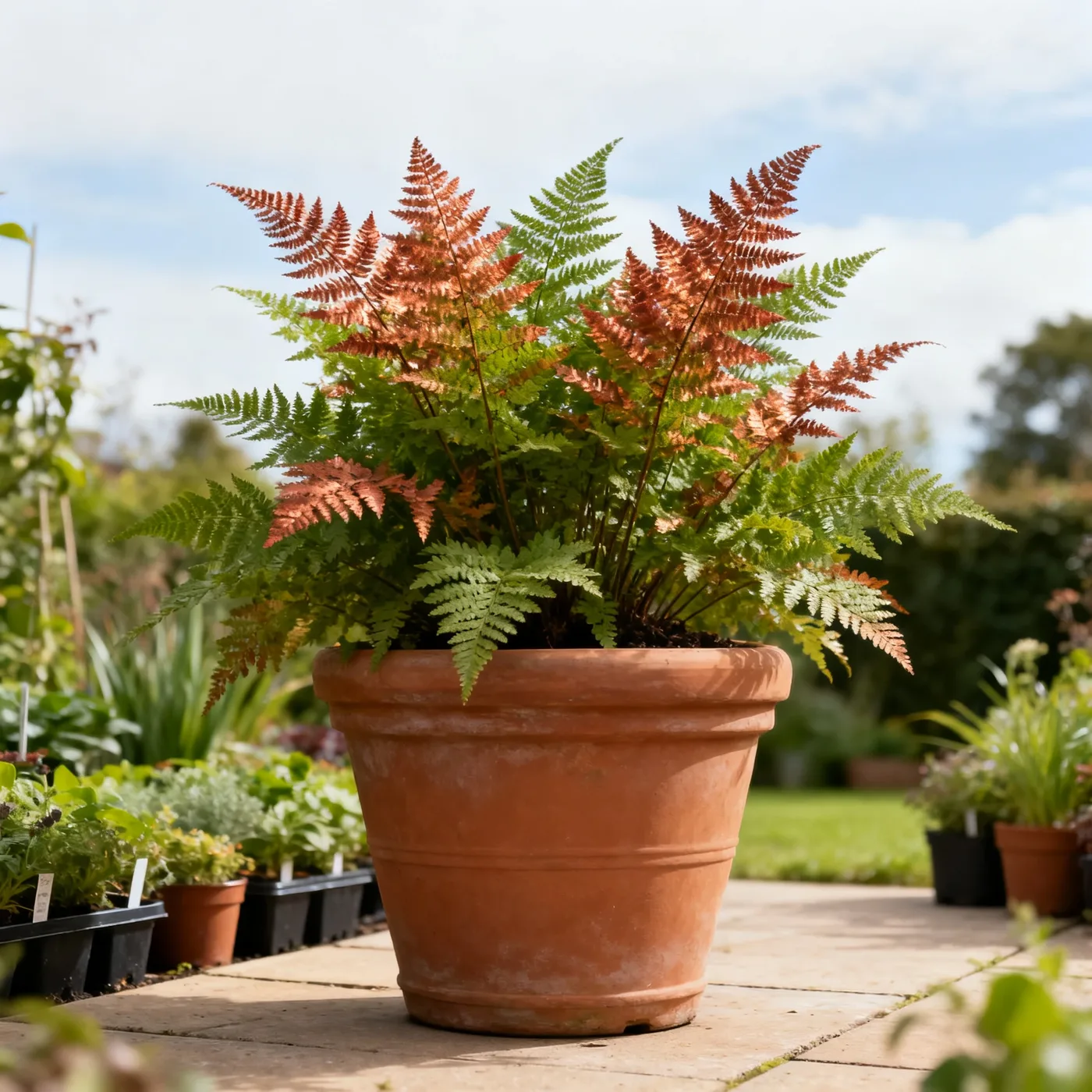
Brilliance is an evergreen fern with red new fronds in spring that turn coppery pink, then dark glossy green. The species emerges coppery pink and turns green, so the red flush is the cultivar's own. On size, Brilliance reaches 0.5–1 meter tall and wide, about 1.5–3 feet. The species itself grows 1.5–2 feet tall and 2–3 feet wide.
Is Non-Native a Problem?
We push back a little on the idea that non-native means a poor choice. Nearly everything in a typical garden came from somewhere else. What counts is whether a plant stays where you put it.
If your goal is a planting of regional natives only, choose a fern native to your area and ask your local extension service which ones suit your site. If your goal is a tidy evergreen for shade, the sections below explain why we are comfortable with this one.
Invasive Lists and How to Check Yours
Invasive status is a defined label, not a general feeling about a plant. This section covers what a listing is, who publishes one, and what our sources say about this fern.
What a Listing Actually Means
An invasive listing says a non-native plant has escaped cultivation in a region and harms natural areas, farms or waterways. A noxious weed listing is a related but separate category, and in some states it restricts selling or moving the plant. That second kind is the restricted crate on our loading dock.
Lists are published at the state level, usually by the department of agriculture, the department of natural resources or a state invasive plant council. Many university extension services keep watch lists too, and some counties and regions add their own. A plant can be listed in one state and absent from the next.
What Our Sources Say
We want to be exact here. None of the sources we used for this guide place Brilliance or its species on an invasive plant list. They do carry one caution. NC State Extension says the species "may naturalize in NC as it has in other states and may become a problematic invasive species."
That is a warning about the species, not a listing, and it says nothing specific about the cultivar. We do not wave it away. It is the reason the check below is worth a few minutes.
Climate shapes how far a fern could ever wander. NC State lists the species for zones 6b–12b and UF/IFAS lists 5 through 11. Our hardiness zones guide covers the cold and heat limits for this cultivar.
A Five-Step Check Before You Order
Work through these in order. The whole check takes a few minutes and gives you a written answer for your own address.
- Search your state name plus "invasive plant list" and open the page from a state agency, extension service or invasive plant council.
- Search that page for Dryopteris erythrosora, then for autumn fern and Brilliance, because lists use botanical names and often name only the species.
- Repeat the search for your county or region if your state publishes regional lists.
- Check the noxious weed list separately, since that is where sale and transport rules live.
- If you cannot find a list or the answer is unclear, call your county extension office and ask.
Why a Clump Stays Where You Put It
Spread in a garden bed comes down to how the plant widens. Brilliance grows from one center, and that habit is the main reason it stays tidy.
One Crown, Slow Widening
Brilliance has a clump forming habit. Fronds rise from a central crown, and the clump grows outward from that point rather than sending runners across the bed to pop up elsewhere.
Here is one more detail we think is fair to share. The species spreads slowly over time through underground creeping rhizomes. In practice that means the clump enlarges in small steps around its edge. It does not leap a path or jump into the lawn.
How Far It Travels in a Bed
The sources give no yearly figure for outward growth, so we will not make one up. What we can give is a mature size and a timeline. Spread is 0.5–1 meter, about 1.5–3 feet, and it takes 5–10 years to reach maturity.
In our rows, a clump is still one clump long after you would call it established. Leave generous room if you want the full 3 feet, and our size guide walks through spacing in more detail.
Taking a Clump Back
If a clump outgrows its spot, you can reduce it rather than fight it. Lift it, cut it into sections and replant the pieces where you want more ferns. We cover the method in our guide to dividing Brilliance by hand.
That makes a spreading clump an asset rather than a chore. Most gardeners who divide end up with free plants and a bed that stays the shape they chose.
Spore, Seedlings and Stray Volunteers
A clump is only one route a fern can take. The other is spores, and this is where the honest answer is shorter, because the sources say less.
What Is Documented
Ferns do not flower or set seed. UF/IFAS lists the species with no flowers, and the plant also has no fruits and reproduces via spores. Spores are the only way a fern like this can start new plants away from the parent.
The species may also naturalize in other states. That tells us spores can establish seedlings somewhere, at least for the species.
What Is Not Known
None of our sources measure how many volunteers the Brilliance cultivar produces in a home garden. They also do not say whether its spores are viable, reduced or sterile. We will not call it sterile, because we cannot back that up.
Our sources also give no data on seedling survival. Spores need steady moisture and shade to turn into plants, which is why the question is about woodlands and damp walls, not dry beds.
What We Tell Customers to Do
The practical answer costs almost nothing. If you plant near a natural area, a stream bank or a damp wooded edge, check the local list first and favor spots well inside your own bed.
Every season, glance over damp, shady ground near the clump for small fern seedlings that you did not plant. Pull them while they are small. If you never see any, you have your answer for your own site.
Tools for Keeping the Edges Tidy
A clump this slow needs very little, but a few ordinary tools make an edge routine quick. Customers usually ask us which ones matter, so here is each item and its job.
| Tool | What it is for |
|---|---|
| Spade | Slicing around the clump to trim its edge, lifting sections for division and removing a stray seedling with its roots. |
| Bed edging | Giving the bed a hard line against lawn and paths, so you can see at a glance if the clump has moved. |
| Mulch | Keeping the soil moist and the ground bare enough that a new seedling stands out. |
| Hand shears | Cutting back tattered old fronds so the true outline of the crown is visible. |
| Gloves and a trowel | Pulling small volunteers from damp soil without disturbing the clump. |
A Simple Yearly Routine
Do these in sequence once a year, early in the growing season. It is a short job for a plant that does not ask for much.
- Clear tattered fronds with shears so you can see the crown.
- Run the spade around the outside of the clump and trim anything creeping past the edging.
- Scan the nearby damp ground for seedlings and pull them with a trowel.
- Top up mulch, keeping it off the crown itself.
Our mulching guide covers how much and what kind. After that, leave the plant alone.
Neighbors That Behave Differently
The clearest way to judge Brilliance is against plants that really do spread. This is a brief contrast. The full side-by-side lives in another guide.
Runners and Self-Seeders
Running plants send stems along or under the ground and pop up several feet from the parent. Self-seeders drop seed that sprouts across the bed, the path and the neighbor's yard. Both can take over a shady corner in a few seasons, and both ask for regular removal.
Where Brilliance Sits
Brilliance does neither in any way our sources document. It widens slowly from a crown, it reproduces by spores rather than seed, and the one caution on record concerns the species. That puts it much nearer the tidy end of the shade garden than the running end.
For a comparison with other ferns, read Brilliance versus other popular shade ferns. It sets habit, size and spread side by side so you do not have to piece it together here.
Non-Native, Tame and Worth Planting
On origin, Brilliance comes from eastern Asia and is not native to the US. On invasive status, none of the sources we used list it, though it does carry a caution that the species may naturalize. On spread, it forms a clump that widens slowly from one crown.
Brilliance Autumn Fern
Nursery-grown Brilliance Autumn Fern in sizes from 4 Inch, shipped to your door.
From $16.99
Shop Now →Brilliance is non-native, unflagged in our sources and slow to spread. Take a quick look at your state or county list before ordering. As a small grower with our own farms, we grow and sell top-quality ferns and want you to plant this one knowing exactly what it is, so it earns its place in your shade without a worry.