Brilliance Autumn Fern vs Other Popular Shade Ferns
Imagine a garden-center aisle with seven fern tags in a row and the same word printed on every one: evergreen. Lift the pots and the plants inside look nothing alike. One keeps its fronds through a hard freeze, one drops half of them, and one only counts as evergreen on a windowsill. So what is each tag promising?
The word means something different in each pot, and sorting that out is the first of four decisions that narrow a shady-spot choice. We'll walk you through evergreen habit, coppery color, mature size and winter cold, then use those cuts to weigh Brilliance Autumn Fern against Boston, Christmas, holly, wood, lady, Japanese painted and ostrich ferns.
Take the cuts in order and the choice mostly makes itself. Take them out of order and you end up with a bare patch in February or a fern that swallows its neighbors.
Does Evergreen Mean the Same Everywhere?
Three words do most of the work on a fern tag, so we'll define them before sorting anything. Think of "evergreen" the way you think of "water-resistant" on a jacket label: it names the goal, not how the thing behaves in a long storm.
Evergreen means the fronds stay green through winter and are replaced by new ones the following spring. Semi-evergreen means a fern keeps some or all of its fronds in a mild winter and drops many in a hard one. Deciduous means every frond dies back and the bed is bare until new growth rises.
The table below sorts the seven rivals by those terms, with Brilliance on top. Brilliance itself is an evergreen fern, and evergreen woodfern is evergreen to semi-evergreen.
| Fern | Winter habit |
|---|---|
| Brilliance | Evergreen |
| Boston | Evergreen only where winters stay frost-free, which usually means indoors |
| Christmas | Evergreen |
| Holly | Evergreen |
| Wood | Evergreen to semi-evergreen in mild winters |
| Lady | Deciduous |
| Japanese painted | Deciduous |
| Ostrich | Deciduous |
One of the most common questions we get is whether "evergreen" means perfect fronds until spring. It means green ones, and the Boston and wood fern rows show why the word has to be read against your own winter.
The choice: if you see the bed from a window in January, make winter foliage a requirement. That puts lady, painted and ostrich on probation, because they leave bare ground for months. They stay in the running until the last section, but they have to earn it.
What a Coppery Flush Rules in and Out
Next comes color, and we need one more term. The flush is the burst of colored new fronds a fern unrolls in spring before the fronds settle into ordinary green.
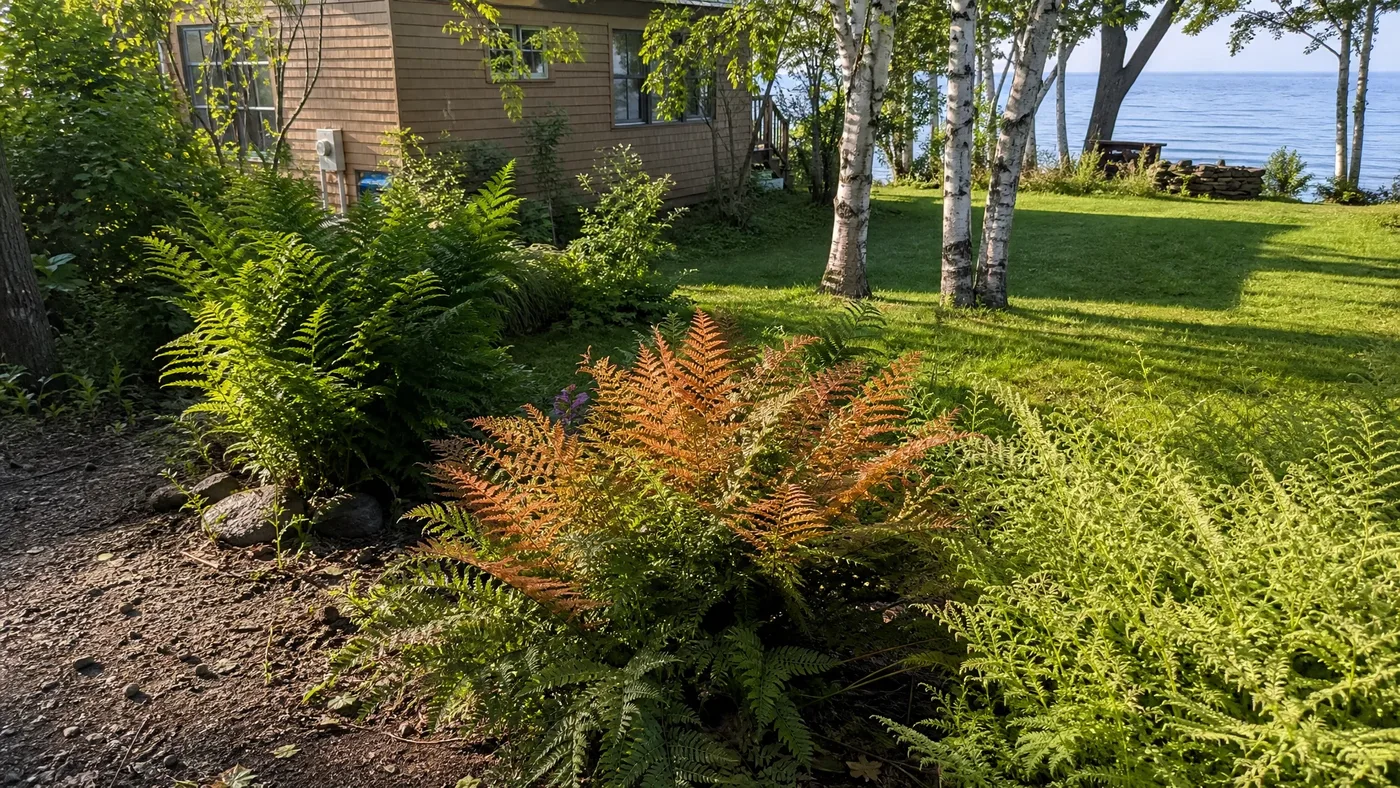
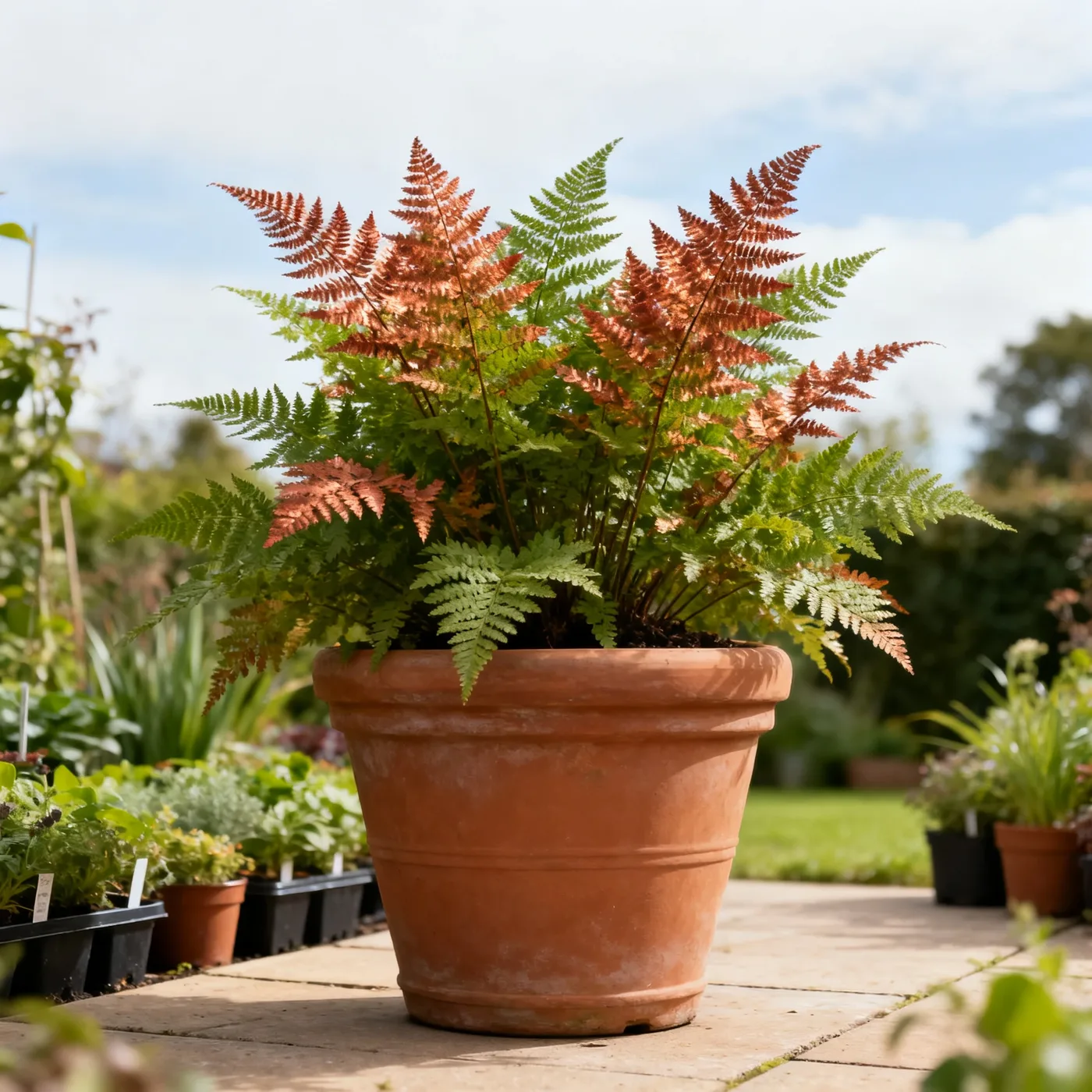
For Brilliance, the flush is the whole reason people ask for it by name. Its new fronds are red in spring, turning to coppery pink and then dark glossy green. That is a three-stage show, and a clump carries all three shades at once while the new fronds mature beside the older ones.
What the Species Does and Doesn't Do
The plain species is not colorless in spring. Its fronds emerge coppery pink and turn green as they mature. The cultivar's edge is the red start and the dark glossy finish, which we cover in our species comparison.
What the Rivals Offer Instead
None of the seven rivals is sold for a warm spring color change. Japanese painted fern is sold for silvery fronds, which is a cool color that stays put rather than a flush that fades. The rest are chosen for shape, texture or toughness. Despite the autumn name, the show here is a spring one, and our fall color guide explains the name.
The choice: decide whether color is a requirement. For a bed seen from the path or patio, we say yes. That leaves Brilliance for warm copper and painted fern for cool silver, and painted fern is deciduous. If color is only a nice extra, all seven rivals stay on the table and the next cuts do the work.
Reading Size Before You Read Anything Else
A tag gives two numbers that matter, mature height and mature spread, and gardeners often read only the first. Both describe the plant years from now, not the pot in your hand.
Habit matters as much as the numbers. A clumping fern grows from one crown that widens gradually, so a bed stays the size you planted it for. A colonizing fern sends out runners and sets new crowns away from the parent, so the planting keeps moving.
Brilliance is a clumper. It reaches an ultimate height and spread of 0.5 to 1 meter, about 1.5 to 3 feet each way, and takes 5 to 10 years to get there. The species is a little wider at 2 to 3 feet, according to NC State, which also notes it spreads slowly by underground rhizomes. Our guide on how big Brilliance really gets covers the timeline in detail.
Ostrich fern is the contrast. It is a deciduous, stoloniferous fern forming colonies of upright rosettes up to 1.5 meters tall, about 5 feet, with a mature spread of 1.5 to 2.5 meters, roughly 5 to 8 feet. Brilliance is a fraction of that, and it stays in its clump.
For the other rivals, read the tag's height and spread yourself, because sizes vary between the plants sold under those names.
The choice: measure the space, then subtract the plants beside it. If the bed gives you a patch about 3 feet across and no more, ostrich fern is cut here. Everything else survives until we read the winter numbers.
Counting Winters: Which Ferns Survive Yours?
A hardiness zone is a single number for the coldest winter nights a place typically sees. Lower numbers mean colder minimums. It says nothing about summer heat or wet soil, only whether a plant lives through the cold.
Brilliance is a little awkward here because its sources use different scales. The species is listed for zones 6b through 12b by NC State and 5 through 11 by UF/IFAS. We plan around the overlap of the two US lists.
That overlap is zones 6b through 11. If your garden sits there, Brilliance is a safe year-round outdoor fern. In zone 5 or at the edges, check with your local extension service before planting. Our hardiness zone guide goes further on those edges.
Lay every other tag against your zone the same way. Look at the lowest zone each one lists and compare it to your own. Boston fern is the exception, because it cannot take a freeze at all. We are only asking one question in this section: does it live through your winter? How you care for each is a separate matter.
The choice: keep any fern whose listed minimum is at or below your zone. If you are in a mild climate, nearly everyone passes. If you are colder than the sources cover for Brilliance, the cold-tolerant ferns have an edge, and the next section shows where.
Where Boston and Christmas Ferns Drop Out
These two sit at opposite ends of the cold scale, and each is dropped or kept for one particular job.
Boston Fern Belongs Indoors
Boston fern is the classic fern for hanging baskets and shaded porches. Its evergreen label only holds where winters stay frost-free, so in most gardens it spends the cold months inside. Customers usually ask us whether Brilliance can replace it on the porch. Outdoors, yes, within its zones. Indoors, our houseplant guide covers what that takes.
The choice: drop Boston fern for any bed that freezes. Keep it only if the plant lives in a container that comes in for winter.
Christmas Fern Is the Cold-Climate Fallback
Christmas fern is evergreen and tough, which is why it earns a place on cold slopes. It does not have the flush, though. Its fronds are green when they unroll and green when they finish.
So Christmas fern passes the evergreen test and the size test, and it fails the color test. If you were willing to skip color, it would go on to the final round. The one case where we would pick it over Brilliance is a garden that sits colder than Brilliance's listed range.
The choice: drop Christmas fern when color matters. Keep it for the cold end, where the sources stop covering Brilliance.
Holly, Wood and Lady Ferns in Turn
These three are woodland ferns that form tidy clumps, so they are the closest rivals. We'll hold each against Brilliance's three anchors: coppery color, mature size and hardiness.
Holly Fern
Holly fern is named for glossy, leathery fronds that resemble holly leaves, and it stays evergreen. Brilliance matches that sheen, since its mature fronds are dark glossy green, and then adds the copper flush on top. Check the holly fern tag's lowest zone against yours, because it is the one in this trio most often written for milder winters.
Wood Fern
Evergreen woodfern is the nearest relative. It belongs to the same genus, Dryopteris, as Brilliance, but its fronds are evergreen to semi-evergreen in mild winters. Brilliance has no flush competitor here, since wood fern has no coppery new growth to match it.
Lady Fern
Lady fern is lacy and light, and it is deciduous, so you lose the fronds every winter. It fails the evergreen cut and the color cut at the same time. We would pick it only for a bed that looks best in summer and gets ignored in January.
The choice: Brilliance beats all three if you want winter green and a spring flush. Choose wood fern if you want plain green in a colder spot, holly fern in a mild climate and lady fern only for a summer-only bed.
Painted and Ostrich Ferns, the Last Two Cuts
Two ferns remain, and they are the ones that fell to the first cuts. Each has one trait that sets it apart, so we'll define it and decide whether it is worth the trade.
Japanese Painted Fern
Japanese painted fern is known for silvery fronds, a cool color that looks very different from Brilliance's copper. It is deciduous, so the silver disappears each winter and leaves bare soil. It works well as a companion in front of Brilliance, where the two colors contrast, but it does not replace it.
The choice: keep it as a partner if you like silver, and drop it as a rival because it fails the evergreen test.
Ostrich Fern
Ostrich fern is deciduous with an upright vase shape, forming colonies by runners. It grows to about 5 feet and spreads far wider than Brilliance, as we saw earlier. It dies back in winter and brings no color flush.
The choice: drop it. The only gardener it suits has a large, moist area and wants a colony that fills it. For a defined bed, a clump that stays put is the better plant.
Seven Ferns Down to One Choice
We started with seven rivals and cut them one decision at a time. Evergreen habit put lady, painted and ostrich on probation. Color narrowed the field to a warm copper flush, which only Brilliance carries. Size removed ostrich fern for any bed that cannot host a colony. Winter cold removed Boston fern outside a container.
Brilliance Autumn Fern
Nursery-grown Brilliance Autumn Fern in sizes from 4 Inch, shipped to your door.
From $16.99
Shop Now →Evergreen first, then color, then size, then cold: Boston fell to frost, Christmas, holly and wood ferns fell on the missing flush, lady and painted ferns fell to winter bareness, ostrich fell to its size, and Brilliance stayed. Our growers watch Brilliance through the year for the red-to-copper flush in spring and the dark glossy green that follows, because that is the plant doing exactly what the tag promised.