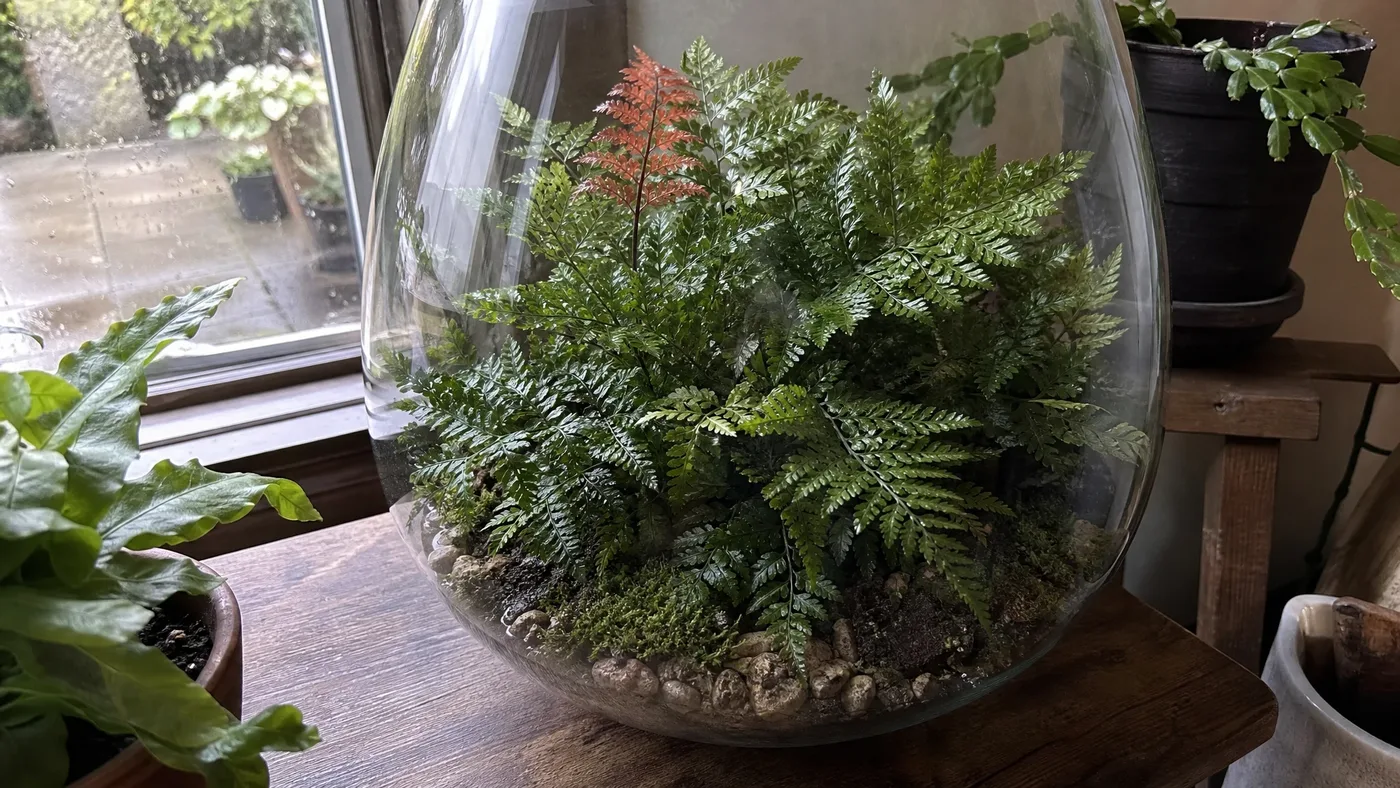
Growing Brilliance Autumn Fern in a Terrarium or Vivarium
You drag a sleeve across the pane and read what it left behind: fat beads, fine mist, or streaks running toward the soil. The glass reports on the box before the fern does, and by the time a frond browns, the cause is already old news.
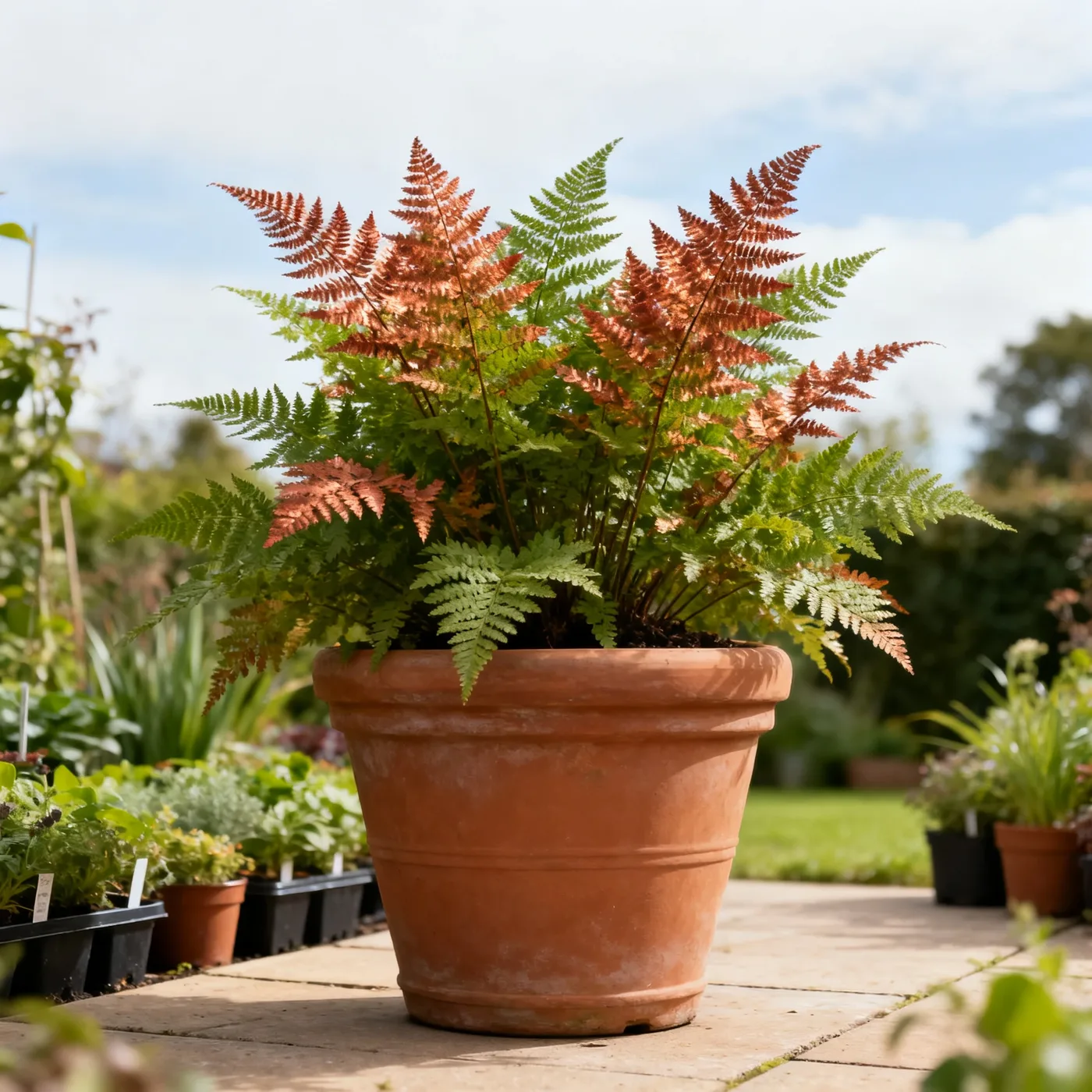
Brilliance comes from eastern Asia and wants steady moisture, which is exactly what a closed box delivers, for better and worse. Too tight and it fogs, molds and rots at the roots. Balanced, it asks very little of you.
This guide covers everything you need to know about reading a terrarium or vivarium, from fogged glass and soil mold to crowded fronds and a short morning check that keeps the box steady.
Glass Fogged Solid All Day
A haze that never clears means the box holds more water than the air can move out. Work out which side of that problem you are on, then open a gap and keep it only as wide as it needs to be.
Read the Droplets First
Wipe a patch clean and watch how the glass refills. The table below matches what you see to the likely cause and your first move.
| What you see | Likely cause | First move |
|---|---|---|
| Thin haze at dawn that clears by midday | A normal day and night cycle | Leave it alone |
| Beads on the glass all day, even in bright light | Too little air exchange | Prop the lid open a crack |
| Streaks running down the pane, soil shiny wet | Too much water | Stop watering and draw off the excess |
| Fog on one wall only | A lamp or window warming that side | Turn the box or move the light |
Vent, Then Stop Venting
Slide the lid open a crack and leave it. Wipe the glass, check again the next morning, and widen the gap only if the haze is still solid at midday. The moment the glass clears for part of the day, stop. Fog that clears and returns is a healthy cycle.
NC State says this fern likes acidic, constantly moist soil high in organic matter, so aim for moist, not wet, and don't chase a bone-dry pane. The same source says to protect plants from drying winds, so never aim a fan or a wide-open vent straight at the fronds.
You will see advice to mist a sealed box every day. Skip it. If the glass is fogged, the box is already wetter than this fern needs.
White Fuzz Creeping Across the Soil
White threads on the surface are mold feeding on something in the substrate, helped along by still, wet air. Fix the mix and the airflow and the fuzz loses its reason to stay.
Mix for Air at the Roots
Brilliance likes an organic, acidic soil, but a terrarium has no rain to flush it and no breeze to dry the top. That means the mix has to be chunky.
Build it from coarse bark pieces, perlite or similar grit, a modest share of well-rotted leaf mold, and a little horticultural charcoal. Our soil guide covers the in-ground version, so borrow its acidic, organic thinking and open up the texture. The species prefers acid soil, below 6.0, but texture matters more than chasing a number.
Keep out fresh compost, garden soil, unrotted wood chips and food scraps. Anything still breaking down fast feeds mold.
Clearing an Existing Patch
Act when you first see the fuzz. It spreads faster than you can wait it out.
Lift the fuzz with a spoon, taking a thin layer of the top substrate with it. Don't dig deep. This fern spreads slowly by creeping underground rhizomes, and digging tears them. Wipe the glass, open the lid, and let the surface dry a little before you water again. Water at the edge of the box, never over the crown.
If the fuzz comes back, swap the top layer for fresh coarse mix and cut the water. A second return means the air is still too stale, so widen the vent.
Crisp Brown Edges Inside a Sealed Jar
Brown, papery edges in a box that should be swimming in humidity look like a contradiction. They almost always trace back to a leak, a hot lamp or a lid that doesn't seat.
Check the Seal First
Run your hand around the lid and rim. A lid that rocks, a cracked gasket or a wide mesh vent lets moist air out as fast as the soil makes it. We often see a brown-edged fern in a jar where the lid sits slightly off, and a flat, snug fit fixes it.
Your tell is the glass. If it never fogs, even at dawn, the box is leaking. An established fern tolerates only brief droughts, so a few dry stretches show up as crisp tips. Close any gap a little at a time and read the glass again the next day.
Move the Heat Source
A lamp that sits too close warms the air and dries the fronds nearest to it. Rest your palm on the glass above the bulb. Warm is fine. Hot means raise the lamp, switch to a cooler light, or both.
A box in a sunny window can cook the same way. Brown edges on only the sun-facing fronds point straight at the source.
Cut a browned frond off at its base with clean scissors. Brown tissue won't turn green again, and this evergreen fern keeps sending up new fronds, red at first, then coppery pink, then dark glossy green, to replace it.
Pale Fronds Leaning Toward the Light
Stretched, thin, washed-out growth tilting to one side says the light is too weak or too far off center. Brilliance is a shade fern, so the fix is usually modest.
Pick the Lamp
Use a full-spectrum LED made for plants, and skip incandescent bulbs, which put out more heat than useful light. Mount it above the middle of the box, not at one end, so the fronds have no reason to lean.
Set the height by touch. The glass over the lamp should feel warm, never hot. If you have to leave the lid off to keep the box from cooking, the lamp is too close.
Set Distance and Hours
Run the lamp on a timer that copies a bright day, with a dark stretch at night. Lamp output varies widely, so follow the maker's guidance for distance rather than trusting a single number from us.
Clemson says ferns prefer moderate, indirect light, with a north-facing window ideal. A box on a bright shelf near a north window may need no lamp at all. Keep it out of direct south or west sun, which turns glass into an oven.
Read the color to tell too little from too much. Pale and stretched means raise the light level. Pale and scorched on the fronds closest to the lamp means back it off. Give the box a quarter turn now and then if you light from a window.
Yellowing at the Base and a Sour Smell
Yellow lower fronds and a sour, swampy smell when you lift the lid mean the roots are sitting in water with nowhere for it to go. A sealed box has no drain hole, so you build one in layers.
Build the Layered Bottom
Work from the bottom up, and keep the water level in the lowest layer, below the roots.
Start with gravel or expanded clay pellets, deep enough to hold more water than you will ever add. Lay mesh, landscape fabric or a thin layer of sphagnum over it so the substrate can't sift down. Then add the chunky mix from earlier. Outdoors the ground carries extra water away. A glass box does not.
The mix in our container guide assumes drain holes, so don't copy it into a sealed box as written.
Lift and Repot
Do this as soon as you smell it. Waiting only lets the rot climb.
Lift. Tip the fern out with its root ball and shake off the wet substrate.
Trim. Cut away roots that are black, soft or foul-smelling. Firm, pale roots stay.
Rebuild. Wash the glass, then lay the drainage layer, barrier and fresh mix.
Replant. Set the crown at the surface, not buried, and firm the mix lightly.
Water lightly and vent. Moisten the top, keep the lid cracked until the glass clears, and trim yellowed fronds as they fade.
Fronds Pressing Against the Lid
Sooner or later Brilliance outgrows the box. It is a big fern, and most terrariums are not built for it. Decide early whether it will live under glass or only start there.
Know How Big It Gets
The cultivar reaches an ultimate height and spread of 0.5 to 1 meter, about 1.5 to 3 feet, and takes 5 to 10 years to reach maturity. The species itself stands 1.5 to 2 feet tall and 2 to 3 feet wide. Our size guide goes deeper.
Slow growth means a young plant fits a jar for a good while. A mature one needs the footprint of a large planter. Fronds that touch the glass stay wet, bend out of shape and start to rot.
One of the most common questions we get is how long a young plant can stay under glass. Our answer is until the fronds touch the lid.
Size Up or Move Out
You have three good moves once the fronds crowd the lid.
Move it to a taller tank or vivarium with real headroom, repeating the repotting steps above. Divide it, as our guide to propagating by division shows, and keep a small piece under glass. Or take it out of the box and grow it in an open pot, as described in our guide to growing it indoors as a houseplant. Trimming the outer fronds buys a little time, but it doesn't solve the size.
Reading the Glass Each Morning
Every problem above shows on the glass first. A short look each morning catches it while the fix is still small.
The Morning Checklist
Run through these in order. Most mornings you will finish without touching anything.
- Read the glass before you open the lid. A thin haze or a few clear patches is right, solid fog means vent and ease off the water, and bone-dry glass means check the seal.
- Look across the soil. Glossy standing wet needs less water, and any white thread needs a spoon and more air.
- Check the newest fronds and the frond edges. Red or coppery pink on new growth and dark glossy green on older fronds is normal, but crisp tips or a lean toward one side needs a look at heat or light.
- Lift the lid and sniff once. Earthy is good, sour means the roots are too wet.
- Rest your palm on the glass over the lamp. Warm passes, hot means move it.
- Glance at the tallest frond against the lid, and plan the move before it presses the glass.
Change one thing at a time, then give the box a day to answer. Most boxes settle once you stop fiddling with them.
A Steady Box Needs Little From You
The glass tells you first. Fog that never clears means vent or water less. White fuzz means a chunkier mix and fresher air. Brown edges mean a leak or too much heat. A pale lean means better light, a sour base means build drainage, and crowding means this fern is a guest in a small box, not a permanent resident.
Brilliance Autumn Fern
Nursery-grown Brilliance Autumn Fern in sizes from 4 Inch, shipped to your door.
From $16.99
Shop Now →Picture the first glance at the glass in the morning light: a thin film of droplets, a few clear patches, the fronds standing clear of the lid. You read it, and there is nothing to do. Before a plant leaves us, we check the roots, crown and fronds by hand, because as growers with our own farms we sell only top-quality ferns, and a clean start makes any box easier to keep.