Is Brilliance Autumn Fern Toxic to Cats and Dogs?
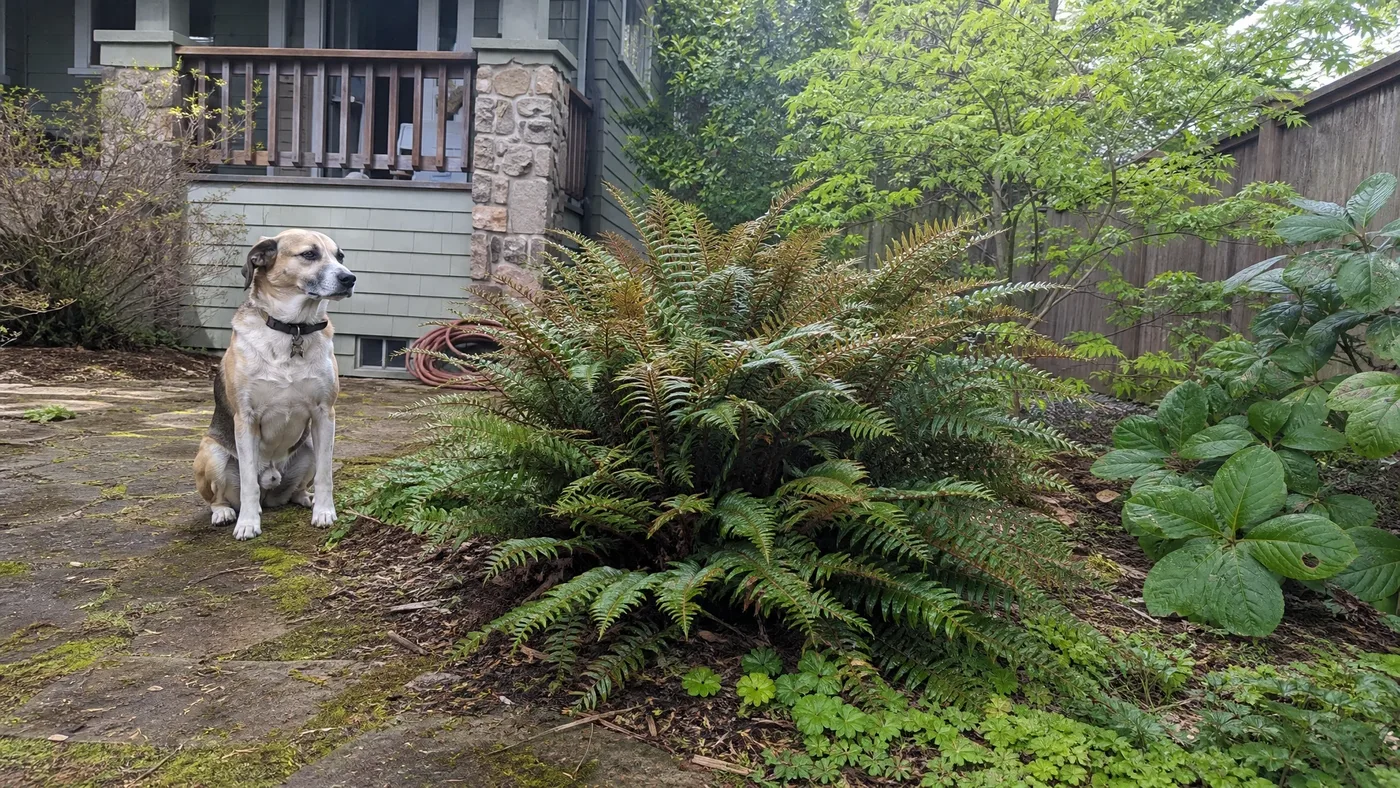
A Brilliance planted without a thought for the pets in the yard tends to end up as flattened fronds, a crushed crown and a clump that never fills out. It is a slow plant. The cultivar takes 5–10 years to reach maturity, so a bad first year or two sets it back for a long time.
The bigger worry for most owners is what happens if a cat or dog takes a bite. It is one of the most searched questions about this fern. We will answer it plainly, including the parts our sources cannot answer.
This guide covers everything you need to know about keeping Brilliance around cats and dogs, from the toxicity evidence and the fern's size to upkeep, placement and what to do if a pet chews a frond.
The Toxicity Evidence Is Thinner Than Expected
We cannot hand you a clean yes or no on toxicity, and we would rather explain why than guess. This section sets out what we can stand behind and what we cannot.
Verdict: unconfirmed. The sources we rely on for this plant cover its height, hardiness, soil and foliage. None of them says whether Dryopteris erythrosora or the cultivar 'Brilliance' is toxic or safe for cats or dogs. So we will not tell you it is safe, and we will not tell you it is dangerous.
Why Silence Is Not a Safety Rating
A missing warning and a confirmed all-clear are two different things, and they are easy to confuse.
A plant can be absent from a toxicity list simply because nobody has assessed it. You will also see blanket claims that all ferns are pet safe. We do not repeat them. Some plants sold as ferns are not true ferns at all, and a listing for one fern tells you nothing certain about another.
The reasoning matters here. A toxicity rating is built from reports of animals that actually ate the plant. If a plant is rarely eaten, or rarely reported, the record stays thin even when the plant is harmless. Thin is the honest word for what we have.
Why Dose and Animal Change the Answer
Even where a plant has been assessed, a single label hides several variables. We define them here so you can read a listing sensibly.
Toxicity is the capacity of a plant to cause harm when an animal eats it. Whether harm follows depends on which part was eaten, how much, and the size and species of the animal. A cat and a dog are not interchangeable, and a puppy is not a full-grown dog. That is why a listing that names both species, rather than a general claim, is the thing to look for. It is also why we send you to a vet rather than offering a rule of thumb we cannot support.
How to Check Before You Buy
The check takes about five minutes, and it is worth doing before the plant is in the ground.
The ASPCA keeps toxic and non-toxic plant pages for pet owners. Search them under both the botanical name and the common name, because autumn fern goes by several names (our guide to the botanical and common names lists them).
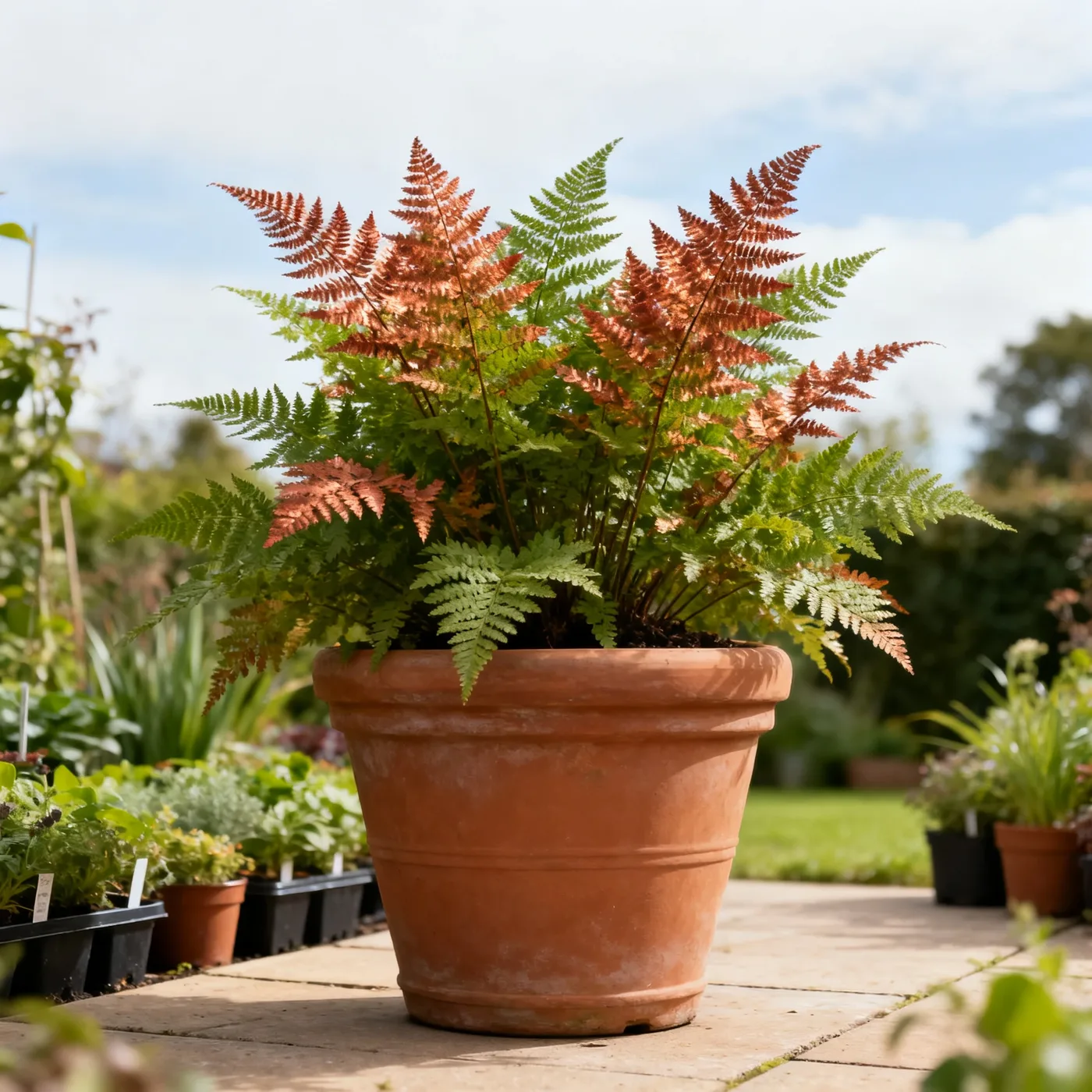
Brilliance is a selection of the species, noted for red new fronds where the species emerges coppery pink. A listing for Dryopteris erythrosora is therefore the entry to look for, but we cannot promise the cultivar was assessed on its own. If you find no entry, or you are unsure what you found, ask your veterinarian. Bring the full name, Dryopteris erythrosora 'Brilliance', and treat the answer as the deciding word over anything we write.
Height and Habit Decide What Pets Can Reach
Whatever the toxicity answer turns out to be, how much of the plant a pet can get at is a fact we can measure. Here is how Brilliance sits against a dog's mouth and a cat's paws.
Verdict: fully within reach. You cannot plant this fern out of a dog's or cat's range once it matures. You can only choose where it grows.
Size at Maturity
This is a compact fern, and its fronds sit low and spread wide.
UF/IFAS gives the species a height of 1 to 2 feet. NC State adds a width of 2 to 3 feet. The cultivar is roughly 1.5 to 3 feet tall and wide.
At any of those numbers, the fronds are at nose and paw height. The clump spreads slowly by underground rhizomes, so the mass of fronds grows wider year by year rather than taller. Our guide on how big Brilliance really gets covers the numbers in more detail.
Slow Growth Cuts Both Ways
Because the cultivar takes years to fill out, pet damage in the early seasons costs more than it would on a fast plant.
A young clump has few fronds and a small crown, the point at the base where new fronds emerge. A dog that digs there, or a cat that bats and lies on the plant, can break the crown, and a ruined crown does not grow back quickly. An older clump with many fronds absorbs the same attention with little visible loss. If you have pets, fence or edge a new planting for its first couple of seasons, even if you plan to remove the barrier later.
Evergreen Means No Off Season
Many shade plants die back and give pets a few months off. Brilliance does not.
Brilliance is evergreen, with red new fronds in spring turning coppery pink and then dark glossy green. That means fronds are within reach in January as well as June, so there is no safe season to plan around. The bright new spring flush is also the part most likely to catch a curious pet's eye.
On the plus side, the species has no flowers or fruits and reproduces by spores. There are no blossoms or fallen fruit to be picked up from the ground.
Upkeep That Keeps Chemicals Out of the Picture
If a pet does chew a frond, whatever you have put on that frond goes along with it. A plant that needs little treatment takes that variable away.
Verdict: low upkeep suits pet owners well. Brilliance asks for very little, and that is the pet-friendly way to grow it.
Skip the Sprays
Most of what gets sprayed on a garden plant is a reaction to pests or disease, and this fern rarely needs it.
The cultivar is generally pest-free and disease-free outdoors. We read that as a reason to leave the sprayer in the shed. Reaching for a pesticide at the first spot on a frond adds a risk for your pet that the plant did not ask for.
Check what is wrong first. Browning fronds on this fern are more often a watering or site problem than a pest, and our guide to common Brilliance problems will help you read the symptoms.
Mulch, Compost and Fertilizer Choices
What you add to the soil matters here too, because pets dig and lick as well as chew.
NC State says the species likes acidic, constantly moist soil that is high in organic matter. That is why most growers mulch and add compost. Ingredients in bagged mulches and fertilizers vary, and we cannot vouch for any particular product around pets. Read the label, and ask your vet if you are unsure.
Our mulching guide covers how to apply it. A thin, even layer also keeps loose soil from drawing a digger's attention.
Tidy Up Without Leaving Clippings
Cleanup is the one routine job that puts plant material on the ground, so it needs a pet-minded habit.
When you cut back old fronds, take the clippings away and do not leave them in a pile where a dog can find them. Wilted material is easy for a pet to pick up, and it is harder for you to spot what was eaten. The same goes for pots. Empty any saucer that holds standing water, since moisture-loving plants tend to be overwatered into puddles, and a pet may drink from them along with whatever has leached into the water.
Siting Brilliance Where Pets and Fronds Both Do Well
Placement is the one tool you fully control. A good site protects the fern from pets, and the pets from the fern.
Verdict: yes, with thought about where it goes. Planting it away from the paths your pets patrol is the most useful thing you can do, whatever the toxicity answer is.
Deer Resistance Is Not Pet Resistance
This is the point where many owners reason from the wrong evidence.
The plant is seldom damaged by deer. One of the most common questions we get is whether a plant deer leave alone is therefore safe for the dog. It is not the same question. A deer browsing a plant, or ignoring it, says nothing about what a chewing puppy does or what happens afterward. Our guide on deer and rabbit resistance explains what that rating does and does not mean.
Practical Placement
These placements help in a real yard.
- Plant it toward the back of a bed, behind low edging or other plants, rather than along a path or fence line where a dog runs.
- Avoid cool, moist shade where your dog likes to lie. That is exactly the kind of spot this fern wants, so the two will compete.
- Keep young plants away from diggers. Loose soil around a new planting draws attention, and a small crown has little margin for damage.
- Put pots on a raised stand or a high shelf if you have a cat who climbs, and check that the stand is stable enough not to tip.
The cultivar suits full or partial shade, so there is usually a choice of spot to work with.
Containers and Indoor Spaces
A pot changes the equation, because you can move it and a pet can knock it over.
On a patio, a heavy pot is harder for a dog to tip than a light one, and it keeps the crown above the ground-level traffic. Indoors, a cat treats any green plant at its level as fair game, so height is your main defense. Moving a pot between rooms is easy, which lets you keep it out of rooms your pets use when you are away.
If a Pet Chews a Frond
A calm, ordered response matters more than guessing about toxicity. These steps are the ones we tell customers to have ready.
Verdict: call, do not wait and watch. Because the toxicity is unconfirmed, a professional should decide whether the bite matters.
The Steps, in Order
Do them in this order, and do not skip the call.
- Take any remaining plant material away from your pet. Do not force anything into the mouth or induce vomiting unless a vet tells you to.
- Note what was chewed, roughly how much, and when it happened.
- Call your veterinarian or the ASPCA Poison Control at (888) 426-4435 or contact your local veterinarian as soon as possible if you suspect your pet has eaten a potentially toxic plant.
- Give the full name, Dryopteris erythrosora 'Brilliance', and keep a piece of the plant or a photo to hand.
- Follow the vet's instructions. Do not try home remedies unless you are told to.
What to Tell the Vet
The person on the phone will ask a few questions, and having the answers ready speeds up the call.
Give your pet's species, approximate weight and age, plus what you saw them eat and when. Mention anything else in the yard that was treated recently, such as a fertilizer or pesticide, because the vet needs to rule those out as well as the plant. If the fern was bought in a pot, the tag helps, since it carries the name the vet will want to look up.
When Not to Wait
We are growers, not vets, and we have no source on how much of a frond causes a problem. If your pet seems unwell at any point after chewing the plant, treat that as the reason to call. Do not wait for a second sign.
Planting Brilliance Around Pets, Decided Plainly
Our sources do not confirm whether Brilliance is toxic to cats or dogs, so we do not call it safe. Check the pet plant pages under both names, ask your vet, and keep the poison control number somewhere you can find it. Then plant it where pets do not patrol, spray nothing you do not need to, and keep the fronds out of reach of anything that chews.
Brilliance Autumn Fern
Nursery-grown Brilliance Autumn Fern in sizes from 4 Inch, shipped to your door.
From $16.99
Shop Now →Before a plant leaves us, our growers check the fronds, crown and roots, and we make sure the tag carries the full botanical name, so you can look it up with your vet. We are growers with our own farms who grow and sell top-quality plants, and for a fern you will keep near pets that care matters more than anything else about it.